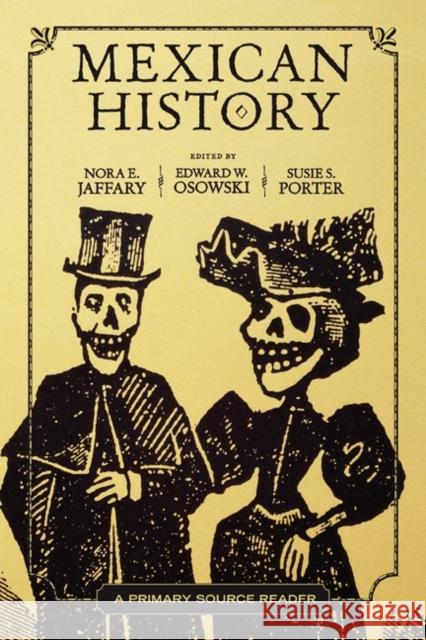
Mexican History is a comprehensive and innovative primary source reader in Mexican history from the pre-Columbian past to the neoliberal present. Chronologically organized chapters facilitate the book s assimilation into most course syllabi. Its selection of documents thoughtfully conveys enduring themes of Mexican history land and labor, indigenous people, religion, and state formation while also incorporating recent advances in scholarly research on the frontier, urban life, popular culture, race and ethnicity, and gender. Student-friendly pedagogical features include contextual...
Mexican History is a comprehensive and innovative primary source reader in Mexican history from the pre-Columbian past to the neoliberal presen...
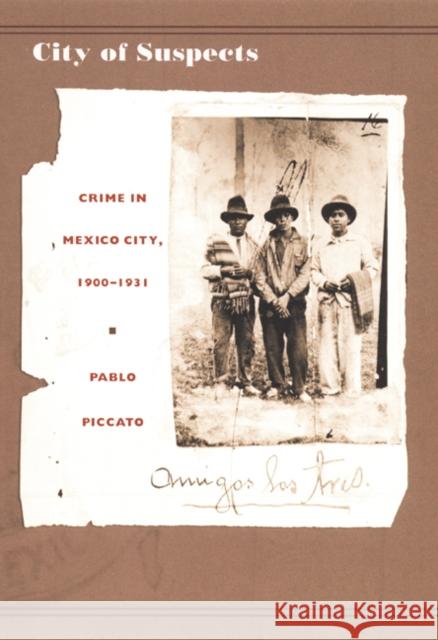
In "City of Suspects" Pablo Piccato explores the multiple dimensions of crime in early-twentieth-century Mexico City. Basing his research on previously untapped judicial sources, prisoners' letters, criminological studies, quantitative data, newspapers, and political archives, Piccato examines the paradoxes of repressive policies toward crime, the impact of social rebellion on patterns of common crime, and the role of urban communities in dealing with transgression on the margins of the judical system. By investigating postrevolutionary examples of corruption and organized crime,...
In "City of Suspects" Pablo Piccato explores the multiple dimensions of crime in early-twentieth-century Mexico City. Basing his research on previousl...
In the mid-to-late nineteenth century, as Mexico emerged out of decades of civil war and foreign invasion, a modern notion of honor of one s reputation and self-worth became the keystone in the construction of public culture. Mexicans gave great symbolic, social, and material value to honor. Only honorable men could speak in the name of the public. Honor earned these men, and a few women, support and credit, and gave civilian politicians a claim to authority after an era dominated by military heroism.
Tracing how notions of honor changed in nineteenth-century Mexico, Pablo Piccato...
In the mid-to-late nineteenth century, as Mexico emerged out of decades of civil war and foreign invasion, a modern notion of honor of one s reputatio...
In the mid-to-late nineteenth century, as Mexico emerged out of decades of civil war and foreign invasion, a modern notion of honor of one s reputation and self-worth became the keystone in the construction of public culture. Mexicans gave great symbolic, social, and material value to honor. Only honorable men could speak in the name of the public. Honor earned these men, and a few women, support and credit, and gave civilian politicians a claim to authority after an era dominated by military heroism.
Tracing how notions of honor changed in nineteenth-century Mexico, Pablo Piccato...
In the mid-to-late nineteenth century, as Mexico emerged out of decades of civil war and foreign invasion, a modern notion of honor of one s reputatio...