Based primarily on long-neglected manuscript and newspaper sources--and especially on reminiscences of people who knew him--this psychobiography casts new light on Lincoln. Burlingame uses a blend of Freudian and Jungian theory to interpret the psyche of the 16th president.
Based primarily on long-neglected manuscript and newspaper sources--and especially on reminiscences of people who knew him--this psychobiography casts...
"If I did not laugh occasionally I should die," Lincoln is said to have told his cabinet, "and you need this medicine as much as I do." Now in paperback, this volume gathers the best unpublished and uncollected work on Lincoln by Benjamin P. Thomas, widely regarded as the greatest Lincoln historian of his generation. This diverse collection is enhanced by an introduction by Michael Burlingame, himself a leading biographer of Lincoln, who provides a balanced portrait of Thomas and his circuitous path toward writing history.
"If I did not laugh occasionally I should die," Lincoln is said to have told his cabinet, "and you need this medicine as much as I do." Now in paperba...
Of the three secretaries who assisted President Abraham Lincoln-John G. Nicolay, John Hay, and William O. Stoddard-only Stoddard wrote an extended memoir about his time in the Executive Mansion. First published in 1890, the book vividly depicts the president's agonizing reaction to the defeats at Fredericksburg and Chancellorsville, the difficulties encountered (and presented) by Mary Lincoln, the president's relations with George B. McClellan and other generals, and the anxiety preceding the Merrimack's epic battle with the Monitor. In 1866 Stoddard also penned thirteen "White House...
Of the three secretaries who assisted President Abraham Lincoln-John G. Nicolay, John Hay, and William O. Stoddard-only Stoddard wrote an extended mem...
William O. Stoddard's memoirs as President Abraham Lincoln's third secretary reveala perspective of the president rarely viewed. In this collection of 120 weekly dispatches submitted to the New York Examiner under the pseudonym "Illinois," Stoddard sheds new light on Lincoln and his era.These documents provide commentary on Lincoln's personal circumstances as well as events in Washington and on military, diplomatic, economic, and political developments. Although historians at times differ with Stoddard's accounts, he offers valuable descriptions of Lincoln, insight into the president's...
William O. Stoddard's memoirs as President Abraham Lincoln's third secretary reveala perspective of the president rarely viewed. In this collection of...
Originally published in 1922, The Real Lincoln is an in-depth look at Abraham Lincoln the man, not the public figure. Acclaimed at the time as an excellent, impartial source book, The Real Lincoln was compiled by Jesse W. Weik through a series of letters and interviews with people who knew the sixteenth president personally as well as their descendents. This is an examination of Lincoln without the weight of history, looking at him as a dynamic figure and illuminating aspects of his life before his presidency. His childhood, his marriage to Mary Todd, his law practice, the way he spent his...
Originally published in 1922, The Real Lincoln is an in-depth look at Abraham Lincoln the man, not the public figure. Acclaimed at the time as an exce...
On 18 April 1861, assistant presidential secretary John Hay recorded in his diary the report of several women that "some young Virginian long haired swaggering chivalrous of course. . . and half a dozen others including a daredevil guerrilla from Richmond named Ficklin would do a thing within forty eight hours that would ring through the world."
The women feared that the Virginian planned either to assassinate or to capture the president. Calling this a "harrowing communication," Hay continued his entry: "They went away and I went to the bedside of the Chief "couche. "I told him the...
On 18 April 1861, assistant presidential secretary John Hay recorded in his diary the report of several women that "some young Virginian long haire...
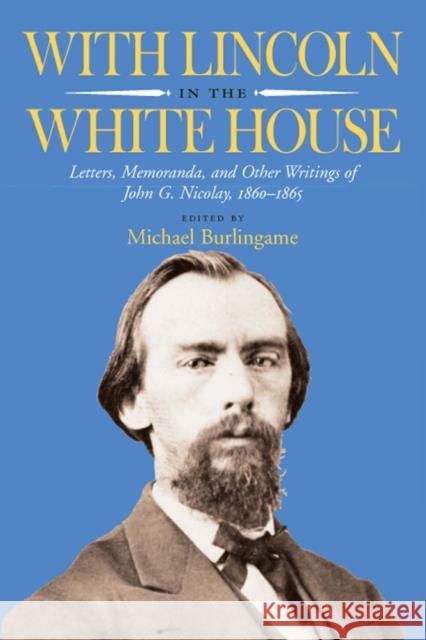
From the time of Lincoln's nomination for the presidency until his assassination, John G. Nicolay served as the Civil War president's chief personal secretary. Nicolay became an intimate of Lincoln and probably knew him as well as anyone outside his own family. Unlike John Hay, his subordinate, Nicolay kept no diary, but he did write several memoranda recording his chief's conversation that shed direct light on Lincoln. In his many letters to Hay, to his fiancee, Therena Bates, and to others, Nicolay often describes the mood at the White House as well as events there. He also expresses...
From the time of Lincoln's nomination for the presidency until his assassination, John G. Nicolay served as the Civil War president's chief personal s...
In "An Oral History of Abraham Lincoln," Michael Burlingame has uncovered buried Lincoln treasure from the papers of one of Lincoln’ s private secretaries, John G. Nicolay. Between 1872 and 1890, Nicolay and John Hay worked on a monumental ten-volume biography of Lincoln for which they conducted thirty-nine interviews in Springfield and Washington. However, some of Nicolay’ s notes were written in shorthand, making them inaccessible to researchers. Nicolay and Hay had made little use of the interviews in the published biography, partly because they considered the information too...
In "An Oral History of Abraham Lincoln," Michael Burlingame has uncovered buried Lincoln treasure from the papers of one of Lincoln’ s private s...
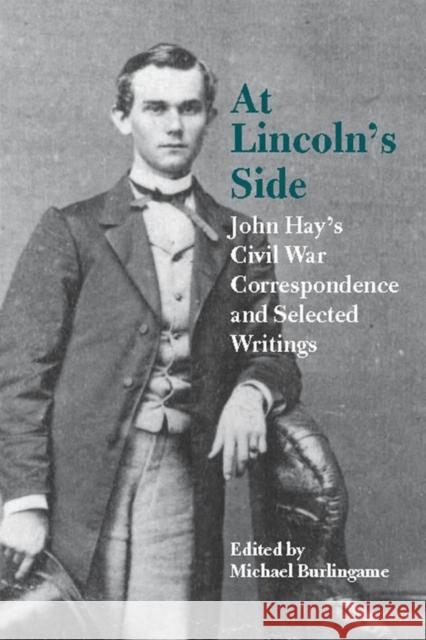
John Hay believed that “ real history is told in private letters, ” and the more than 220 surviving letters and telegrams from his Civil War days prove that to be true, showing Abraham Lincoln in action: “ The Tycoon is in fine whack. I have rarely seen him more serene & busy. He is managing this war, the draft, foreign relations, and planning a reconstruction of the Union, all at once. I never knew with what tyrannous authority he rules the Cabinet, till now. The most important things he decides & there is no cavil.”
Along with Hay’ s personal...
John Hay believed that “ real history is told in private letters, ” and the more than 220 surviving letters and telegrams from his Civil W...
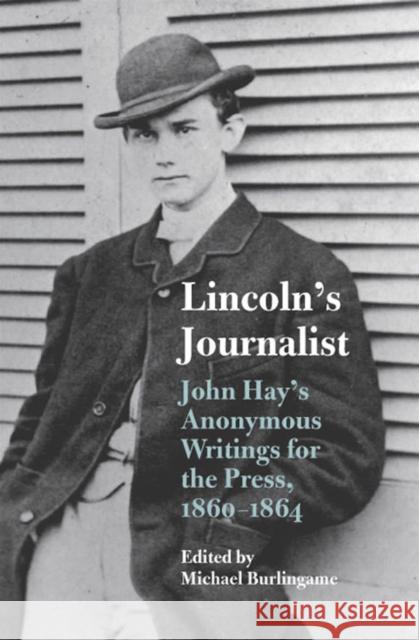
Michael Burlingame presents anonymous and pseudonymous newspaper articles written by Lincoln's assistant personal secretary, John Hay, between 1860 and 1864. In the White House, Hay became the ultimate insider, the man who had the president's ear. "Only an extremely small number of persons ever saw Abraham Lincoln both day and night in public as well as private settings from 1860 to 1864," notes Wayne C. Temple, chief deputy director, Illinois State Archives. "And only one of them had the literary flair of John Milton Hay."
Burlingame takes great pains to establish authorship of the...
Michael Burlingame presents anonymous and pseudonymous newspaper articles written by Lincoln's assistant personal secretary, John Hay, between 1860...