In "The Art of Criticism," William Veeder and Susan M. Griffin have brought together for the first time the best of the Master's critical work: the most important of his Prefaces, which R. P. Blackmur has called "the most sustained and I think the most eloquent and original piece of literary criticism in existence"; his studies of Hawthorne, George Eliot, Balzac, Zola, de Maupassant, Turgenev, Sante-Beuve, and Arnold; and his essays on the function of criticism and the future of the novel. The editors have provided what James himself emphasized in his literary criticism-the text's...
In "The Art of Criticism," William Veeder and Susan M. Griffin have brought together for the first time the best of the Master's critical work: the mo...
Written by one of America's most innovative and articulate feminists, this book illustrates how childhood experience, gender and sexuality, private aspirations, and public personae all assume undeniable roles in the causes and effects of war.
Written by one of America's most innovative and articulate feminists, this book illustrates how childhood experience, gender and sexuality, private as...
In her award-winning examination of the nature of war, A Chorus of Stones, critically acclaimed author and feminist Susan Griffin showed new ways of thinking about society and war, about private and public lives. In The Eros of Everyday Life, she once again takes readers on a startling journey, showing the profound connections between religion and philosophy, science and nature, Western thought and the role of women, and the supremacy of abstract thought over the forces of life. Featuring the brilliant original title essay that is nothing less than an intellectual and emotional...
In her award-winning examination of the nature of war, A Chorus of Stones, critically acclaimed author and feminist Susan Griffin showed new wa...
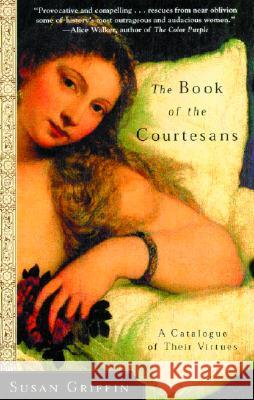
They charmed some of Europe s most illustrious men, honing their social skills as well as their sexual ones, and accumulating wealth, fame, and power along the way. Unlike their geisha counterparts, courtesans didn't lived in brothels or bend their wills to suit their suitors. They were the muses who enflamed the hearts of our most celebrated artists--Raphael, Manet, Dumas, and Proust, to name just a few--as well as becoming artists in their own right. Offering the first comprehensive tour of their worlds, Susan Griffins celebrates these first feminists and hails their virtues: Timing,...
They charmed some of Europe s most illustrious men, honing their social skills as well as their sexual ones, and accumulating wealth, fame, and power ...