Lee D. Baker explores what racial categories mean to the American public and how these meanings are reinforced by anthropology, popular culture, and the law. Focusing on the period between two landmark Supreme Court decisions--Plessy v. Ferguson (the so-called "separate but equal" doctrine established in 1896) and Brown v. Board of Education (the public school desegregation decision of 1954)--Baker shows how racial categories change over time. Baker paints a vivid picture of the relationships between specific African American and white scholars, who orchestrated a paradigm...
Lee D. Baker explores what racial categories mean to the American public and how these meanings are reinforced by anthropology, popular culture, and t...
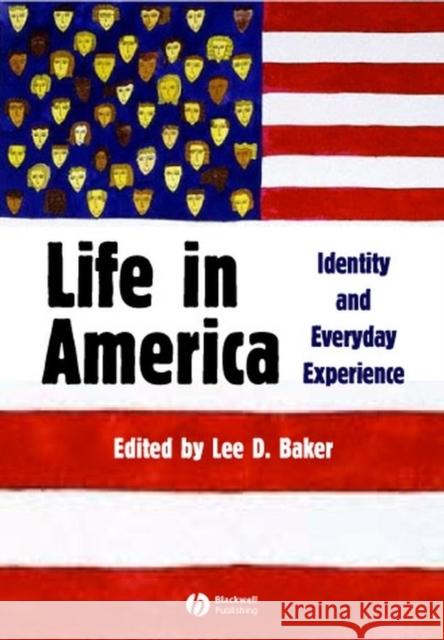
Life in America: Identity and Everyday Experience is a fascinating collection of readings that explores how people negotiate identity in the United States today.
Brings together readings that provide a thoroughly engaging and fascinating look at central issues of identity and what it means to be American.
Explores the tension between identity and identification to help readers begin to understand how people creatively confront the perks and perils of identity in the United States.
Offers a look at a wide range of subjects including: violence and video games,...
Life in America: Identity and Everyday Experience is a fascinating collection of readings that explores how people negotiate identity in the Un...
In the late nineteenth century, if ethnologists in the United States recognized African American culture, they often perceived it as something to be overcome and left behind. At the same time, they were committed to salvaging disappearing Native American culture by curating objects, narrating practices, and recording languages. In Anthropology and the Racial Politics of Culture, Lee D. Baker examines theories of race and culture developed by American anthropologists during the late nineteenth century and early twentieth. He investigates the role that ethnologists played in creating a...
In the late nineteenth century, if ethnologists in the United States recognized African American culture, they often perceived it as something to be o...
In the late nineteenth century, if ethnologists in the United States recognized African American culture, they often perceived it as something to be overcome and left behind. At the same time, they were committed to salvaging disappearing Native American culture by curating objects, narrating practices, and recording languages. In Anthropology and the Racial Politics of Culture, Lee D. Baker examines theories of race and culture developed by American anthropologists during the late nineteenth century and early twentieth. He investigates the role that ethnologists played in creating a...
In the late nineteenth century, if ethnologists in the United States recognized African American culture, they often perceived it as something to be o...