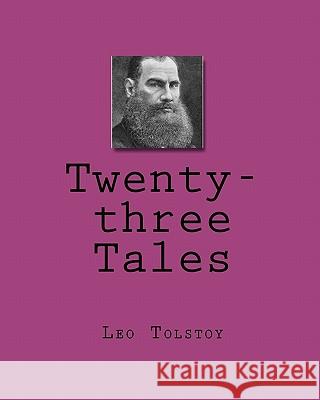
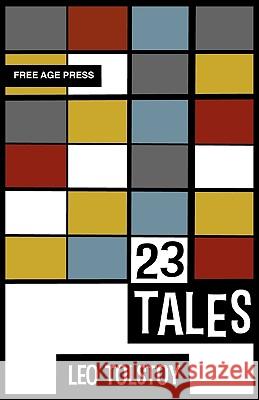
In his book, 'Twenty Three tales, ' we see Tolstoy's love of the short story, whether for children or adults; and witness the secret of simplicity and transparency of style, so evident in the great Russian writers. The children's stories remind us of Tolstoy's life-long passion for the schooling and education of peasant children. Of the adult stories, some draw on traditional Russian folk tales, breathe the air old peasant wisdom, and take us deep into the land of snow, bears, heartache and vodka. Other stories reflect Tolstoy's political and moral concerns, such as war, alcohol and greed....
In his book, 'Twenty Three tales, ' we see Tolstoy's love of the short story, whether for children or adults; and witness the secret of simplicity and...
Leo Tolstoy had a profound influence on people through out the Western world. Leo Tolstoy was a Russian novelist, essayist, dramatist and philosopher. Tolstoy was a member of the aristocratic Tolstoy family. He was known as an educational reformer, pacifist and Christian anarchist. His masterpiece War and Peace made him one of the world s greatest novelists. His ability to depict life in 19th century Russia made him a leader in realist fiction. Tolstoy s stand on nonviolent resistance influenced twentieth century people such as Martin Luther King Jr. and Ghandi. As a moral philosopher Tolstoy...
Leo Tolstoy had a profound influence on people through out the Western world. Leo Tolstoy was a Russian novelist, essayist, dramatist and philosopher....
Childhood, Boyhood and Youth were originally published in separate parts in the 1850s. This trilogy portrays a fictionalized version of the author's formative years in Russia. "Childhood" and "Boyhood" were written when Tolstoy was in the army; "Youth" was composed during a visit to western Europe. Years later, he said, "What I aimed at was not to write my own history, but that of friends of my youth." Tolstoy sought to communicate the intense emotions, confusions, and fears of a young boy as he grows up.
Childhood, Boyhood and Youth were originally published in separate parts in the 1850s. This trilogy portrays a fictionalized version of the author's f...
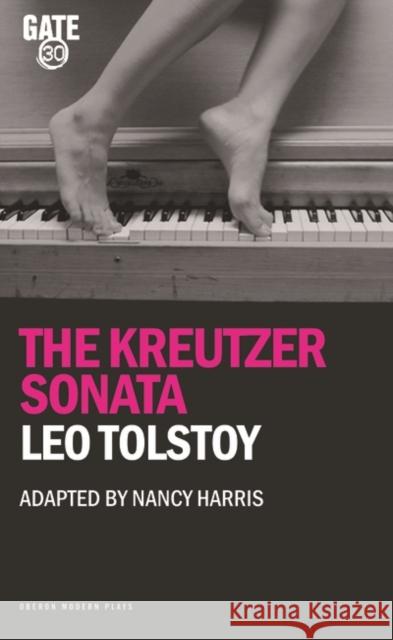
British playwright Nancy Harris adapts Leo Tolstoy's novella The Kreutzer Sonata, for the stage. This play about death, desire and Beethoven opened to great acclaim before transferring to Broadway.
British playwright Nancy Harris adapts Leo Tolstoy's novella The Kreutzer Sonata, for the stage. This play about death, desire and Beethoven opened to...
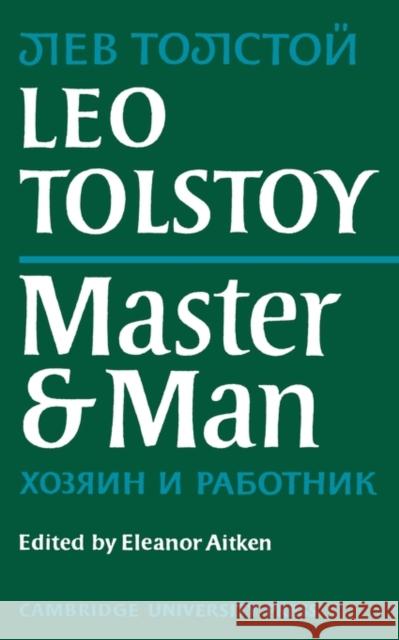
Tolstoy (1828 1910) wrote Master and Man in 1894, from an idea which originated two years earlier while he was organising food centres in the famine-stricken areas of central Russia. The story is of two individuals caught in a snowstorm. By showing how they react when faced with danger and lonely death, Tolstoy expressed implicitly what he felt to be essential to man for his understanding of the meaning of life and his acceptance of death. Mrs. Aitken has stressed the Russian text first published in 1895. She includes a brief introductory essay on Tolstoy and Master and Man and provides notes...
Tolstoy (1828 1910) wrote Master and Man in 1894, from an idea which originated two years earlier while he was organising food centres in the famine-s...
'My Confession' is Tolstoy's chronicle of his journey to faith; his account of how he moved from despair to the possibility of living; from unhappy existence to 'the glow and strength of life'. It describes his spiritual and philosophical struggles up until he leaves the Orthodox Church, convinced that humans discover truth not by faith, but by reason. The story begins when at the age of 50, Tolstoy is in crisis. Having found no peace in art, science or philosophy, he is attacked by the black dog of despair, and considers suicide. His past life is reappraised and found wanting; as slowly...
'My Confession' is Tolstoy's chronicle of his journey to faith; his account of how he moved from despair to the possibility of living; from unhappy ex...
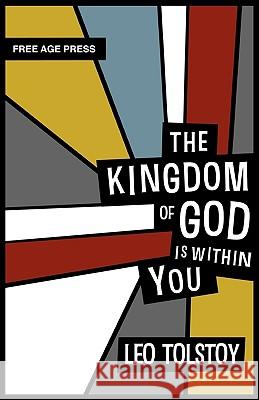
Published in 1884, 'The kingdom of God is within you' is perhaps Tolstoy's most significant work of non-fiction. Due to the Russian censors, it was first published in Germany, but its dominant idea of non-violence echoed across the international stage throughout the 20th century. In essence, the book is a defence by Tolstoy of the position on non-violence he adopted in 'My Religion'; and therefore also an assault on the Orthodox Church. 'Nowhere, ' says Tolstoy, 'is there evidence that God or Christ founded anything like what churchmen understand by the Church.' And in what it now proclaimed,...
Published in 1884, 'The kingdom of God is within you' is perhaps Tolstoy's most significant work of non-fiction. Due to the Russian censors, it was fi...
In his book, 'Twenty Three tales, ' we see Tolstoy's love of the short story, whether for children or adults; and witness the secret of simplicity and transparency of style, so evident in the great Russian writers. The children's stories remind us of Tolstoy's life-long passion for the schooling and education of peasant children. Of the adult stories, some draw on traditional Russian folk tales, breathe the air old peasant wisdom, and take us deep into the land of snow, bears, heartache and vodka. Other stories reflect Tolstoy's political and moral concerns, such as war, alcohol and greed....
In his book, 'Twenty Three tales, ' we see Tolstoy's love of the short story, whether for children or adults; and witness the secret of simplicity and...