Leo Nikolayevich Tolstoy Count Leo Tolstoy Charles Neider
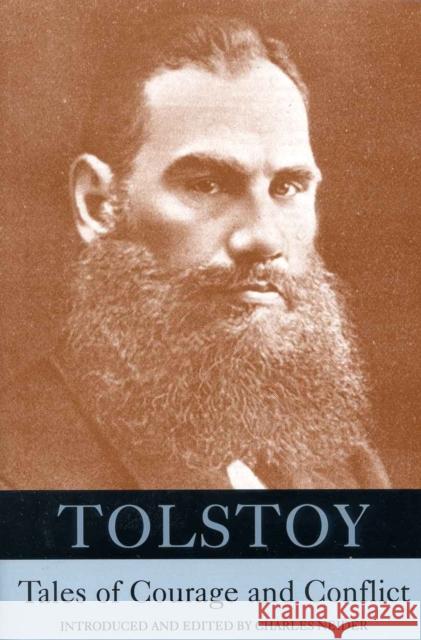
Russian novelist and philospher Leo Tolstoy (1828-1910) is best known for his monumental novels War and Peace and Anna Karenina, but his reputation as a master of short fiction is richly evident in this unparalleled anthology. Here, in the largest one-volume collection available, are 36 stories of war, intrigue, treachery, murder, moral turmoil, spiritual anguish, and occasional redemption. They include early stories like the famed "Sevastopol" tales of warfare and "Lost on the Steppe;" the tour de force novellas "The Death of Ivan Ilyitch" and "The Kreutzer Sonata;" as well as folk tales,...
Russian novelist and philospher Leo Tolstoy (1828-1910) is best known for his monumental novels War and Peace and Anna Karenina, but his reputation as...
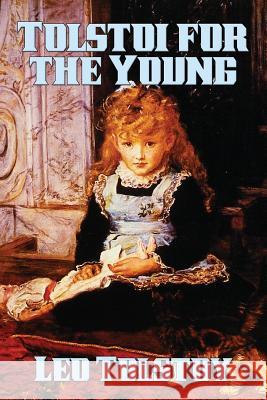
Leo Tolstoy, was a Russian writer who is generally regarded as one of the greatest authors of all time. The stories in this book have been adapted for children making them the perfect introduction to Tolstoy for young readers.
Leo Tolstoy, was a Russian writer who is generally regarded as one of the greatest authors of all time. The stories in this book have been adapted for...
This morning I underwent a medical examination in the government council room. The opinions of the doctors were divided. They argued among themselves and came at last to the conclusion that I was not mad. But this was due to the fact that I tried hard during the examination not to give myself away. I was afraid of being sent to the lunatic asylum, where I would not be able to go on with the mad undertaking I have on my hands. They pronounced me subject to fits of excitement, and something else, too, but nevertheless of sound mind. The doctor prescribed a certain treatment, and assured me that...
This morning I underwent a medical examination in the government council room. The opinions of the doctors were divided. They argued among themselves ...
In an age of materialism like our own the phenomenon of spiritual power is as significant and inspiring as it is rare. No longer associated with the "divine right" of kings, it has survived the downfall of feudal and theocratic systems as a mystic personal emanation in place of a coercive weapon of statecraft. Tolstoy's stories embody this principle.
In an age of materialism like our own the phenomenon of spiritual power is as significant and inspiring as it is rare. No longer associated with the "...
" La fin du siecle, dans le langage evangelique, cela ne signifie point la fin d'une periode de cent ans et le commencement d'une autre, mais la fin d'une certaine conception du monde, la fin d'une religion, d'un moyen de communion des hommes et le commencement d'une nouvelle conception du monde, d'une autre religion, d'un autre moyen de communion. Il est dit dans l'Evangile qu'a tel passage d'un siecle a l'autre des maux de toutes sortes se produiront: trahisons, tromperies, cruautes, guerres, et qu'a cause des crimes l'amour se refroidira. Pour moi ces paroles ne sont point une prophetie...
" La fin du siecle, dans le langage evangelique, cela ne signifie point la fin d'une periode de cent ans et le commencement d'une autre, mais la fin d...
" Le titre de ce volume: Plaisirs vicieux, se rapporte plus particulierement aux etudes sur l'alcool, le tabac et les narcotiques en general, et aux articles: l'Ivresse dans les classes dirigeantes et Des relations entre les sexes. En effet, dans ces ecrits Tolstoi passe en revue plusieurs des habitudes de l'homme moderne et que l'ecrivain russe taxe de pernicieuses ou vicieuses aussi bien au point de vue moral que physique. Mais le comte Tolstoi ne s'est pas borne a critiquer et a condamner les seuls plaisirs vicieux . Allant plus au fond des choses, il a reconnu les imperfections de toute...
" Le titre de ce volume: Plaisirs vicieux, se rapporte plus particulierement aux etudes sur l'alcool, le tabac et les narcotiques en general, et aux a...
Leo Nikolayevich Tolstoy Constantine Popoff Sergiy Novikov
-What I Believe- (Russian: V chem moia viera?) is a work by Leo Tolstoy in which he expounds his general views on life. This edition of the book was banned following its publication in Russia. In February 1901, the Russian Orthodox Church excommunicated Leo Tolstoy. The author describes the changes which happened to his mind. He also tells about the long way he had covered before coming to his ideas. The basis for the latter is also described in this book, proving them to be well-grounded and thought-out. Deputy of the First State Duma Victor Obninsky wrote the following in the...
-What I Believe- (Russian: V chem moia viera?) is a work by Leo Tolstoy in which he expounds his general views on life. This edition of the book ...