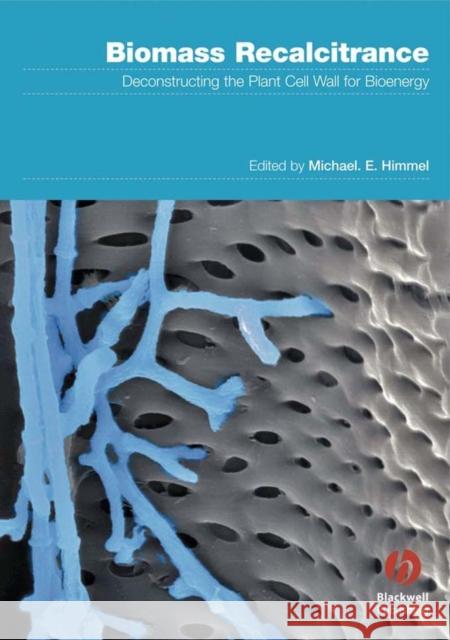
Alternative and renewable fuels derived from lignocellulosic biomass offer a promising alternative to conventional energy sources, and provide energy security, economic growth, and environmental benefits. However, plant cell walls naturally resist decomposition from microbes and enzymes - this collective resistance is known as -biomass recalcitrance-. Breakthrough technologies are needed to overcome barriers to developing cost-effective processes for converting biomass to fuels and chemicals.
This book examines the connection between biomass structure, ultrastructure, and...
Alternative and renewable fuels derived from lignocellulosic biomass offer a promising alternative to conventional energy sources, and provide energy ...
Biomass conversion research is a combination of basic science, applied science, and engineering testing and analysis. Conversion science includes the initial treatment (called pre-treatment) of the feedstock to render it more amenable to enzyme action, enzymatic saccharification, and finally product formation by microbiological or chemical processes. In Biomass Conversion: Methods and Protocols, expert researchers in the field detail methods which are now commonly used to study biomass conversion. These methods include Biomass Feedstocks and Cellulose, Plant Cell Wall Degrading...
Biomass conversion research is a combination of basic science, applied science, and engineering testing and analysis. Conversion science includes t...
With step-by-step guidance on studying the processes of biomass conversion, a field combining basic and applied science with engineering analysis, the detail included here ensures reproducible results. So too does the astute advice from leading researchers.
With step-by-step guidance on studying the processes of biomass conversion, a field combining basic and applied science with engineering analysis, the...