Eight prominent historians and social scientists give their perspectives on the fate of Marxist approaches to history and the direction of the discipline in coming decades. The volume offers rigorous and approachable analysis from several political and intellectual positions and will be an important contribution to current historical debates.
Eight prominent historians and social scientists give their perspectives on the fate of Marxist approaches to history and the direction of the discipl...
This book investigates a gap in Italian historiography by examining rural rather than city communes. Wickham's discussion of a group of villages around Lucca is the first detailed study of the origin of organized village communities in Italy to appear in over 70 years. It shows how the 12th-century social and political structures of the countryside ran alongside those of the city.
This book investigates a gap in Italian historiography by examining rural rather than city communes. Wickham's discussion of a group of villages aroun...
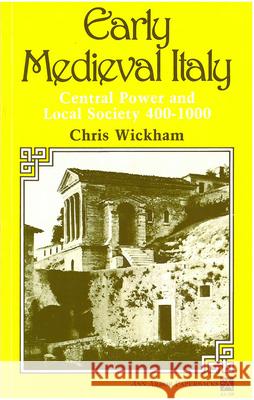
One of the few anthropological studies of medieval history ever to be written, this book charts the internal social and economic development of two mountain valley societies in Tuscany from the 8th to the 12th century. Linking Garfagnana and Casentino with the emerging world of Italian city states, the author explores society from below, through the activities of the local people, rather than through the interests of their masters.
One of the few anthropological studies of medieval history ever to be written, this book charts the internal social and economic development of two mo...
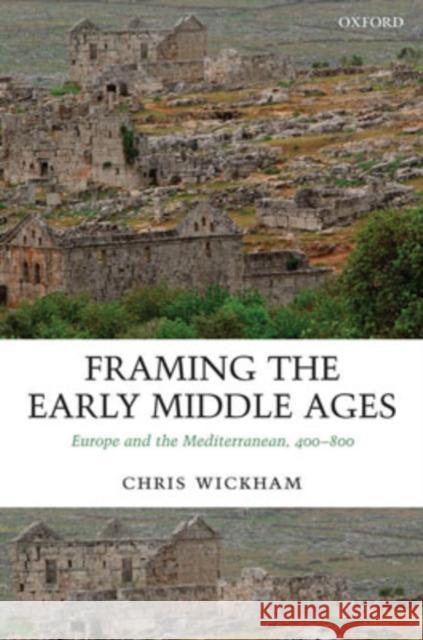
The Roman empire tends to be seen as a whole whereas the early middle ages tends to be seen as a collection of regional histories, roughly corresponding to the land-areas of modern nation states. As a result, early medieval history is much more fragmented, and there have been few convincing syntheses of socio-economic change in the post-Roman world since the 1930s. In recent decades, the rise of early medieval archaeology has also transformed our source-base, but this has not been adequately integrated into analyses of documentary history in almost any country. In Framing the Early...
The Roman empire tends to be seen as a whole whereas the early middle ages tends to be seen as a collection of regional histories, roughly correspondi...
The Roman empire tends to be seen as a whole whereas the early middle ages tends to be seen as a collection of regional histories, roughly corresponding to the land-areas of modern nation states. As a result, early medieval history is much more fragmented, and there have been few convincing syntheses of socio-economic change in the post-Roman world since the 1930s. In recent decades, the rise of early medieval archaeology has also transformed our source-base, but this has not been adequately integrated into analyses of documentary history in almost any country. In Framing the Early...
The Roman empire tends to be seen as a whole whereas the early middle ages tends to be seen as a collection of regional histories, roughly correspondi...
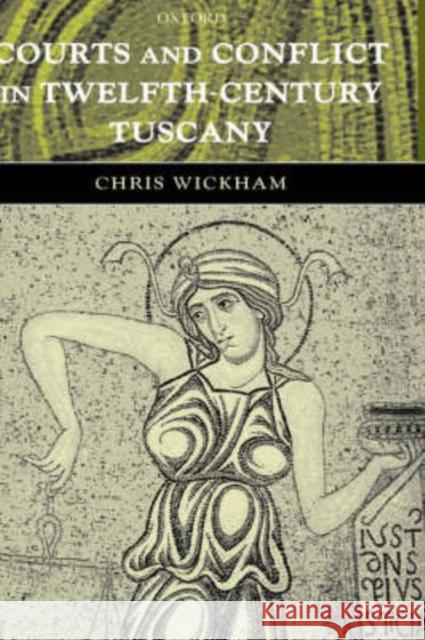
This study of disputes and their settlement in twelfth- century Tuscany is more than just legal history. Studded with colorful contemporary narratives, the book explores the mindsets of medieval Italians, and examines the legal framework which structured their society. Chris Wickham uncovers the interrelationships and collisions between different legal systems, and in doing so provides a new understanding of mentalities and power in the Italian city-state.
This study of disputes and their settlement in twelfth- century Tuscany is more than just legal history. Studded with colorful contemporary narratives...
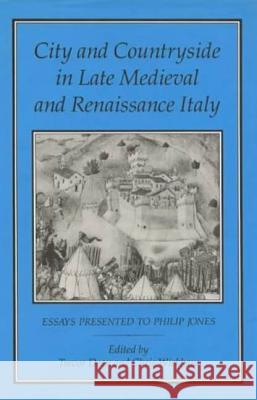
This book brings together challenging new essays from some of the leaders in Italian scholarship in three countries, to show the range of work that is currently being done not only on Florence but also on Naples, Ferrara and Lucca and on the relationship between cities and countryside.
This book brings together challenging new essays from some of the leaders in Italian scholarship in three countries, to show the range of work that...
The eighth century has not been analysed as a period of economic history since the 1930s, and is ripe for a comprehensive reassessment. The twelve papers in this book range over the whole of Europe and the Mediterranean from Denmark to Palestine, covering Francia, Italy and Byzantium on the way. They examine regional economies and associated political structures, that is to say the whole network of production, exchange, and social relations in each area. They offer both authoritative overviews of current work and new and original work. As a whole, they show how the eighth century was the...
The eighth century has not been analysed as a period of economic history since the 1930s, and is ripe for a comprehensive reassessment. The twelve pap...
The Langobards or Lombards were the last Germanic group to invade the Roman Mediterranean, crossing the Alps into Italy in 568-9. They were nonetheless one of the longest-lasting, for their state survived Charlemagne's conquest in 774, and was the core of the medieval kingdom of Italy. The incompleteness of their conquest of Italy was also one of the root causes of Italian division for over 1300 years after their arrival. But they present a challenge to the historian, for most of the evidence for them dates to the last half-century of their independence, up to 774, a period in which Langobard...
The Langobards or Lombards were the last Germanic group to invade the Roman Mediterranean, crossing the Alps into Italy in 568-9. They were nonetheles...