Catriona MacLeod Veronique Plesch Charlotte Schoell-Glass
This volume presents the impressive range of scholarly affinities, approaches, and subjects that characterize today's word and image studies. The essays were first presented in 2005 at an international conference.
This volume presents the impressive range of scholarly affinities, approaches, and subjects that characterize today's word and image studies. The essa...
This book aims at offering a broad survey of the encounter between word and image studies and anthropology and to demonstrate the mutual benefits of this dialogue for both disciplines in the three fields of the image (Marin), the social history of writing (Petrucci), and memory (Yates). The themes discussed by the contributors to this volume, all specialists in their field, highlight each in their specific field one or more aspects of the agency of both text and image. Bridging the gap between the Anglo-Saxon and the Latin research traditions, this bilingual volume focuses on three major...
This book aims at offering a broad survey of the encounter between word and image studies and anthropology and to demonstrate the mutual benefits of t...
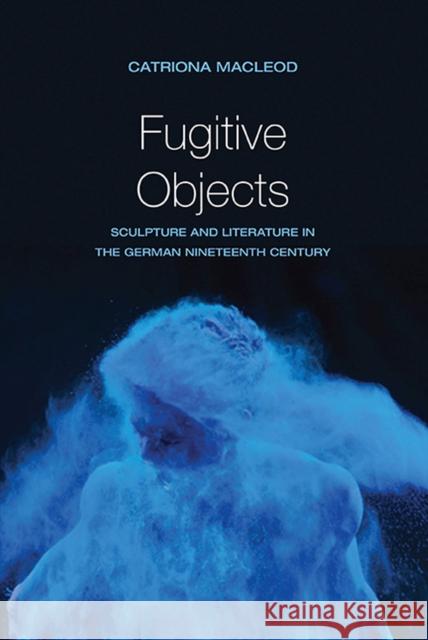
Winner of the 2014 Jean-Pierre Barricelli Prize for Best Book on Romanticism In Fugitive Objects, Catriona MacLeod examines the question of why sculpture is both intensively discussed and yet rendered immaterial in German literature. She focuses on three forms of disappearance: sculpture s vanishing as a legitimate art form at the beginning of the nineteenth century in German aesthetics, statues migration from the domain of high art into mass reproduction and popular culture, and sculpture s dislodging and relocation into literary discourse. Through original readings of...
Winner of the 2014 Jean-Pierre Barricelli Prize for Best Book on Romanticism In Fugitive Objects, Catriona MacLeod examines the questi...
Winner of the 2014 Jean-Pierre Barricelli Prize for Best Book on Romanticism In "Fugitive Objects, " Catriona MacLeod examines the question of why sculpture is both intensively discussed and yet rendered immaterial in German literature. She focuses on three forms of disappearance: sculpture s vanishing as a legitimate art form at the beginning of the nineteenth century in German aesthetics, statues migration from the domain of high art into mass reproduction and popular culture, and sculpture s dislodging and relocation into literary discourse. Through original readings of Clemens...
Winner of the 2014 Jean-Pierre Barricelli Prize for Best Book on Romanticism In "Fugitive Objects, " Catriona MacLeod examines the question of...
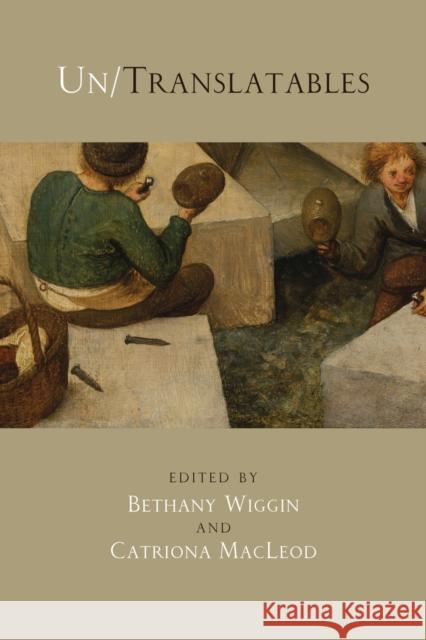
The term "Untranslatables" is rooted in two explorations of translation written originally in German: Walter Benjamin's now ubiquitous "The Task of the Translator" and Goethe's extensive notes to his "tradaptation" of mystical Persian poetry. The essays collected in Un/Translatables unite two inescapable interventions in contemporary translation discourses: the concept of "Untranslatables" as points of productive resistance, and the Germanic tradition as the primary dialogue partner for translation studies. The essays collected in the volume pursue the critical itineraries that would...
The term "Untranslatables" is rooted in two explorations of translation written originally in German: Walter Benjamin's now ubiquitous "The Task of th...
The term "Untranslatables" is rooted in two explorations of translation written originally in German: Walter Benjamin's now ubiquitous "The Task of the Translator" and Goethe's extensive notes to his "tradaptation" of mystical Persian poetry. The essays collected in Un/Translatables unite two inescapable interventions in contemporary translation discourses: the concept of "Untranslatables" as points of productive resistance, and the Germanic tradition as the primary dialogue partner for translation studies. The essays collected in the volume pursue the critical itineraries that would...
The term "Untranslatables" is rooted in two explorations of translation written originally in German: Walter Benjamin's now ubiquitous "The Task of th...