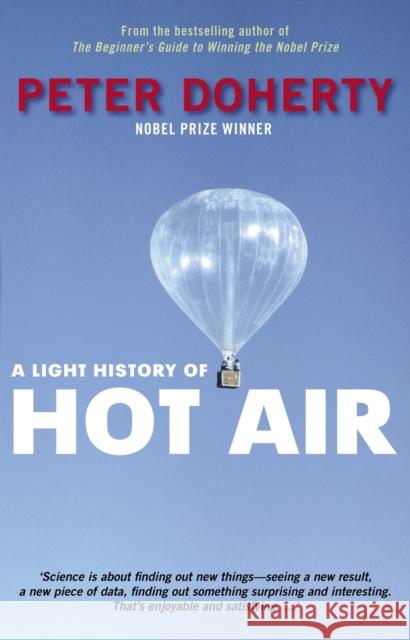
In The Beginner's Guide to Winning the Nobel Prize, Doherty recounts his unlikely path to becoming a Nobel Laureate. Beginning with his humble origins in Australia, he tells how he developed an interest in immunology and describes his award-winning, influential work with Rolf Zinkernagel on T-cells and the nature of immune defense. In prose that is at turns amusing and astute, Doherty reveals how his nonconformist upbringing, sense of being an outsider, and search for different perspectives have shaped his life and work. Doherty offers a rare, insider's look at the realities of...
In The Beginner's Guide to Winning the Nobel Prize, Doherty recounts his unlikely path to becoming a Nobel Laureate. Beginning with his humble ...
We've lit big fires and gentle flames over the ages to open our minds, to warn of danger, to brighten our way through the darkness and to allow us to read at night. This work is concerned with the world and the simple beauty of science. It also features cameos from Albert Einstein, Samuel Pepys, Charles Dickens, and Thomas the Tank Engine.
We've lit big fires and gentle flames over the ages to open our minds, to warn of danger, to brighten our way through the darkness and to allow us to ...
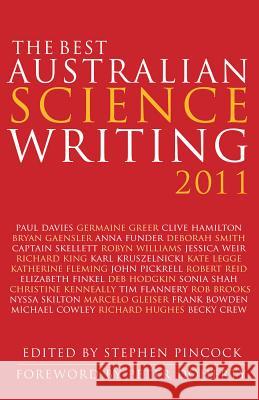
From the elemental forces that drive our expanding universe to the delicate hairs on the back of your neck, science offers talented writers the kind of scope that other subjects simply can't match. This dynamic genre of Australian writing has never, until now, been showcased in an anthology. With a foreword by Nobel Prize winner Peter Doherty, The Best Australian Science Writing 2011 is a landmark book. Showcasing selections from the work of renowned communicators such as Tim Flannery, Germaine Greer, Anna Funder and Paul Davies, this book is an inspiring exploration of the most exciting,...
From the elemental forces that drive our expanding universe to the delicate hairs on the back of your neck, science offers talented writers the kind o...