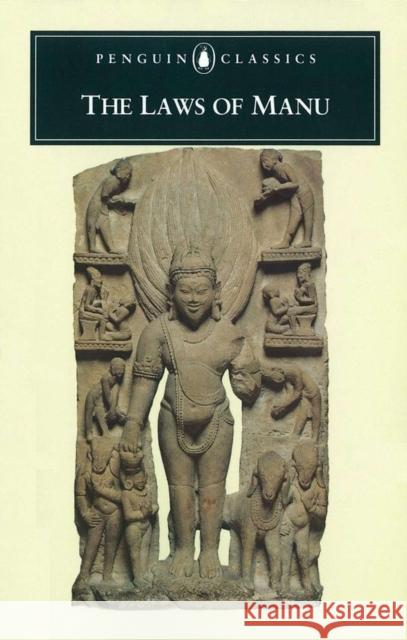
The Laws of Manu form a towering work of Hindu philosophy. Composed by many Brahmin priests, this is an extraordinary, encyclopaedic representation of human life in the world, and how it should be lived. Manu encompasses topics as wide-ranging as the social obligations and duties of the various castes, the proper way for a righteous king to rule and to punish transgressors, relations between men and women, birth, death, taxes, karma, rebirth and ritual practices. First translated into English in 1794, its influence spread from Nietzsche to the British Raj, and although often...
The Laws of Manu form a towering work of Hindu philosophy. Composed by many Brahmin priests, this is an extraordinary, encyclopaedic representa...
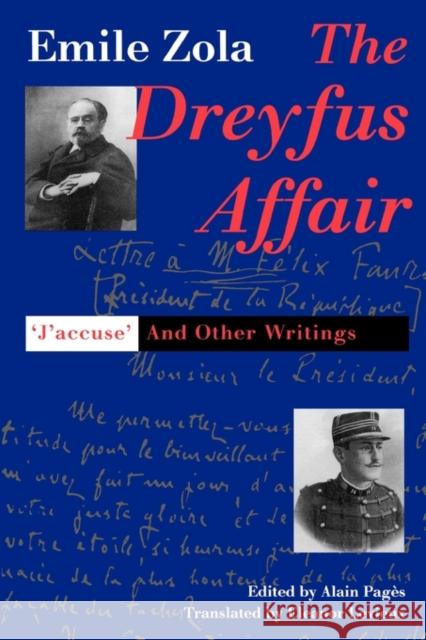
In September 1894 the French authorities intercepted a letter which they claimed emanated from a Jewish army captain, Alfred Dreyfus, which they claimed to be proof of espionage on behalf of Germany. Dreyfus was subsequently court-martialed and imprisoned on Devil's Island, and the efforts of his family to have him released provoked an anti-Semitic controversy that split the French intellectual world down the center. Most famous among the participants was France's greatest living novelist, Emile Zola. This book is the first to provide, in English translation, the full extent of Zola's...
In September 1894 the French authorities intercepted a letter which they claimed emanated from a Jewish army captain, Alfred Dreyfus, which they claim...
Zola's prophetic celebration of unbridled commerce and consumerism, The Ladies' Paradise (Au bonheur des dames, 1883) recounts the frenzied transformations that made late nineteenth-century Paris the fashion capital of the world. The novel's capitalist hero, Octave Mouret, creates a giant department store that devours the dusty, outmoded boutiques surrounding it. Paralleling the story of commercial triumph is the love story between Mouret and the innocent Denise Baudu, who comes to work in The Ladies' Paradise. She provides the crucial link between Mouret and the three...
Zola's prophetic celebration of unbridled commerce and consumerism, The Ladies' Paradise (Au bonheur des dames, 1883) recounts the fren...
Here is a true publishing event-the first modern translation of a lost masterpiece by one of fiction's giants. Censored upon publication in 1871, out of print since the 1950s, and untranslated for a century, Zola's The Kill (La Curee) emerges as an unheralded classic of naturalism. Second in the author's twenty-volume Rougon-Macquart saga, it is a riveting story of family transgression, heedless desire, and societal greed. The incestuous affair of Renee Saccard and her stepson, Maxime, is set against the frenzied speculation of Renee's financier husband, Aristide, in a Paris...
Here is a true publishing event-the first modern translation of a lost masterpiece by one of fiction's giants. Censored upon publication in 1871, out ...
Many of the earliest books, particularly those dating back to the 1900s and before, are now extremely scarce and increasingly expensive. Pomona Press are republishing these classic works in affordable, high quality, modern editions, using the original text and artwork.
Many of the earliest books, particularly those dating back to the 1900s and before, are now extremely scarce and increasingly expensive. Pomona Press ...
In a quiet rural village in late 19th-century France, an eleven-year-old boy is found dead in his room, sexually molested and strangled by an unknown assailant. The shocked townsfolk erupt in outrage: Who could have committed this horrible crime? Rumors immediately begin to fly and suspicions shift from one person to another as ignorant conjecture begins to feed on itself. At first a vagrant is suspected; he could have come in through the open window while passing through the town at night. But in a matter of days another story begins to circulate: the culprit must be Simon, the Jewish...
In a quiet rural village in late 19th-century France, an eleven-year-old boy is found dead in his room, sexually molested and strangled by an unknown ...
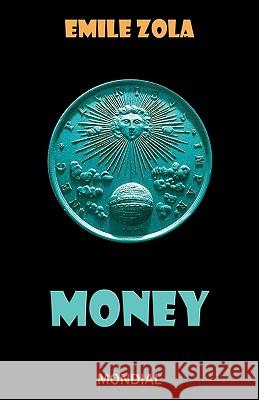
"Judged by the standard of popularity, "Money" may be said to rank among M. Zolas notable achievements . . . This is not surprising, as the book deals with a subject of great interest to every civilized community."--Ernest Alfred Vizetelly.
"Judged by the standard of popularity, "Money" may be said to rank among M. Zolas notable achievements . . . This is not surprising, as the book deals...
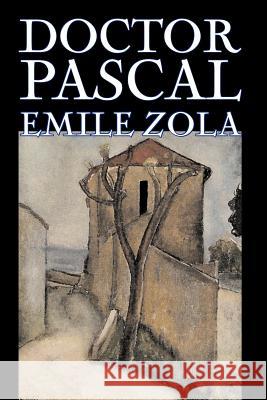
Doctor Pascal is the twentieth and final novel of the Rougon-Macquart series by Emile Zola. This volume serves in many respects as an epilogue to the series -- but it's also a fine tale in its own right. Doctor Pascal, approaching old age, looks back on his life and finds himself asking whether he has made the right choices . . . and the answers he finds aren't always what you'd expect. Those who enjoy Zola's better-known novels will find much to appreciate here as well.
Doctor Pascal is the twentieth and final novel of the Rougon-Macquart series by Emile Zola. This volume serves in many respects as an epilogue to t...
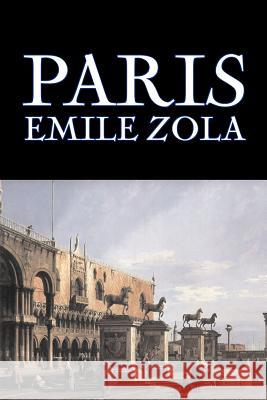
In Zola's 1873 tale, a prisoner who's escaped and taken refuge in Paris gets caught up in a Socialist cell -- and sees a Paris not to be found elsewhere. One of Zola's own favorites, "Paris" is a truly brilliant tale -- it shows us the city's underbelly, both figuratively and literally, for we see the enormous market (built in the 1850s) into which flowed great rivers of of food -- and from which flowed sewers of blood and putrefaction. This is a brilliant tale, and one as alive and memorable today as it was when Zola wrote it.
In Zola's 1873 tale, a prisoner who's escaped and taken refuge in Paris gets caught up in a Socialist cell -- and sees a Paris not to be found elsewhe...
Emile Zola Ernest Alfred Vizetelly Ernest Alfred Vizetelly
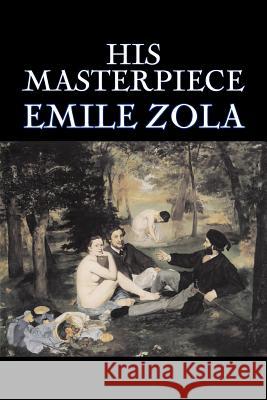
Emile Zola's "His Masterpiece" is the author's most autobiographical novel, based in part on his boyhood friendship with the painter Paul Cezanne. The painter of "His Masterpiece, " Claude Lantier, has much in common with Cezanne, as well as Manet -- the controversial painter of this period whose "realistic" work in some ways mirrors Zola's writing. Claude's friend Pierre Sandoz, the clerk and writer of the novel, is based closely on Zola himself. Not as fortunate in life as was Manet, Claude Lantier's art is misunderstood, and he struggles emotionally and financially. From his ill-fated...
Emile Zola's "His Masterpiece" is the author's most autobiographical novel, based in part on his boyhood friendship with the painter Paul Cezanne. The...