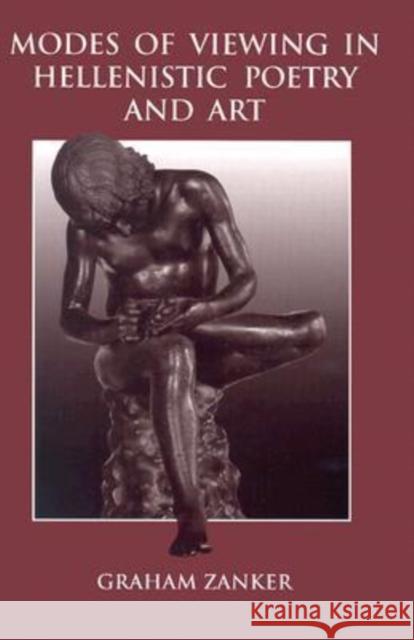
Taking a fresh look at the poetry and visual art of the Hellenistic age, from the death of Alexander the Great in 323 BC to 20 BC, Graham Zanker makes enlightening discoveries about the assumptions and conventions of Hellenistic poets and artists and their audiences. Zanker offers exciting new interpretations by closely comparing poetry and art for the light each sheds on the other.
Taking a fresh look at the poetry and visual art of the Hellenistic age, from the death of Alexander the Great in 323 BC to 20 BC, Graham Zanker makes...
In The Heart of Achilles, Graham Zanker addresses the task of reconstructing the ethical thought-world in which the characters of the Iliad live and move. It is only against this background, Zanker argues, that we can convincingly place the ethical status of the heroes and their actions. This in turn helps us to form a comprehensive view of the Iliad'scharacterization of its people, especially that of Achilles, by examining all his responses to the question of allegiance, the value of heroic prowess, and of life itself. " Zanker] investigates altruistic...
In The Heart of Achilles, Graham Zanker addresses the task of reconstructing the ethical thought-world in which the characters of the Iliad ...
Taking a fresh look at the poetry and visual art of the Hellenistic age, from the death of Alexander the Great in 323 B.C. to the Romans' defeat of Cleopatra in 30 B.C., Graham Zanker makes enlightening discoveries about the assumptions and conventions of Hellenistic poets and artists and their audiences. Zanker's exciting new interpretations closely compare poetry and art for the light each sheds on the other. He finds, for example, an exuberant expansion of subject matter in the Hellenistic periods in both literature and art, as styles and iconographic traditions reserved for grander...
Taking a fresh look at the poetry and visual art of the Hellenistic age, from the death of Alexander the Great in 323 B.C. to the Romans' defeat of...
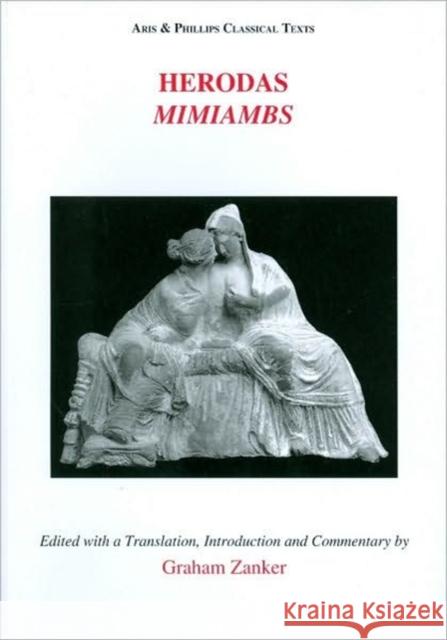
Before the publication of the second-century AD papyrus containing eight and a fragmentary ninth of the Mimiambs of Herodas in 1891, Herodas was known only through approximately twenty lines which had survived in quotations found principally in Athenaios and Stobaios.
Before the publication of the second-century AD papyrus containing eight and a fragmentary ninth of the Mimiambs of Herodas in 1891, Herodas was known...