Yeats is a poet as much of fact as of feeling. Every work of his has a source whether from folklore, legend, mythology, the occult, or history: each a source that for him had a definite objective reality. The demands of this world and of that other world of Yeatsian spiritual reality often conflict. His verse play The Only Jealousy of Emer, particularly in its early drafts, offers a vivid portrayal of such a struggle. Premiering in 1922 in Amsterdam and first staged in Ireland at the Abbey Theatre in 1926, it marked one of the turning points of Yeats's career, because in its final...
Yeats is a poet as much of fact as of feeling. Every work of his has a source whether from folklore, legend, mythology, the occult, or history: eac...
George Moore involved W. B. Yeats personally in the revision of a novel of Moore's that contained a character based on Yeats; this involvement led to the pair's collaboration in writing a play based on Diarmuid and Grania, one of the best-known tragic tales of Celtic mythology. At the late stages of composition, the authors decided to add songs, and Edward Elgar provided the music. The play opened at the Gaiety Theatre in Dublin on October 21, 1901.
Although the collaboration had been difficult Yeats and Moore disagreed frequently, mainly about style the production was well received....
George Moore involved W. B. Yeats personally in the revision of a novel of Moore's that contained a character based on Yeats; this involvement led ...
"It takes years to get my plays right." So Yeats informed Margot Ruddock on October 11, 1934, from Rome, where he had begun to redraft The King of the Great Clock Tower to give her a role to act. In June of that year Yeats had begun to rewrite his first prose version of the play before it had even been staged (it was performed most successfully at the Abbey Theatre from July 30 that summer). Two versions of The King of the Great Clock Tower (one in prose and one in verse) and a new play, A Full Moon in March, derived from the first, were to emerge from a period...
"It takes years to get my plays right." So Yeats informed Margot Ruddock on October 11, 1934, from Rome, where he had begun to redraft The King...
Gathered by the renowned Irish poet, playwright, and essayist William Butler Yeats, the sixty-five tales and poems in this delightful collection uniquely capture the rich heritage of the Celtic imagination. Filled with legends of village ghosts, fairies, demons, witches, priests, and saints, these stories evoke both tender pathos and lighthearted mirth and embody what Yeats describes as "the very voice of the people, the very pulse of life." "The impact of these tales doesn't stop with Yeats, or Joyce, or Oscar Wilde," writes Paul Muldoon in his Foreword, "for generations of readers in...
Gathered by the renowned Irish poet, playwright, and essayist William Butler Yeats, the sixty-five tales and poems in this delightful collection uniqu...
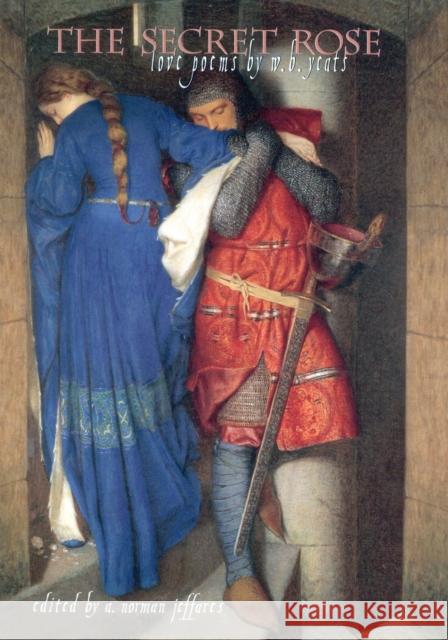
Arranged in chronological sequence, The Secret Rose offers a glimpse of all Yeats' styles-beginning with his youthful romantic idealism and ending with his more outspoken, sardonic treatment of sexuality.
Arranged in chronological sequence, The Secret Rose offers a glimpse of all Yeats' styles-beginning with his youthful romantic idealism and ending wit...
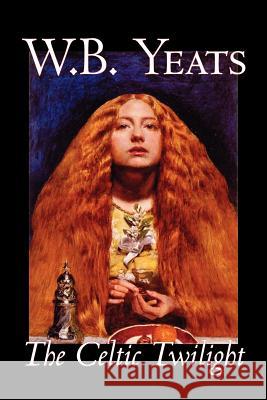
Ireland is home to some of the world's most enchanting myths and tales. But many of these stories would have been lost if they hadn't been recorded and written down. Poet and Nobel laureate William Butler Yeats was one of these fortunate witnesses. In "The Celtic Twilight," originally published in 1893, he collected some of the most delightful myths and folktales of his native land.
Ireland is home to some of the world's most enchanting myths and tales. But many of these stories would have been lost if they hadn't been recorded an...
"The things a man has heard and seen are threads of life, and if he pull them carefully from the confused distaff of memory, any who will can weave them into whatever garments of belief please them best. I too have woven my garment like another, but I shall try to keep warm in it, and shall be well content if it do not unbecome me. . . . " -- W.B. Yeats
"The things a man has heard and seen are threads of life, and if he pull them carefully from the confused distaff of memory, any who will can weave...
If you are a stranger, you will not readily get ghost and fairy legends, even in a western village. You must go adroitly to work, and make friends with the children, and the old men, with those who have not felt the pressure of mere daylight existence, and those with whom it is growing less, and will have altogether taken itself off one of these days. The old women are most learned, but will not so readily be got to talk, for the fairies are very secretive, and much resent being talked of; and are there not many stories of old women who were nearly pinched into their graves or numbed with...
If you are a stranger, you will not readily get ghost and fairy legends, even in a western village. You must go adroitly to work, and make friends ...
J. M. Synge William Butler Yeats William Butler Yeats
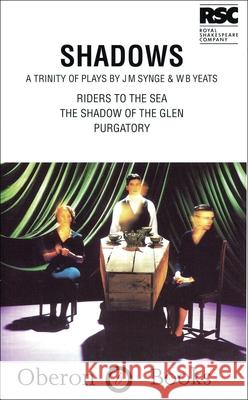
Three compelling short plays that reveal our fascination with death. Includes: Riders to the Sea and The Shadow of the Glen by J. M. Synge and Purgatory by W. B. Yeats.
Three compelling short plays that reveal our fascination with death. Includes: Riders to the Sea and The Shadow of the Glen by J. M. Synge and Purgato...