An engaging series of reflections on the literary landscape of our time--from the writings of Roland Barthes to those of Stephen King--Wood explores such issues as the shift of interest from novel to story, the blurring of the line between fiction and criticism, the persistence of the notion of paradise, the lure of horror, and the tendency of fiction both to reflect and to resist contemporary history. Wood casts his net wide: a brilliant dissection of Beckett's prose comedy is followed by an absorbing sequence of essays on Kundera, Calvino and Garcia Marquez. Chapters on Toni Morrison and on...
An engaging series of reflections on the literary landscape of our time--from the writings of Roland Barthes to those of Stephen King--Wood explores s...
'America in the Movies is a brilliant romp through the fertile field of Hollywood's vision of America in the 1940s and 50s. With geniality and insight, Michael Wood exposes the tangle of fantasy and reality in the waning days of the studio system.' -- Leo Braudy, University of Southern California
'America in the Movies is a brilliant romp through the fertile field of Hollywood's vision of America in the 1940s and 50s. With geniality and insight...
As a child in Russia, Vladimir Nabokov enjoyed conjuring: "I loved doing simple tricks--turning water into wine, that kind of thing." In this engrossing book Michael Wood explores the blend of arrogance and mischief that makes Nabokov such a fascinating and elusive master of fiction. Wood argues that Nabokov is neither the aesthete he liked to pretend to be nor the heavy-handed moralist recent critics make him. Major works like Pnin, Lolita, Pale Fire and Ada appear in a new light, but there are also chapters on earlier works, like the Real Life of Sebastian Knight; on...
As a child in Russia, Vladimir Nabokov enjoyed conjuring: "I loved doing simple tricks--turning water into wine, that kind of thing." In this engro...
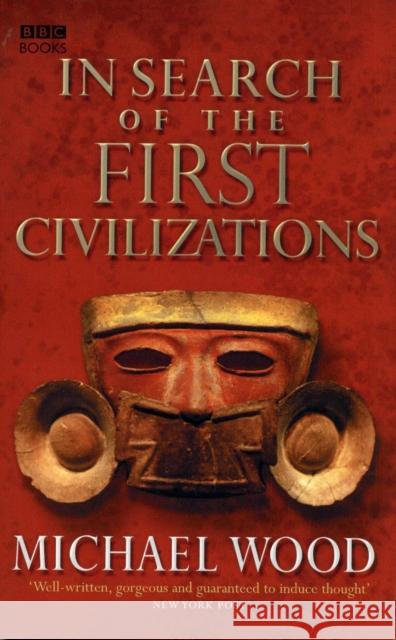
Asks questions such as: what is civilization? Did it mean the same to the Chinese, the Indians and the Greeks? What can the values of the ancient cultures teach us today? And, do the ideals of the West - a latecomer to civilization - really have universal
Asks questions such as: what is civilization? Did it mean the same to the Chinese, the Indians and the Greeks? What can the values of the ancient cult...
Making Sense of Statistics provides a thorough, but accessible, introduction to statistics and probability, without the distractions of mathematics. The book does not require you to use any algebraic formulae or equations, but it does explain how and why methods work, and exactly what answers mean. Guidance is provided on how to design investigations, analyze data and interpret results. There are exercises and case studies from a variety of areas of application, and an accompanying website from which interactive spreadsheet models and data files can be downloaded.
Making Sense of Statistics provides a thorough, but accessible, introduction to statistics and probability, without the distractions of mathe...
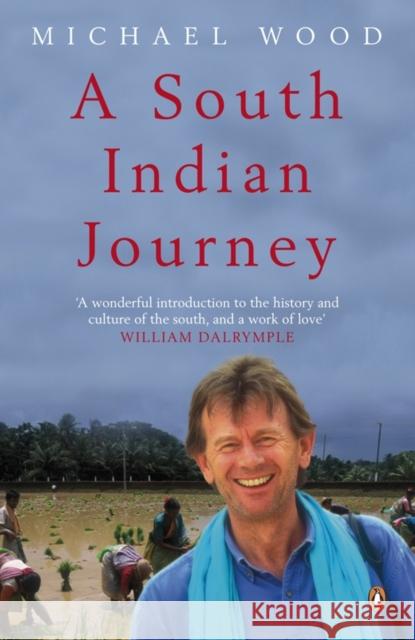
Features Michael Wood's magical journey through south-east India, which was inspired by a temple astrologer (who had accurately predicted his marriage and the birth of his two daughters).
Features Michael Wood's magical journey through south-east India, which was inspired by a temple astrologer (who had accurately predicted his marriage...
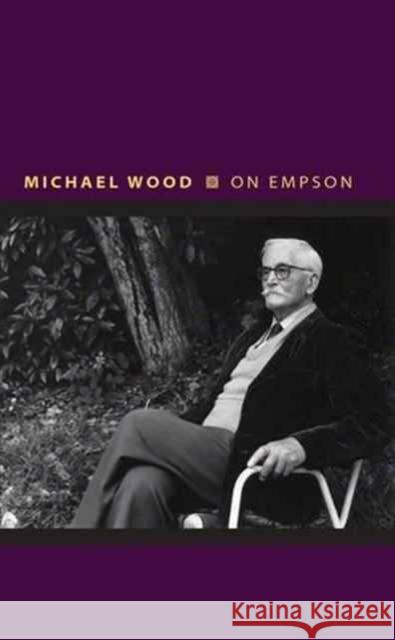
From one of today's most distinguished critics, a beautifully written exploration of one of the twentieth century's most important literary critics
Are literary critics writers? As Michael Wood says, "Not all critics are writers--perhaps most of them are not--and some of them are better when they don't try to be." The British critic and poet William Empson (1906-84), one of the most important and influential critics of the twentieth century, was an exception--a critic who was not only a writer but also a great one. In this brief book, Wood, himself one of the most...
From one of today's most distinguished critics, a beautifully written exploration of one of the twentieth century's most important literary crit...