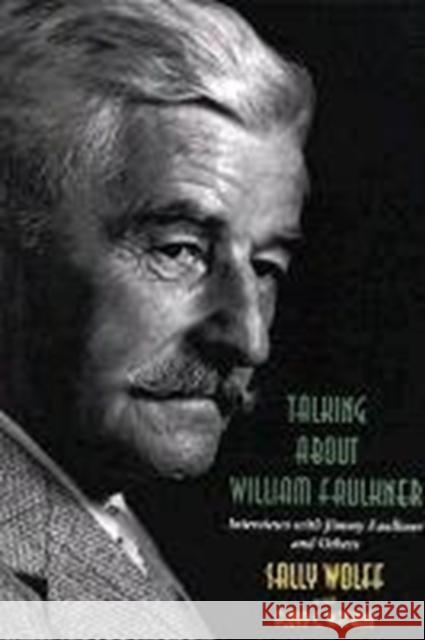
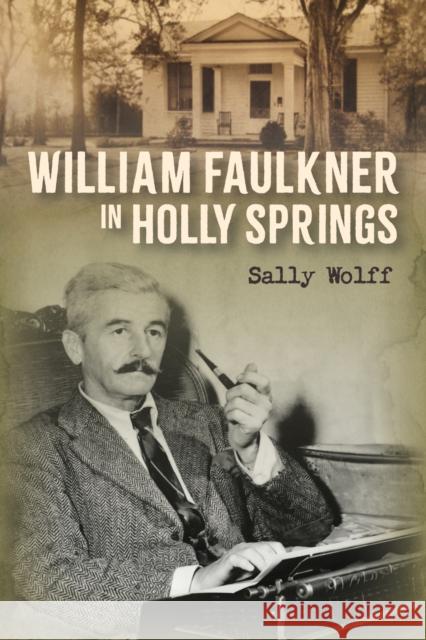
In the 1970s and 1980s, two Emory U. professors took students of southern literature to Lafayette County, Mississippi to explore the region where William Faulkner lived, with William Faulkner's nephew serving as guide and story-teller. This volume recreates the details of Faulkner's life and the era
In the 1970s and 1980s, two Emory U. professors took students of southern literature to Lafayette County, Mississippi to explore the region where Will...
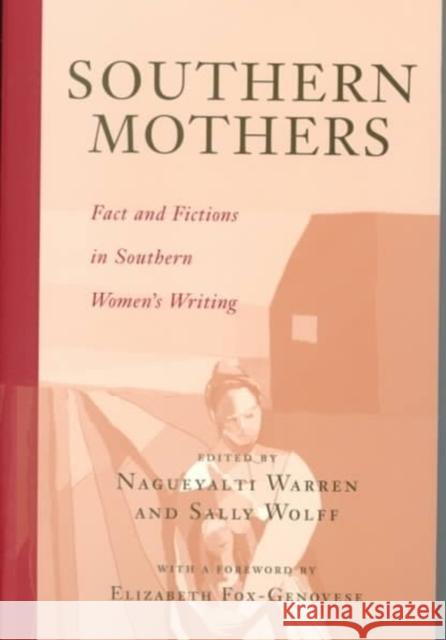
Nagueyalti Warren Sally Wolff Elizabeth Fox-Genovese
Southern Mothers, a collection of critical essays by prominent southern literary scholars, examines the significance of motherhood in southern fiction. The belle, the mammy, religion, and racism are several of the distinctive threads with which southern women writers have woven the fabric of their stories. Bringing southern motherhood into focus -- with all its peculiarities of attitude and tradition -- the essays speak to both the established and the unconventional modes of motherhood that are typical in southern writing and probe the extent to which southern women writers have rejected...
Southern Mothers, a collection of critical essays by prominent southern literary scholars, examines the significance of motherhood in southern fict...
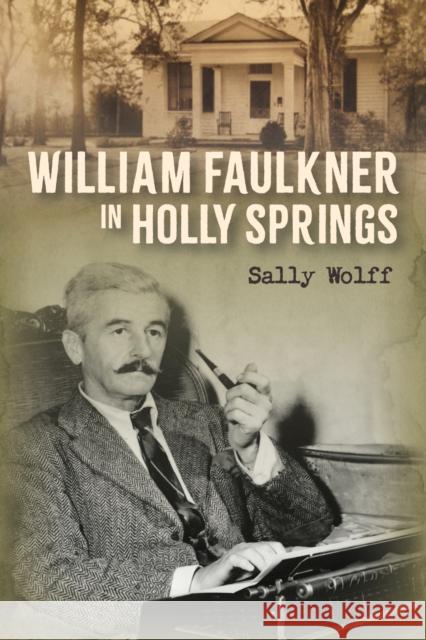
Emory University professor Sally Wolff has carried on a fifty-year tradition of leading students on expeditions to Faulkner country in and around Oxford, Mississippi. Not long ago, she decided to invite alumni on one of these field trips. One response to the invitation surprised her: I can't go on the trip. But I knew William Faulkner. They were the words of Dr. Edgar Wiggin Francisco III, and in talking with Wolff he revealed that as a child in the 1930s and 1940s he did indeed know Faulkner quite well. His father and Faulkner maintained a close friendship for many years, going back to their...
Emory University professor Sally Wolff has carried on a fifty-year tradition of leading students on expeditions to Faulkner country in and around Oxfo...
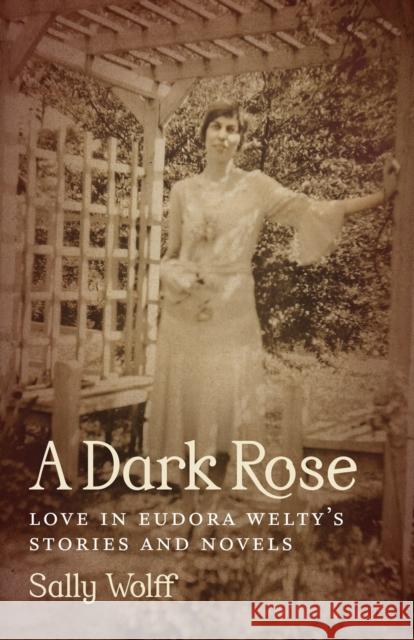
From the heartbroken protagonist she depicted in her first published story, "Death of a Traveling Salesman," to the reflective widow she described in her last novel, The Optimist's Daughter, Eudora Welty wrote realistically about the shadows and radiance of love. In a meticulous exploration of this theme, Sally Wolff combines new readings of Welty's fiction with contextual information and background drawn from a nineteen-year friendship with Welty. A common image in much of Welty's fiction, the rose has traditionally symbolized love in literature. Wolff argues that the dark rose-from the...
From the heartbroken protagonist she depicted in her first published story, "Death of a Traveling Salesman," to the reflective widow she described in ...