As one of our most accomplished biographers and novelists, A. N. Wilson has a keen eye for a good story, and in this spectacular work he singles out those writers, statesmen, scientists, philosophers, and soldiers whose lives illuminate so grand and revolutionary a history: Darwin, Marx, Gladstone, Christina Rossetti, Gordon, Cardinal Newman, George Eliot, Kipling. Wilson's accomplishment in this book is to explain through these signature lives how Victorian England started a revolution that still hasn't ended.
As one of our most accomplished biographers and novelists, A. N. Wilson has a keen eye for a good story, and in this spectacular work he singles out t...
What are the facts about the life of Jesus, as opposed to the myths, or unprovable tenets of faith surrounding the miracles, death, and resurrection? How and when did Christianity become a separate religion from the Judaism into which Jesus was born? To what extent was his power over contemporaries political rather than religious? A. N. Wilson's answers to these questions will fascinate readers of every shade of faith or skepticism.
What are the facts about the life of Jesus, as opposed to the myths, or unprovable tenets of faith surrounding the miracles, death, and resurrection? ...
Edward A. Steiner (1866 1956) was a devotee and student of Leo Tolstoy. As part of a group of young men inspired by the work of Tolstoy, Steiner made the first of several pilgrimages to Tolstoy s home. His last pilgrimage was undertaken in 1903, when Steiner went to Russia shortly before Tolstoy s death with the express purpose of writing this work. Part homage to an ailing mentor, part analytical biography of a legendary literary figure, Tolstoy the Man brings the reader into the inner sanctum of Tolstoy s life and work.As a professor of applied Christianity, Steiner strove to present...
Edward A. Steiner (1866 1956) was a devotee and student of Leo Tolstoy. As part of a group of young men inspired by the work of Tolstoy, Steiner made ...
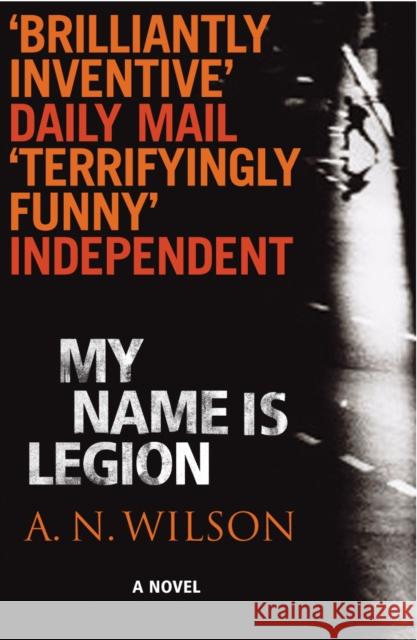
'So it was that within minutes of Father Vivyan's soul leaving his body and soaring God alone knows where... the silence of that religious house was broken... They could hear the coarse accents of Lennox Mark shouting, Don't you realize - you CUNT - don't you realize who I FUCKING am? ' Had Father Vivyan been killed by his own pride and fanaticism; by his belief that he could 'save' a dangerous and mentally unstable boy? Had he been killed by his own fanatical posture, his alliance with those whom the rest of the world saw as terrorists? Or had he been destroyed by the popular Press and in...
'So it was that within minutes of Father Vivyan's soul leaving his body and soaring God alone knows where... the silence of that religious house was b...
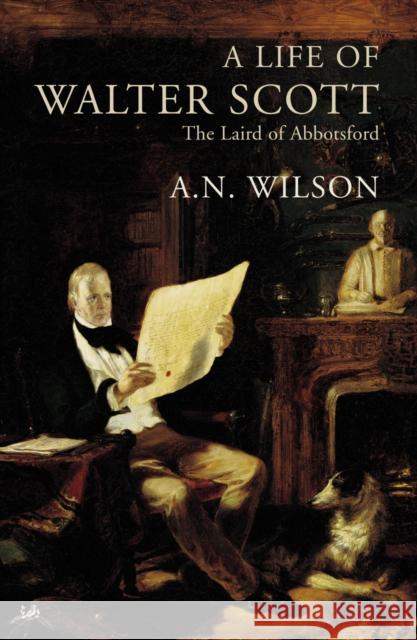
Despite his prolific output as a novelist, poet, biographer, historian and anthologist, Scott only embarked on his literary career in early middle age. In the face of constant ill-health, and financial and domestic troubles, he combined the life of a best-selling and influential author with that of a lawyer, landowner, Border farmer, part-time soldier and paterfamilias.
Despite his prolific output as a novelist, poet, biographer, historian and anthologist, Scott only embarked on his literary career in early middle age...
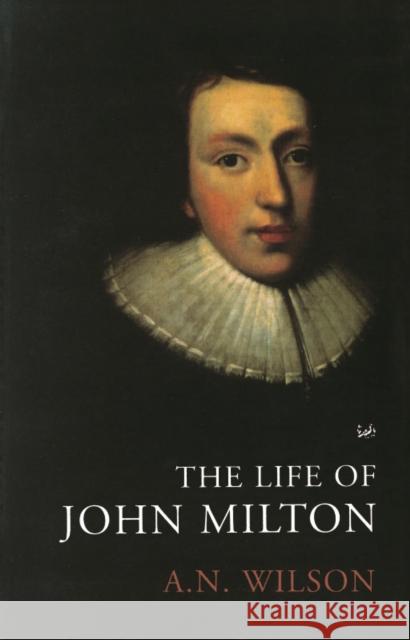
A.N. Wilson's sympathetic, readable and analytical narrative places John Milton, one of the greatest poets of the 17th century, in the context of his political and religious ideas.
A.N. Wilson's sympathetic, readable and analytical narrative places John Milton, one of the greatest poets of the 17th century, in the context of his ...
By the end of the nineteenth century, almost all the great writers, artists, and intellectuals had abandoned Christianity, and many abandoned belief in God altogether. This was partly the result of scientific discovery, particularly the work of Charles Darwin in The Origin of Species. (No reader here will soon forget the venomous Oxford debate between Thomas Huxley, brilliant defender of Darwin, and Bishop Wilberforce in 1860.) But as Wilson demonstrates in such fascinatingly diverse lives as those of Gibbon, Kant, Marx, Carlyle, George Eliot, and Sigmund Freud, the doubt about religion...
By the end of the nineteenth century, almost all the great writers, artists, and intellectuals had abandoned Christianity, and many abandoned belie...
For William Butler Yeats, Dante Alighieri was "the chief imagination of Christendom." For T. S. Eliot, he was of supreme importance, both as poet and philosopher. Coleridge championed his introduction to an English readership. Tennyson based his poem "Ulysses" on lines from the Inferno. Byron chastised an "Ungrateful Florence" for exiling Dante. The DivineComedy resonates across five hundred years of our literary canon.
In Dante in Love, A. N. Wilson presents a glittering study of an artist and his world, arguing that without an understanding of medieval...
For William Butler Yeats, Dante Alighieri was "the chief imagination of Christendom." For T. S. Eliot, he was of supreme importance, both as poet a...