Humour is rarely seen to raise its indecorous head in the surviving corpus of Old English literature, yet the value of reading that literature with an eye to humour proves considerable when the right questions are asked. Humour in Anglo-Saxon Literature provides the first book-length treatment of the subject. In all new essays, eight scholars employ different approaches to explore humor in such works as Beowulf and The Battle of Maldon, the riddles of the Exeter Book, and Old English saints' lives. An introductory essay provides a survey of the field, while individual essays push towards a...
Humour is rarely seen to raise its indecorous head in the surviving corpus of Old English literature, yet the value of reading that literature with an...
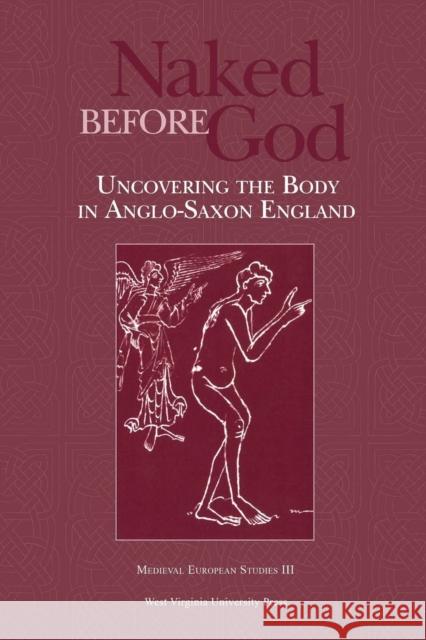
At different times and in different places, the human form has been regarded in different ways. The Ancient Greeks thought it was the most admirable subject for art whereas early Christians often viewed it as lascivious in our post-lapsarian state. Benjamin Withers of Indiana University at South Bend and Jonathan Wilcox at the University of Iowa have assembled one of the most talented groups of young scholars in the field of early medieval studies and asked them to present and explore the evidence for how the human form was regarded by the English before the Norman Conquest. With...
At different times and in different places, the human form has been regarded in different ways. The Ancient Greeks thought it was the most admirable s...