The use of medicinal plants dates to prehistoric times when ancient man found that ingestion or application of certain herbs and barks was effective in treating some of the ailments that plagued him. Herbal medicine is a part of virtually all cultures, and Tonga is no exception. However, several early visitors in the first decades of the 'European Era' in Tongan history noted the relatively minor use of herbal plants, especially in comparison with the adjacent Fiji Islands. Whether or not this evaluation is true may never be learned, but today in tonga, herbal remedies are used at one time or...
The use of medicinal plants dates to prehistoric times when ancient man found that ingestion or application of certain herbs and barks was effective i...
The dream of becoming a beachcomber on some distant tropical shore has always held a particular fascination for Westerners. To be able to spend one's day relaxing under a tropical sun and walking a palm-covered beach bordering a blue lagoon has seemed like the ideal escape from the everyday pressures of the hurried lifestyle of our Western world. Ever since its European discovery, Polynesia has captivated the imagination of adventurers looking for an island paradise. Now, with the age of jet travel, a visit to the islands is no longer an impossible dream. Every year thousands of people fly...
The dream of becoming a beachcomber on some distant tropical shore has always held a particular fascination for Westerners. To be able to spend one...
Wayside Plants of the Islands has been designed as a guide book to the identification of the most common plant species encountered in the lowlands of the Pacific Islands. It is based upon the author's 25 years of botanical excursions in Hawai'i, Samoa, Tonga, Tahiti, Fiji, Guam, Belau (Palau), and the other Pacific Islands. The lowlands here have been highly disturbed and are now entirely dominated by "alien" weedy species. This guide book includes color photos of 170 of the most common of these lowland species, with descriptions and other pertinent information. Most of the plants covered are...
Wayside Plants of the Islands has been designed as a guide book to the identification of the most common plant species encountered in the lowlands of ...
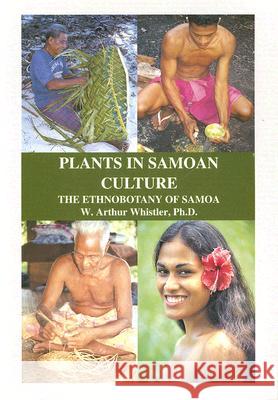
"Today in Samoa a large segment of the population takes or is given Samoan herbal medicine sometime during their lifetime, especially during infancy and childhood. Thus, despite 165 years of contact with Western culture and its medical traditions, Samoan herbal medicine is strong today, and does not appear to be in danger of dying out in the near future." --from the Preface
"Today in Samoa a large segment of the population takes or is given Samoan herbal medicine sometime during their lifetime, especially during infancy a...
Samoans have learned by centuries of experience which trees provide the best timber, which plants are edible, which make the best cordage, and which can be used as medicines. However, as people move away from a culture based on the traditional use of the surrounding plants and animals to one based on imported goods, they lose a valuable part of their tradition.... Samoans have been the keepers of this knowledge and these plants for close to three millennia, but as we begin the new millennium, traditional lore is unfortunately no longer being passed on to the younger generation. This loss of...
Samoans have learned by centuries of experience which trees provide the best timber, which plants are edible, which make the best cordage, and which c...
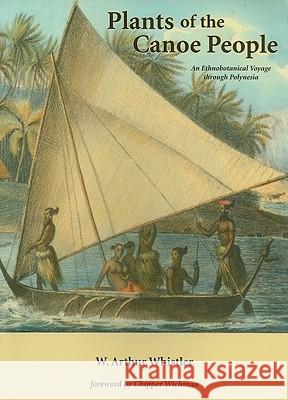
This book is about the useful plants of the Pacific islanders, with special emphasis on plants used by Polynesians. A total of ninety-six plants are included, listed in alphabetical order by scientific name, followed by a paragraph that includes Polynesian names and their origins and the English name if any. Range, habitat, uses of the plant, and a botanical description of the species are also included for each entry.
This book is about the useful plants of the Pacific islanders, with special emphasis on plants used by Polynesians. A total of ninety-six plants are i...