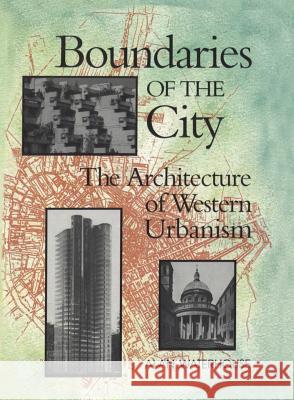
In this study Alan Waterhouse draws on anthropological, social and cultural history, literature, and philosophy to reach an understanding of the roots of Western architecture and city building. He explores the illusion that cities are constructed to impose rational order, an order articulated through urban boundaries. These boundaries, he finds, are shaped around our instinctive fears and insecurities about crime, insurrection, and the violent disruption of everyday life. At the same time, contrary instincts aspire to create a unified domain, to proclaim the interdependence of things...
In this study Alan Waterhouse draws on anthropological, social and cultural history, literature, and philosophy to reach an understanding of the ro...