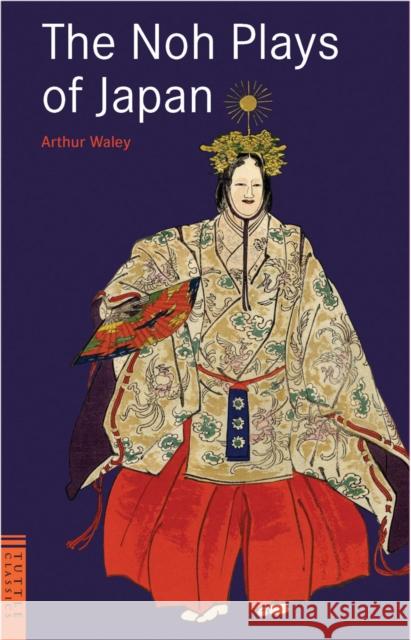
The Noh Plays of Japan is the most respected collection of Noh plays in English. The classic Japanese plays can be read for their great literary merit and also provide the reader with an understanding of a unique theatre art and important insights into the cultural, spiritual and artistic traditions of Japan. The Noh Plays of Japan, first published in 1921 and justly famous for more than three-quarters of a century, established the Noh play for the Western reader as beautiful literature. It contains Arthur Waley's exquisite translations of nineteen plays and...
The Noh Plays of Japan is the most respected collection of Noh plays in English. The classic Japanese plays can be read for their gr...
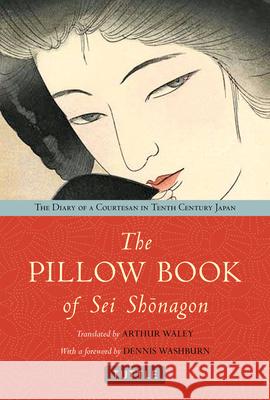
Japan in the 10th century stood physically and culturally isolated from the rest of the world. Inside this bubble, a subtle and beautiful world was in operation, and its inhabitants were tied to the moment, having no interest in the future and disdain for the past. The Pillow Book of Sei Shonagon was a product of a tenth century courtier's experiences in the palace of Empress Teishi. A common custom of the time period, courtiers used to keep notes or a diary in a wooden pillow with a drawer. This "pillow book" reflects the confident aesthetic judgments of Shonagon and her ability...
Japan in the 10th century stood physically and culturally isolated from the rest of the world. Inside this bubble, a subtle and beautiful world was in...
Those who wish to assure themselves that they will lose nothing by ignoring Chinese literature, often ask the question: "Have the Chinese a Homer, an Aeschylus, a Shakespeare or Tolstoy?" The answer must be that China has literature of some importance. The novel exists and has merits, but never became the instrument of great writers. Her philosophic literature knows no mean between the traditionalism of Confucius and the nihilism of Chuang-tzu. In mind, as in body, the Chinese were for the most part mainlanders. Their thoughts set out on no strange quests and adventures, just as their ships...
Those who wish to assure themselves that they will lose nothing by ignoring Chinese literature, often ask the question: "Have the Chinese a Homer, an ...