An amazing sequence of imaginatively bizarre sexual adventures punctuated by philosophical and theological digression. Mlle. De Maupin, Lolita, Candyall pale beside Juliette. Library Journal"
An amazing sequence of imaginatively bizarre sexual adventures punctuated by philosophical and theological digression. Mlle. De Maupin, Lolita, Candya...
No other writer has so scandalized proper society as the Marquis de Sade, but despite the deliberate destruction of over three-quarters of his work, Sade remains a major figure in the history of ideas. His influence on some of the greatest minds of the last centuryfrom Baudelaire and Swinburne to Nietzsche, Dostoyevsky and Kafkais indisputable. This volume contains Philosophy in the Bedroom, a major novel that presents the clearest summation of his political philosophy; Eugenie de Franval, a novella widely considered to be a masterpiece of eighteenth-century French literature; and the only...
No other writer has so scandalized proper society as the Marquis de Sade, but despite the deliberate destruction of over three-quarters of his work, S...
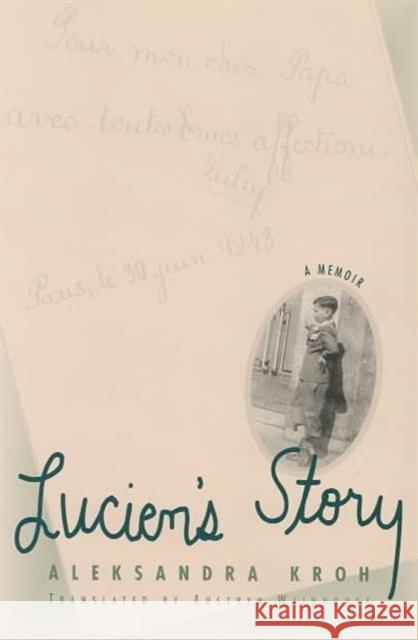
It may have been coincidental that on a walk in the 14th arrondissement would lead Lucien Duckstein to recall his Paris childhood and his removal at age eleven to Drancy and later to Bergen-Belsen. This powerful memoir rings with truth, and Lucien's technique of recounting the events of the past, while acknowledging their effect upon the present and future, makes this account a testament to the personal and psychological costs of the Holocaust.
It may have been coincidental that on a walk in the 14th arrondissement would lead Lucien Duckstein to recall his Paris childhood and his removal at a...
It may have been coincidental that on a walk in the 14th arrondissement would lead Lucien Duckstein to recall his Paris childhood and his removal at age eleven to Drancy and later to Bergen-Belsen. This powerful memoir rings with truth, and Lucien's technique of recounting the events of the past, while acknowledging their effect upon the present and future, makes this account a testament to the personal and psychological costs of the Holocaust.
It may have been coincidental that on a walk in the 14th arrondissement would lead Lucien Duckstein to recall his Paris childhood and his removal at a...
In this first English translation of Hyvernaud's novel, the narrator, who has come back to France after imprisonment in Germany, is preoccupied with the near impossibility of writing a novel about his experiences; at the same time, he attempts to function normally in a world that seems to have changed radically. The Cattle Car is devoid of heroics, portraying the protagonist as a man without a future, the ordinary guy who moves quietly among objects, without making any sort of commotion, a man who daydreams other people's lives. In Letter to a Little Girl, which precedes The Cattle Car,...
In this first English translation of Hyvernaud's novel, the narrator, who has come back to France after imprisonment in Germany, is preoccupied with t...
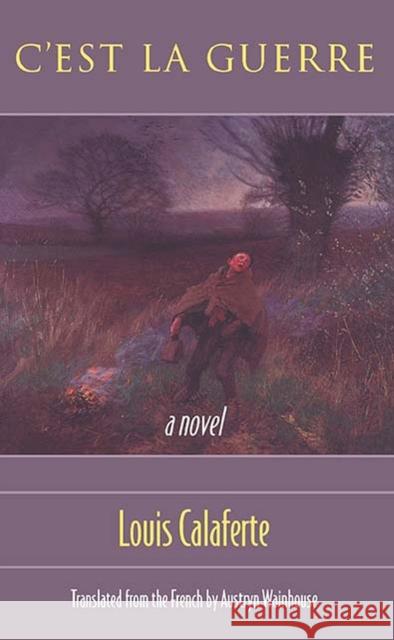
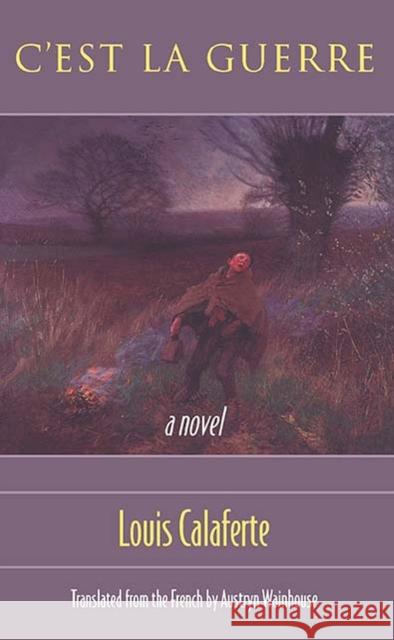
In "C'est la guerre" Louis Calaferte presents the World War II--from the moment its outbreak is announced to the public through the unprecedented disaster that ensues, and through France's liberation in 1945--as it registers itself in the ever more isolated consciousness of a young, nameless boy.
In "C'est la guerre" Louis Calaferte presents the World War II--from the moment its outbreak is announced to the public through the unprecedented disa...
In "C'est la guerre" Louis Calaferte presents the World War II--from the moment its outbreak is announced to the public through the unprecedented disaster that ensues, and through France's liberation in 1945--as it registers itself in the ever more isolated consciousness of a young, nameless boy.
In "C'est la guerre" Louis Calaferte presents the World War II--from the moment its outbreak is announced to the public through the unprecedented disa...
In April 1944, the SS paused in the French village of Chamberet on routine business and left with the author's mother. For the rest of the war the mother was interned at Auschwitz. She returned at war's end, her health irreparably impaired but wanting to talk. Recording her story, however, fell to Morhange-Begue, and here she bears witness on her mother's behalf.
In April 1944, the SS paused in the French village of Chamberet on routine business and left with the author's mother. For the rest of the war the mot...