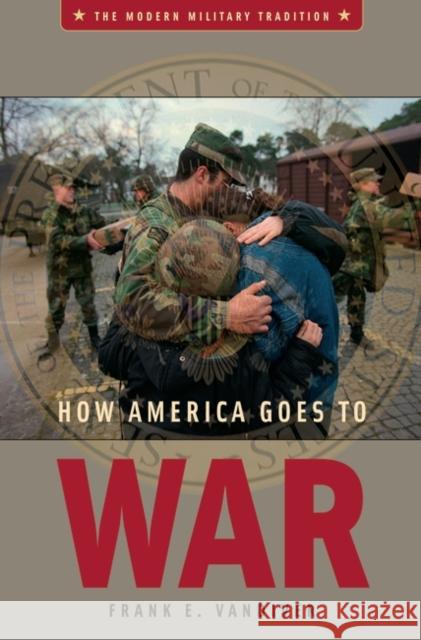
With American involvement in Iraq in the forefront of national news coverage and in the minds of many citizens, questions concerning America's involvement in past conflicts have once again arisen. This is the story of how the United States has gone to war and how the evolution of the nation's war-making apparatus has mirrored the nation's rise to global power. It focuses on the president's role as commander-in-chief vis-a-vis Congress from George Washington to George W. Bush. Conflicts range from the War of 1812 to the Mexican and Civil Wars, the two World Wars, conflicts in Southeast...
With American involvement in Iraq in the forefront of national news coverage and in the minds of many citizens, questions concerning America's invo...
Robert Goldthwaite Carter John M. Carroll Frank E. Vandiver
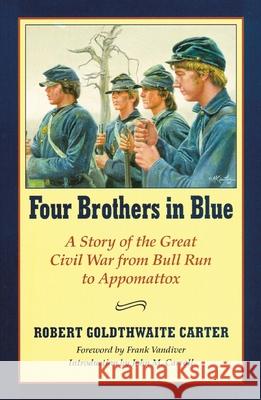
These letters, collected and transcribed by Captain Robert Goldthwaite Carter in the 1870s, are among the finest primary sources on the daily life of the Union soldier in the Civil War. Robert and his three brothers all saw action with the Army of the Potomac under its various commanders, Generals McClellan, Burnside, Hooker, Meade, and Grant. At times in pairs but often in neighboring units, they fought on the battlefields of Bull Run, Antietam, Fredericksburg, Chancellorsville, Gettysburg, the Wilderness, and Petersburg.
These letters, collected and transcribed by Captain Robert Goldthwaite Carter in the 1870s, are among the finest primary sources on the daily life ...
Paperbound reprint of a slim work first published in 1956, and cited in BCL3 . The author describes the Confederate high command and analyzes the figures who dominated the system, finding that it was the nature of the southern character and culture that spelled doom for the Confederate cause. Annota
Paperbound reprint of a slim work first published in 1956, and cited in BCL3 . The author describes the Confederate high command and analyzes the figu...
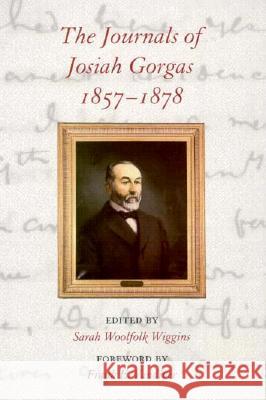
Josiah Gorgas was best known as the highly regarded Chief of Confederate Ordnance. Born in 1818, he attended West Point, served in the U.S. Army, and later, after marrying Amelia Gayle, daughter of a former Alabama governor, joined the Confederacy. After the Civil War he served as president of The University of Alabama until ill health forced him to resign. His journals, maintained between 1857 and 1878, reflect the family's economic successes and failures, detail the course of the South through the Civil War, and describe the ordeal of Reconstruction. Few journals cover such a sweep of...
Josiah Gorgas was best known as the highly regarded Chief of Confederate Ordnance. Born in 1818, he attended West Point, served in the U.S. Army, a...
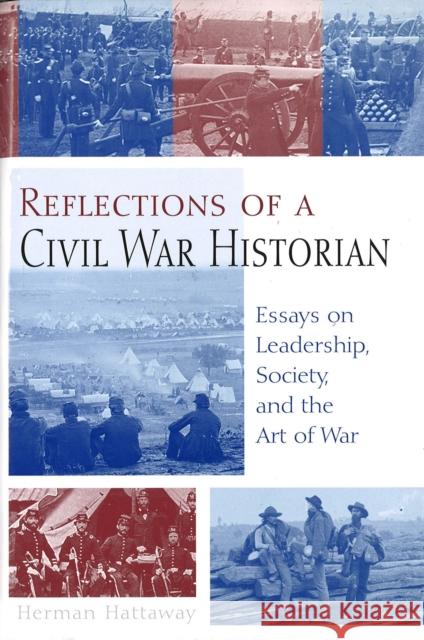
Born in New Orleans, Herman Hattaway grew up in the Deep South. While it might not seem such a stretch for him to have become one of the foremost authorities on the Civil War and Southern history, Hattaway was actually at a loss for a career choice when he stumbled into the class of Professor T. Harry Williams at Louisiana State University. Williams's lectures and writings were so inspiring to Hattaway that he became a regular in his classes, receiving his B.A., M.A., and Ph.D. all under the professor's tutelage.This collection of essays is a compendium of Hattaway's writings...
Born in New Orleans, Herman Hattaway grew up in the Deep South. While it might not seem such a stretch for him to have become one of the foremo...
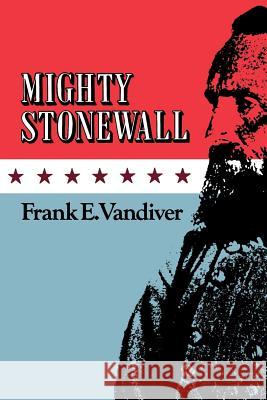
Confederate General Thomas Jonathan Jackson was undoubtedly one of the most influential military commanders of the Civil War. Had he not met his death early in May, 1863, his influence could well have changed the course of the war. Frank E. Vandiver's detailed research and zestful writing style provide a vivid description of Stonewall's boyhood, West Point training, early career, years of teaching at the Virginia Military Institute, and Civil War campaigns. Here, too, are insights into Jackson's personal life and his deep religious feelings, which were so influential on his military thought...
Confederate General Thomas Jonathan Jackson was undoubtedly one of the most influential military commanders of the Civil War. Had he not met his death...
Brothers by blood before the war; brothers in blood after. The blood mingled in the Civil War became the symbol and perverse source of indissoluble union between two sections, two ways of life, two visions of the future, and even two revolutions. In riveting detail yet with broad sweep, veteran Civil war historian Frank E. Vandiver recounts the campaigns and major battles of the first war of the Industrial Revolution, with its machinery, firepower, and engineering beyond imagination. With provocative insight, he traces a picture of the war as rooted in the character and vision of its two...
Brothers by blood before the war; brothers in blood after. The blood mingled in the Civil War became the symbol and perverse source of indissoluble un...
Brothers by blood before the war; brothers "in"""blood after. The blood mingled in the Civil Was became the symbol and perverse source of indissoluble union between two sections, two ways of life, two visions of the future, and even two revolutions. In riveting detail, veteran Civil War historian Frank E. Vandiver recounts the campaigns and major battles of the first war of the Industrial Revolution, with its machinery, firepower, and engineering beyond imagination. With provocative insight, he traces a picture of the war as rooted in the character and vision of its two leaders and their...
Brothers by blood before the war; brothers "in"""blood after. The blood mingled in the Civil Was became the symbol and perverse source of indissoluble...
Begun in the late 1940s, before Vandiver enrolled in the doctoral program at Tulane University, research for this book started with his interviewing the Confederate ordnance chief's daughters and included perusal of Gorgas's 1857-1877 journals. Gorgas is credited with creating, in the Confederacy's ordnance department, "success beyond expectation." With the South having far less capacity to produce arms than the North and with communications from the field severely hampered throughout the war, the former West Pointer nevertheless was responsible for the fact that, as some have argued, the...
Begun in the late 1940s, before Vandiver enrolled in the doctoral program at Tulane University, research for this book started with his interviewing t...
From the day Lyndon Johnson stepped into the U.S. Presidency, he lived in the shadow of Vietnam. With all his skills as a hard-nosed politician, he should have been successful at waging war. Indeed, on the home front, with his War on Poverty, even in the Dominican Republic, he "was" successful. Yet in Vietnam he failed, in epic proportions. This is the paradox--the shadow-that frames Frank E. Vandiver's riveting examination of one of America's most fascinating and controversial presidents mired in the depths of Vietnam, our most complex and controversial war. It is still not...
From the day Lyndon Johnson stepped into the U.S. Presidency, he lived in the shadow of Vietnam. With all his skills as a hard-nosed politician, he sh...