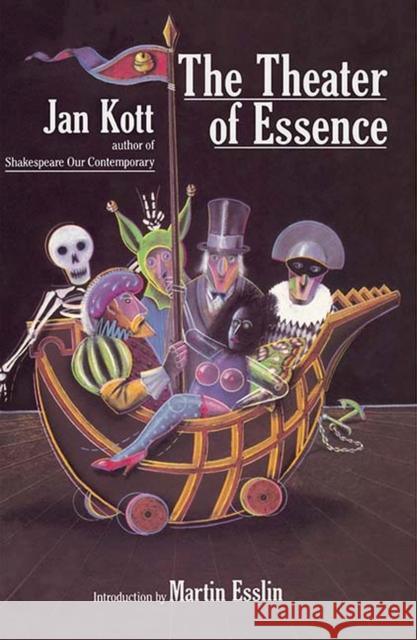
The sixteen essays collected in "The Theater of Essence" define the point of view of one of the most influential theater critics of our time. Jan Kott's subjects extend from Tadeusz Borowski, Ibsen, Ionesco, and Gogol to Bunraku theater in Japan, Yiddish theater in New York, and Grotowski's theater in Poland.
The sixteen essays collected in "The Theater of Essence" define the point of view of one of the most influential theater critics of our time. Jan Kott...
"The Guinea Pigs "is a chilling fable about dehumanization and alienation representing Vaculik's vision of the menace of Soviet domination in the wake of the 1969 invasion. Written in 1970, it is a sweeping condemnation of totalitarianism, embedded in a rich, imaginative, highly experimental narrative. In the words of the "New York Review of Books" it is "one of the major works of literature produced in postwar Europe."
"The Guinea Pigs "is a chilling fable about dehumanization and alienation representing Vaculik's vision of the menace of Soviet domination in the wake...
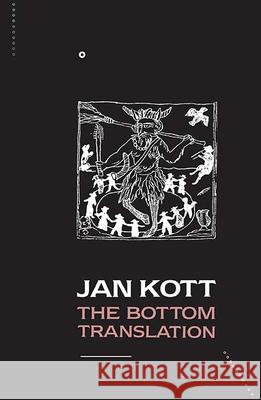
The Bottom Translation represents the first critical attempt at applying the ideas and methods of the great Russian critic, Mikhail Bakhtin, to the works of Shakespeare and other Elizabethans. Professor Kott uncovers the cultural and mythopoetic traditions underlying A Midsummer Night's Dream, The Tempest, Dr. Faustus, and other plays. His method draws him to interpret these works in the light of the carnival and popular tradition as it was set forth by Bakhtin. The Bottom Translation breaks new ground in critical thinking and theatrical vision and is an...
The Bottom Translation represents the first critical attempt at applying the ideas and methods of the great Russian critic, Mikhail Bakhtin, to...
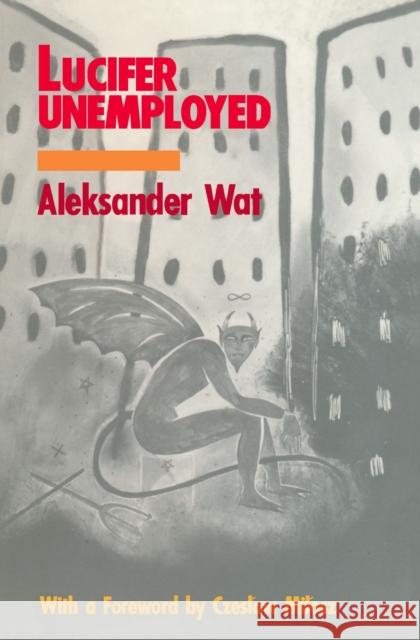
In these nine stories the Polish writer Aleksander Wat consistently turns history on its ear in comic reversals reverberating with futurist rhythms and the gently mocking humor of despair. Wat inverts the conventions of religion, politics, and culture to fantastic effect, illuminating the anarchic conditions of existence in interwar Europe. The title story finds a superbly ironic Lucifer wandering the Europe of the late 1920s in search of a mission: what impact can a devil have in a godless time? What is his sorcery in a society far more diablical than the devil himself? Too idealistic...
In these nine stories the Polish writer Aleksander Wat consistently turns history on its ear in comic reversals reverberating with futurist rhythms an...
To see through the eyes of essayist and dramaturge Jan Kott is to gain in knowledge not just of the theater but also of human culture. Since his "Shakespeare Our Contemporary" appeared in English in 1964, Kott's work has altered--and strengthened--the way critics and the public approach the theater as a whole. "The Memory of the Body" highlights a number of dramatic personalities and personages: authors and directors Witkiewicz, Brecht, Kantor, Grotoswki, Ingmar Bergman, Wedekind; Tilly Newes on the stage in turn-of-the-century Vienna; the all-too-mortal, two-thirds divine Gilgamesh; and a...
To see through the eyes of essayist and dramaturge Jan Kott is to gain in knowledge not just of the theater but also of human culture. Since his "Shak...