Is there a way to appreciate the desert without destroying it, a way to enjoy it without consuming it and to love it without killing it? Moreover, how can literature about the southwestern landscape affect ways in which it is either exploited or preserved? When and how did the desert change dramatically in the eyes of Anglo Americans from barren wilderness to national treasure? By focusing on cultures that lived in the Southwest and by analyzing ways in which they described the land, David Teague persuasively argues against the destructive approach that Americans currently take...
Is there a way to appreciate the desert without destroying it, a way to enjoy it without consuming it and to love it without killing it? Moreo...
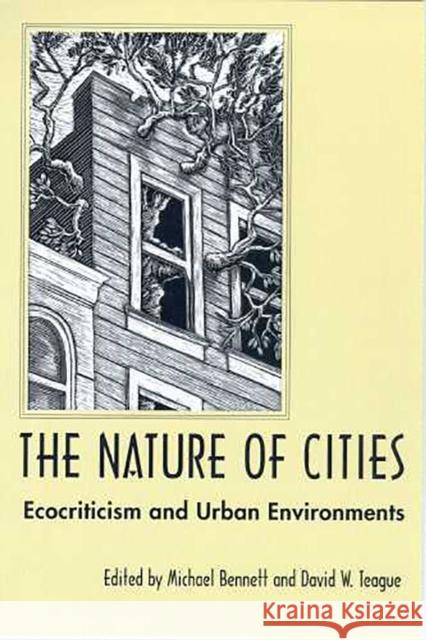
Cities are often thought to be separate from nature, but recent trends in ecocriticism demand that we consider them as part of the total environment. This new collection of essays sharpens the focus on the nature of cities by exploring the facets of an urban ecocriticism, by reminding city dwellers of their place in ecosystems, and by emphasizing the importance of this connection in understanding urban life and culture. The editors--both raised in small towns but now living in major urban areas--are especially concerned with the sociopolitical construction of all environments, both...
Cities are often thought to be separate from nature, but recent trends in ecocriticism demand that we consider them as part of the total enviro...
In this collection of letters, the authors critically examine the ecological principles and reality of the desert saint Van Dyke. The letters depict a privileged, patrician, and pampered member of the upper class, who saw most of the deserts from plush railroad cars and hotel rooms.
In this collection of letters, the authors critically examine the ecological principles and reality of the desert saint Van Dyke. The letters depict a...