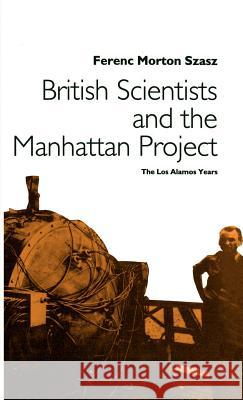
During World War 2, President Franklin D.Roosevelt and Prime Minister Winston Churchill pooled their nations' resources in the desperate race to beat the Germans to the secret of the atomic bomb. This book tells the story of the British scientists who journeyed to Los Alamos, New Mexico, to help develop the world's first nuclear weapons. The contributions of the British Mission to Los Alamos, which have been largely overlooked, were vital to the completion of the project. In addition, the two dozen scientists who collaborated with their American and Canadian allies were to have a profound...
During World War 2, President Franklin D.Roosevelt and Prime Minister Winston Churchill pooled their nations' resources in the desperate race to beat ...
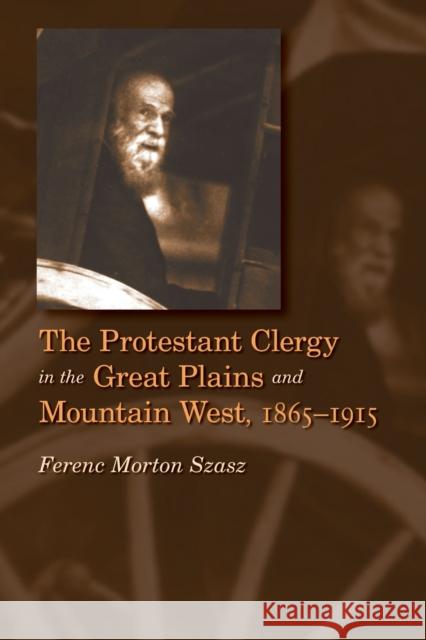
The mainline Protestant churches played a vital role in the settlement of the West. Yet historians have, for the most part, bypassed this theme. This account recreates the unique religious and cultural mix that sets this region apart from the rest of the nation. From itinerant circuit riders to powerful urban bishops, western clergy were continually involved in the maturation of their communities. Their duties on the frontier extended far beyond delivering Sunday sermons; they also served as librarians, counselors, social workers, educators, booksellers, peacekeepers, and general purveyors of...
The mainline Protestant churches played a vital role in the settlement of the West. Yet historians have, for the most part, bypassed this theme. This ...
Although Scots have never been an exceptionally large immigrant group in North America, their presence to the West proved significant in a variety of arenas. In this unique and engaging new book, Ferenc Morton Szasz outlines the many contributions Scots have made to the development of the region.
This book illuminates the many Scottish explorers, traders, adventurers, ranchers, artists, photographers, and writers who helped forge what is perhaps America's greatest cultural export-the myth of the West.
Although Scots have never been an exceptionally large immigrant group in North America, their presence to the West proved significant in a variety ...
When Americans migrated west, they carried with them not only their hopes for better lives but their religious traditions as well. Yet the importance of religion in the forging of a western identity has seldom been examined.
In this first historical overview of religion in the modern American West, Ferenc Szasz shows the important role that organized religion played in the shaping of the region from the late-nineteenth to late-twentieth century. He traces the major faiths over that time span, analyzes the distinctive response of western religious institutions to national...
When Americans migrated west, they carried with them not only their hopes for better lives but their religious traditions as well. Yet the ...
First published in 1984, this prize-winning history of the Manhattan Project is now available in paperback for the first time, fifty years after the explosion of the first atomic bomb.
First published in 1984, this prize-winning history of the Manhattan Project is now available in paperback for the first time, fifty years after the e...
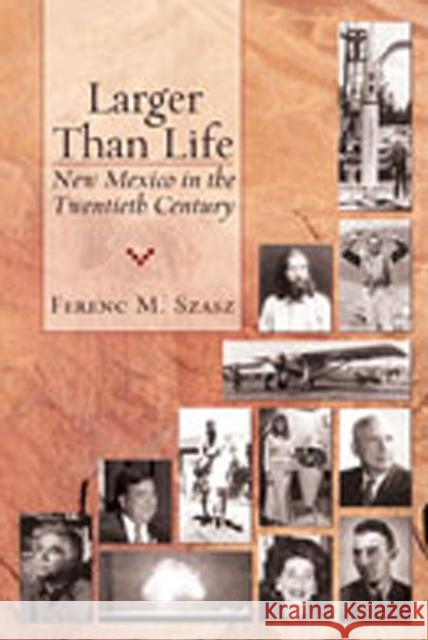
"Larger than Life" offers eleven essays that touch on a variety of southwestern themes. One section highlights three people who have dramatically shaped the region's history: pilot Charles A. Lindbergh, who helped turn New Mexico into a regional center for aviation and rocketry during the interwar years; physicist J. Robert Oppenheimer, who believed that New Mexico had restored him to health in the 1920s, and, as a consequence, chose Los Alamos as the site for the nation's top secret weapons laboratory in 1942; and first-term congressman Bill Richardson (currently governor), who inaugurated...
"Larger than Life" offers eleven essays that touch on a variety of southwestern themes. One section highlights three people who have dramatically shap...
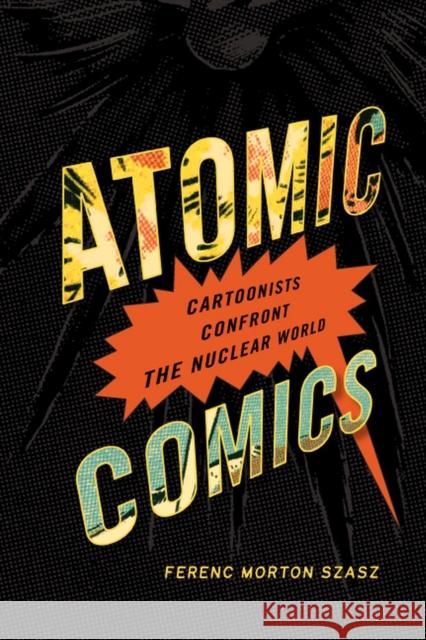
The advent of the Atomic Age challenged purveyors of popular culture to explain to the general public the complex scientific and social issues of atomic power. "Atomic Comics" examines how comic books, comic strips, and other cartoon media represented the Atomic Age from the early 1920s to the present. Through the exploits of superhero figures such as Atomic Man and Spiderman, as well as an array of nuclear adversaries and atomic-themed adventures, the public acquired a new scientific vocabulary and discovered the major controversies surrounding nuclear science. Ferenc Morton Szasz s...
The advent of the Atomic Age challenged purveyors of popular culture to explain to the general public the complex scientific and social issues of a...
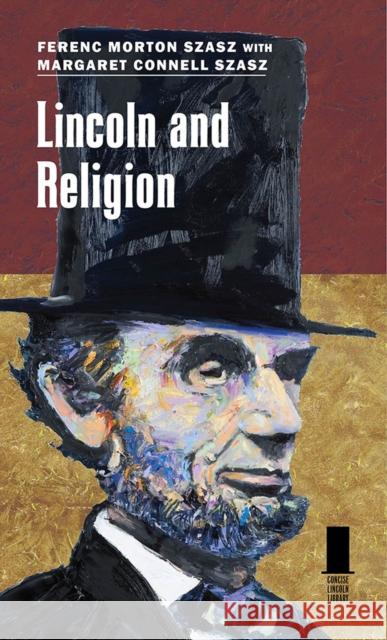
Abraham Lincoln's faith has commanded more broad-based attention than that of any other American president. Although he never joined a denomination, Baptists, Presbyterians, Quakers, Episcopalians, Disciples of Christ, Spiritualists, Jews, and even atheists claim the sixteenth president as one of their own. In this concise volume, Ferenc Morton Szasz and Margaret Connell Szasz offer both an accessible survey of the development of Lincoln's religious views and an informative launch pad for further academic inquiry. A singular key to Lincoln's personality, especially during the presidential...
Abraham Lincoln's faith has commanded more broad-based attention than that of any other American president. Although he never joined a denomination...
During World War II, Franklin D.Roosevelt and Winston Churchill pooled their nations' resources in the race to beat the Germans to the secret of the atomic bomb. This book tells the story of the British scientists who journeyed to Los Alamos to help develop the world's first nuclear weapons.
During World War II, Franklin D.Roosevelt and Winston Churchill pooled their nations' resources in the race to beat the Germans to the secret of the a...