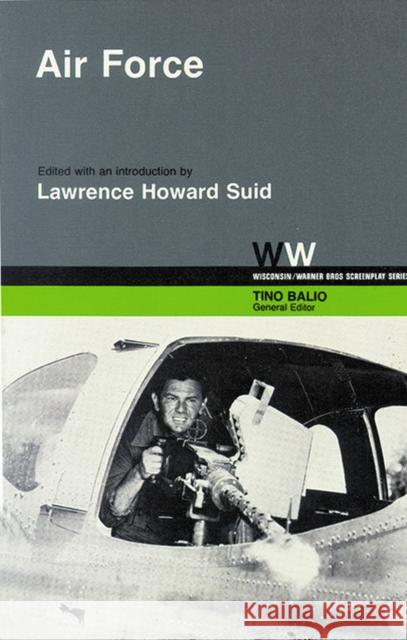
Released in 1943, Air Force was immediately hailed as the definitive "patriotic heart-throb in celluloid" that America, engulfed in war and passionately bent on victory, was primed to embrace. Lawrence Suid charts the evolution of this cinematic success in his introduction to the screenplay, tracing the tangled network of artistic, military, and nationalist interests that molded this film and made it, even after the martial fervor had settled, a standard against which all future films about war would be measured. Throughout the filming, there was tension between the aims of the...
Released in 1943, Air Force was immediately hailed as the definitive "patriotic heart-throb in celluloid" that America, engulfed in war and ...
On August 6 and August 9, 1945, the world became aware of the destructiveness of nuclear energy when the U.S. Army Air Corps dropped atomic bombs on Hiroshima and Nagasaki. Even before the bombs were detonated, though, President Harry Truman had directed his thoughts toward non-military uses of the atom, recognizing that the atomic bomb had given man a new understanding of the forces of nature. This book examines the history and development of nuclear power from the perspective of the U.S. Army's nuclear power program, telling its story from the creation of the Office of Research and...
On August 6 and August 9, 1945, the world became aware of the destructiveness of nuclear energy when the U.S. Army Air Corps dropped atomic bombs o...