Matthew Stewart Princeton Architectural Press Matt Stewart
International trends in creative office design from all over the world: The projects that make up "The Other Office" identify those offices that keep abreast of the rapid pace of change and, more importantly, set the pace.
International trends in creative office design from all over the world: The projects that make up "The Other Office" identify those offices that ke...
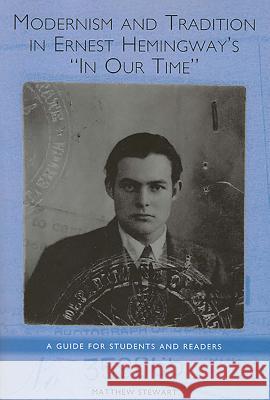
The volume of collected short stories and vignettes In Our Time was Ernest Hemingway's first commercial publication. Its appearance in 1925 launched the full-fledged literary career of this century's most famous American fiction writer. And while other later works of Hemingway have eclipsed In Our Time's fame, none of Hemingway's subsequent works would again carry the degree of experimentation found in this distinctly modernist masterwork. Modernism and Tradition in Ernest Hemingway's In Our Time: A Guide for Students and Readers is a well-paced, lucidly written handbook intended to guide...
The volume of collected short stories and vignettes In Our Time was Ernest Hemingway's first commercial publication. Its appearance in 1925 launched t...
Not only the erudite Thomas Jefferson, the wily and elusive Ben Franklin, and the underappreciated Thomas Paine, but also Ethan Allen, the hero of the Green Mountain Boys, and Thomas Young, the forgotten Founder who kicked off the Boston Tea Party--these radicals who founded America set their sights on a revolution of the mind. Derided as "infidels" and "atheists" in their own time, they wanted to liberate us not just from one king but from the tyranny of supernatural religion.
The ideas that inspired them were neither British nor Christian but largely ancient, pagan, and continental: the...
Not only the erudite Thomas Jefferson, the wily and elusive Ben Franklin, and the underappreciated Thomas Paine, but also Ethan Allen, the hero of the...
America's founders intended to liberate us not just from one king but from the ghostly tyranny of supernatural religion. Drawing deeply on the study of European philosophy, Matthew Stewart brilliantly tracks the ancient, pagan, and continental ideas from which America's revolutionaries drew their inspiration. In the writings of Spinoza, Lucretius, and other great philosophers, Stewart recovers the true meanings of "Nature's God," "the pursuit of happiness," and the radical political theory with which the American experiment in self-government began.
America's founders intended to liberate us not just from one king but from the ghostly tyranny of supernatural religion. Drawing deeply on the stud...