This volume constitutes one of the earliest and most comprehensive ethnographic reconnaissance of the Western Shoshoni and some of their Northern Paiute, Ute, and Southern Paiute neighbors of the Great Basin. At the same time, it tries to ascertain the types of Shoshonean sociopolitical groups and to discover their ecological and social determinants. First published in 1938 as the Smithsonian Institution Bureau of American Ethnology Bulletin 120, this study is a classic in the field of Great Basin ethnology. Steward is considered one of the foremost exponents of cultural evolution in the...
This volume constitutes one of the earliest and most comprehensive ethnographic reconnaissance of the Western Shoshoni and some of their Northern Paiu...
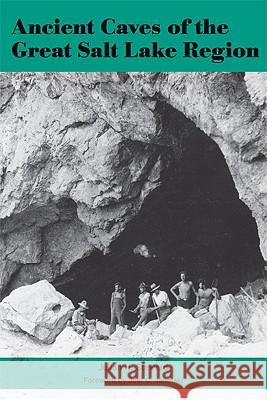
From 1930 to 1931, the University of Utah and the Smithsonian Institute s Bureau of American Ethnology sponsored archaeological field work in the vicinity of the Great Salt Lake. Particular attention was paid to caves that had once been submerged by Lake Bonneville, a prehistoric lake that was some 1,000 feet above the level of the remnant Great Salt Lake. Previous studies had demonstrated that such caves, as the lake subsided, were soon inhabited by ancient peoples and the archaeological explorations were aimed at discovering ancient cultures that could be dated by reference to the...
From 1930 to 1931, the University of Utah and the Smithsonian Institute s Bureau of American Ethnology sponsored archaeological field work in the vici...