Architect, designer, and architectural critic, George Nelson (1908-1986) was a young and impressionable architect when he wrote a series of articles in 1935 and 1936 that eloquently introduced astonishing buildings and fascinating personalities from across the Atlantic to wider American audiences. Building a New Europe presents this important collection of writings together for the first time. The subjects of Nelson's essays include figures both major (Mies van Der Rohe and Le Corbusier) and minor (Helweg-Moeller and Ivar Tengbom). All of these architects would soon be affected by...
Architect, designer, and architectural critic, George Nelson (1908-1986) was a young and impressionable architect when he wrote a series of articles i...
Yale School of Architecture Nina Rappaport Robert A. M. Stern
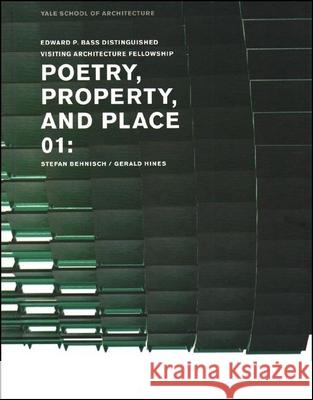
Architect Stefan Behnisch and developer Gerald Hines in a Yale advanced studio, had students design projects to transform Garibaldi Repubblica, a neglected site in central Milan, into a vital urban place.
Architect Stefan Behnisch and developer Gerald Hines in a Yale advanced studio, had students design projects to transform Garibaldi Repubblica, a negl...
Presented in this book is a comprehensive business-oriented approach to teaching assembly language programming on IBM and IBM-compatible computers, geared towards graduate and undergraduate students majoring in data processing or computer science. It also contains self- evaluation quizzes, chapter objectives, exercises and chapter summaries.
Presented in this book is a comprehensive business-oriented approach to teaching assembly language programming on IBM and IBM-compatible computers, ge...
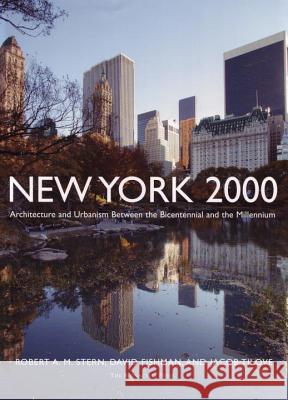
Touted by "Publisher's Weekly" as "an unprecedented record," the new book in the New York series, "New York 2000," is indeed an exceptional survey of this great city's architectural heritage. As the world's financial and cultural capital, New York demands the best in architectural design and balances the constant pressure to build with the need to preserve its historic fabric. Author Robert A. M. Stern and his colleagues trace the rise and fall of the real estate market, the impact of the designation of historic districts and new zoning on development, and the emergence of new commercial...
Touted by "Publisher's Weekly" as "an unprecedented record," the new book in the New York series, "New York 2000," is indeed an exceptional survey of ...
New York 1960 is a massive, in-depth study of the city during a period of unprecedented change. This volume--1,344 pages with more than 1,000 detailed illustrations, including new and period photographs--is part of an ongoing series on the history of New York's architecture and urbanism.
New York 1960 is a massive, in-depth study of the city during a period of unprecedented change. This volume--1,344 pages with more than 1,000 detailed...
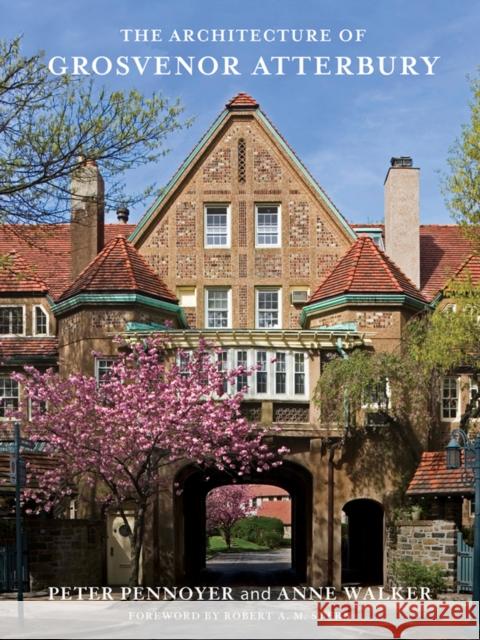
As an inventor, Atterbury was responsible for one of the country's first low-cost, prefabricated concrete construction systems, introducing beauty and inexpensive good design into the lives of the working classes.The Architecture of Grosvenor Atterbury is the first book to showcase the rich and varied repertoire of this prolific architect whose career spanned six decades and whose work affected the course of American architecture, planning, and construction. Illustrated with Jonathan Wallen's stunning color photographs and over 250 historic drawings, plans, and photographs, it also...
As an inventor, Atterbury was responsible for one of the country's first low-cost, prefabricated concrete construction systems, introducing beauty and...
In over thirty years of practice, Robert A. M. Stern has developed a distinctive architecture committed to the synthesis of tradition and innovation and, above all, to the creation and enhancement of a meaningful sense of place. This monograph, covering the years 1999?2002, is the fourth in a series on Stern's work. The volume includes more than one hundred projects, including houses and apartments, buildings for cultural institutions and universities, office and commercial structures, government facilities, and designs for products, including fabric and tableware.
"From the Trade...
In over thirty years of practice, Robert A. M. Stern has developed a distinctive architecture committed to the synthesis of tradition and innovation a...
"At its best, the college campus is the representation of beliefs, of the specific character of a place, of a community, of an institution. It is the setting for the continually evolving interaction of people and ideas over time." " "Robert A. M. Stern Ss an architect, educator, andarchitectural historian, Robert A. M. Stern brings special knowledge and expertise to issues of campus master planning and the design of academic buildings. This unique volume collects more than fifty projects by the firm for the most prestigious institutions in America Harvard, Yale, Dartmouth,...
"At its best, the college campus is the representation of beliefs, of the specific character of a place, of a community, of an institution. It is t...
History is the lens through which Robert A.M. Stern and his fifteen design partners envision an architecture for today. "Robert A.M. Stern Architects: Buildings and Projects 2010-2014" is the seventh volume in a series that encompasses the breadth of the firm's work since Stern's earliest projects in the mid-1960s. Emphasizing the output of the office over the past five years, this volume covers the most globalized period of practice so far. Featuring profiles of well over 100 designs built domestically and abroad, "Robert A.M. Stern Architects: Buildings and Projects 2010-2014" includes...
History is the lens through which Robert A.M. Stern and his fifteen design partners envision an architecture for today. "Robert A.M. Stern Architects:...