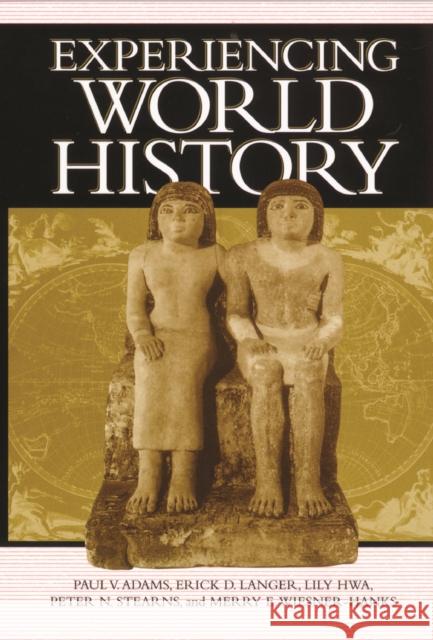
Covering early societies, the classical, postclassical, and modern periods, and the 20th century, and blending the great advances in historical research over the past quarter century, Experiencing World History represents an important addition to the teaching of world history.
Focusing on major issues in social history in the context of world history and divided into five chronological sections that highlight the mixture of change and continuity, the volume traces key aspects of society over time, among them gender; work and leisure; state and society; culture contact and...
Covering early societies, the classical, postclassical, and modern periods, and the 20th century, and blending the great advances in historical res...
Since its founding twenty years ago the Journal of Social History has made substantial contributions to altering the way American historians look at and interpret their subject. It has served as a central outlet for new and exciting scholarship in social history, particularly European and American history but also Asian and Latin American as well. Under the editorship of Peter N. Stearns, the journal has published innovative work by many major American historians. Expanding the Past commemorates and highlights the achievements of the journal by republishing a selection of the...
Since its founding twenty years ago the Journal of Social History has made substantial contributions to altering the way American historians...
Cool. The concept has distinctly American qualities and it permeates almost every aspect of contemporary American culture. From Kool cigarettes and the Peanuts cartoon's Joe Cool to West Side Story (Keep cool, boy.) and urban slang (Be cool. Chill out.), the idea of cool, in its many manifestations, has seized a central place in our vocabulary.
Where did this preoccupation with cool come from? How was Victorian culture, seemingly so ensconced, replaced with the current emotional status quo? From whence came American Cool?
These are the questions Peter Stearns seeks to...
Cool. The concept has distinctly American qualities and it permeates almost every aspect of contemporary American culture. From Kool cigarettes and...
A Finalist for the Los Angeles Times Book Prize in History
The modern struggle against fat cuts deeply and pervasively into American culture, as evidenced by the compulsion to stay thin, or at least to profess a desire to become thin. Dieting, weight consciousness and widespread hostility to obesity form one of the fundamental themes of modern life in countries around the world. Yet, for example, while the French are renowned for their delight in all things gustatory, they are significantly trimmer and less diet-obsessed than Americans.
Fat History explores the...
A Finalist for the Los Angeles Times Book Prize in History
The modern struggle against fat cuts deeply and pervasively into American c...
Emotions lie at our very core as human beings. How we process and grapple with our emotions, how and what we emote, and how we respond to the emotions of others, constitute the essence of our social universe. In a very real sense, we exist only through the prism of our emotions.
And yet the profound effect of human emotion on history, politics, religion, and culture, remains underexamined. While the influence of emotion in such realms as American foreign policy has been well-documented, other emotional aspects of American history have escaped notice. What role, for instance, does...
Emotions lie at our very core as human beings. How we process and grapple with our emotions, how and what we emote, and how we respond to the emoti...
In recent years, Peter N. Stearns has established himself as the foremost historian of American emotional life. In books on anger, jealousy, -coolness, - and body image, he has mapped out the basic terrain of the American psyche.
Now Stearns crowns his work of the past decade with this powerful volume, in which he reveals the fundamental dichotomy at the heart of the national character: a self-indulgent hedonism and the famed American informality on the one hand, and a deeply imbedded repressiveness on the other.
Whether hunting and gathering tribe or complex industrial...
In recent years, Peter N. Stearns has established himself as the foremost historian of American emotional life. In books on anger, jealousy, -cooln...
As issues of history and memory collide in our society and in the classroom, the time is ripe to rethink the place of history in our schools. Knowing, Teaching, and Learning History represents a unique effort by an international group of scholars to understand the future of teaching and learning about the past. It will challenge the ways in which historians, teachers, and students think about teaching history.
The book concerns itself first and foremost with the question, -How do students develop sophisticated historical understandings and how can teachers best encourage this...
As issues of history and memory collide in our society and in the classroom, the time is ripe to rethink the place of history in our schools. Kn...
As issues of history and memory collide in our society and in the classroom, the time is ripe to rethink the place of history in our schools. Knowing, Teaching, and Learning History represents a unique effort by an international group of scholars to understand the future of teaching and learning about the past. It will challenge the ways in which historians, teachers, and students think about teaching history.
The book concerns itself first and foremost with the question, -How do students develop sophisticated historical understandings and how can teachers best encourage this...
As issues of history and memory collide in our society and in the classroom, the time is ripe to rethink the place of history in our schools. Kn...
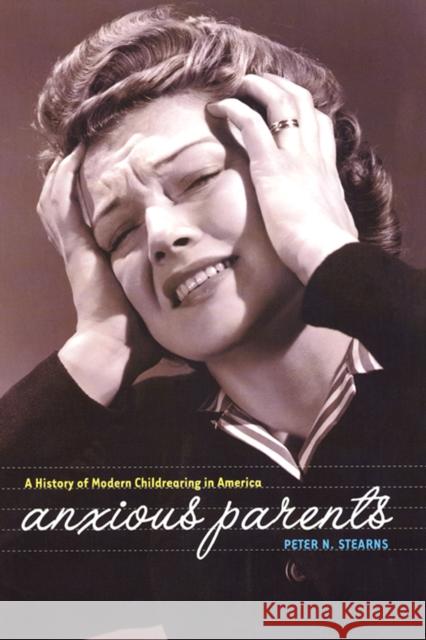
The nineteenth and twentieth centuries saw a dramatic shift in the role of children in American society and families. No longer necessary for labor, children became economic liabilities and twentieth-century parents exhibited a new level of anxiety concerning the welfare of their children and their own ability to parent effectively. What caused this shift in the ways parenting and childhood were experienced and perceived? Why, at a time of relative ease and prosperity, do parents continue to grapple with uncertainty and with unreasonable expectations of both themselves and their...
The nineteenth and twentieth centuries saw a dramatic shift in the role of children in American society and families. No longer necessary for labor...
From his founding of The Journal of Social History to his groundbreaking work on the history of emotions, weight, and parenting, Peter N. Stearns has pushed the boundaries of social history to new levels, presenting new insights into how people have lived and thought through the ages. Having established the history of emotions as a major subfield of social history, Stearns and his collaborators are poised to do the same thing with the study of human behavior. This is their manifesto.
American Behavioral History deals with specific uses of historical data and...
From his founding of The Journal of Social History to his groundbreaking work on the history of emotions, weight, and parenting, Peter N. ...