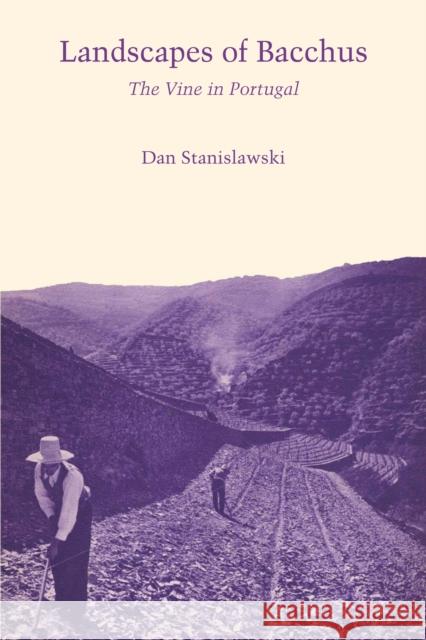
In a country of disparate parts and of long, unbroken historical experience, there may be one dominant feature, a clue to the character of its regions. In Portugal the vine serves as this clue.
The vine has been an important aspect of the Iberian landscape since prehistoric times, and farmers still use Roman methods of cultivation that have been adapted to regional physical conditions and to socioeconomic structure. Southern Portugal today is almost vineless, but in the north three areas can be distinguished by their vine forms and their products. Dan Stanislawski examines these...
In a country of disparate parts and of long, unbroken historical experience, there may be one dominant feature, a clue to the character of its regi...
In this book, Dan Stanislawski studies the geography of various small towns in one Mexican state. He discusses the factors--landscape, buildings, culture groups, and so forth--that create a unique personality for each of these towns.
In this book, Dan Stanislawski studies the geography of various small towns in one Mexican state. He discusses the factors--landscape, buildings, c...
Many map users have wondered why Portugal, sharing with Spain the Iberian Peninsula, ever became a separate nation. That question is answered with remarkable clarity by Dan Stanislawski. This book also presents an analysis of the factors that produce separate nations and offers a study of the evolution of national cultures generally, especially as they apply to Portugal.
Many map users have wondered why Portugal, sharing with Spain the Iberian Peninsula, ever became a separate nation. That question is answered with ...