To understand the genocide and other dramatic events of Rwanda's recent past, one must understand the history of the earlier realm. Jan Vansina provides a critique of the history recorded by early missionaries and court historians and provides a bottom-up view, drawing on hundreds of grassroots narratives. He describes the genesis of the Hutu and Tutsi identities, their growing social and political differences, their bitter feuds, revolts, and massacres, and the relevance of this dramatic history to the post-genocide Rwanda of today. 2001 French edition, Katharla Publishers
To understand the genocide and other dramatic events of Rwanda's recent past, one must understand the history of the earlier realm. Jan Vansina provid...
To understand the genocide and other dramatic events of Rwanda's recent past, one must understand the history of the earlier realm. Jan Vansina provides a critique of the history recorded by early missionaries and court historians and provides a bottom-up view, drawing on hundreds of grassroots narratives. He describes the genesis of the Hutu and Tutsi identities, their growing social and political differences, their bitter feuds, revolts, and massacres, and the relevance of this dramatic history to the post-genocide Rwanda of today.
To understand the genocide and other dramatic events of Rwanda's recent past, one must understand the history of the earlier realm. Jan Vansina provid...
"The authors, respectively a linguist specializing in Swahili and related Bantu languages and a historian specializing in the history of East Africa, have assembled an impressive array of evidence--linguistic, archaeological, documentary, and oral-traditi
"The authors, respectively a linguist specializing in Swahili and related Bantu languages and a historian specializing in the history of East Africa, ...
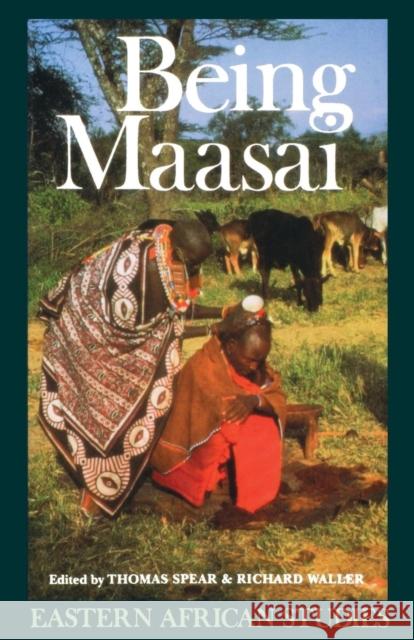
Everyone "knows" the Maasai as proud pastoralists who once dominated the Rift Valley from northern Kenya to central Tanzania. But many people who identity themselves as Maasai, or who speak Maa, are not pastoralist at all, but farmers and hunters. Over time many different people have "become" something else. And what it means to be Maasai has changed radically over the past several centuries and is still changing today. This collection by historians, archaeologists, anthropologists and linguists examines how Maasai identity has been created, evoked, contested, and transformed from the time of...
Everyone "knows" the Maasai as proud pastoralists who once dominated the Rift Valley from northern Kenya to central Tanzania. But many people who iden...
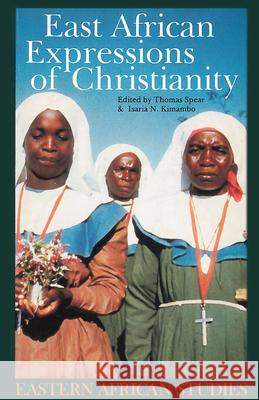
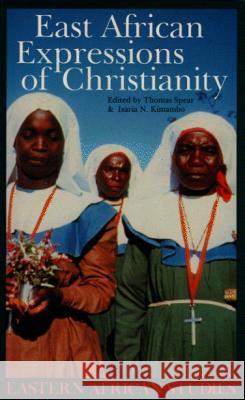
Christianity has been spread in Africa by Africans. This book probes deeply into the experiences of African Christians as they explored the new faith, interpreted it in the context of their own cultural values, appropriated it for themselves, and forged their distinctive churches. The studies included in Eastern African Expressions of Christianity are by prominent Tanzanian and American historians, anthropologists, political scientists, and church people. They examine a complete set of historical issues regarding the translation of religious meanings across cultural boundaries; the religious...
Christianity has been spread in Africa by Africans. This book probes deeply into the experiences of African Christians as they explored the new faith,...
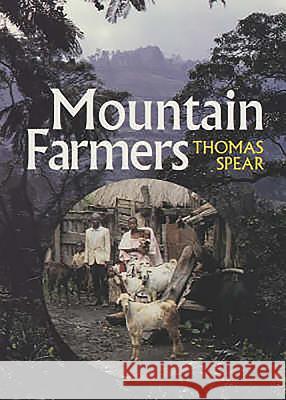
This work examines the struggle between the Meru and Arusha peoples and their German and British rulers over the issue of land and agricultural development on Mount Meru in northern Tanzania. It shows how the Meru and Arashi, faced with an iron ring of land alienated by European settlers successfully intensified their own irrigated agriculture to bring about what has been termed an indigenous agricultural revolution. Tanzania: Mkuki na Nyota
This work examines the struggle between the Meru and Arusha peoples and their German and British rulers over the issue of land and agricultural develo...
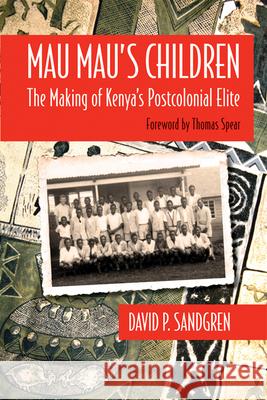
In 1963 David P. Sandgren went to Kenya to teach in a small, rural school for boys, where he remained for the next four years. These were heady times for Kenyans, as the nation gained its independence, approved a new constitution, and held its first elections. In the school where Sandgren taught, the sons of Gikuyu farmers rose to the challenges of this post colonial era and, in time, entered Kenyan society as adults, joining Kenya's first generation of post colonial elites. In Mau Mau's Children, Sandgren has reconnects with these former students. Drawing on more than one...
In 1963 David P. Sandgren went to Kenya to teach in a small, rural school for boys, where he remained for the next four years. These were heady tim...
Christianity has been spread in Africa by Africans. It is the story of peoples seizing control of their own spiritual destinies rather than the commonplace notion that the continent's Christian churches represent colonial and capitalist powers that helped subdue Africans to European domination. In short, once introduced, Christianity took on a powerful life of its own and spun out of the control of those who would retain ownership of doctrine and practice. "East African Expressions of Christianity" examines the experiences of African Christians as they explored the new faith, interpreted...
Christianity has been spread in Africa by Africans. It is the story of peoples seizing control of their own spiritual destinies rather than the common...