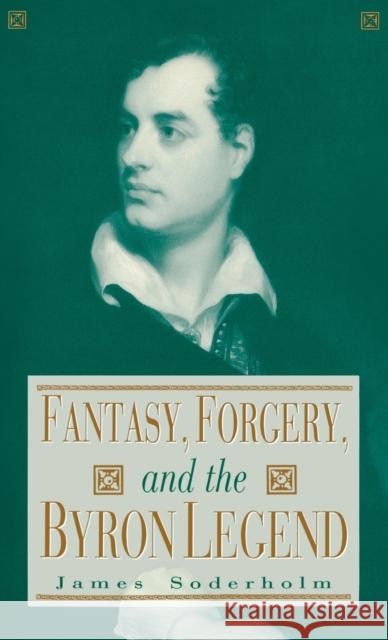
Byron was -- to echo Wordsworth -- half-perceived and half-created. He would have affirmed Jean Baudrillard's observation that "to seduce is to die to reality and reconstitute oneself as illusion." But among the readers he seduced, in person and in poetry, were women possessed of vivid imaginations who collaborated with him in fashioning his legend. Accused of "treating women harshly," Byron acknowledged: "It may be so -- but I have been their martyr. My whole life has been sacrificed to them and by them." Those whom he spell bound often returned the favor in their own writings tried to...
Byron was -- to echo Wordsworth -- half-perceived and half-created. He would have affirmed Jean Baudrillard's observation that "to seduce is to die...
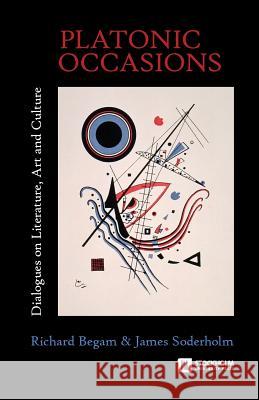
In Platonic Occasions, Richard Begam and James Soderholm reflect upon a wide range of thinkers, writers and ideas from Plato, Descartes and Nietzsche to Shakespeare, the Romantics and the Moderns-from Evil, Love and Death to Art, Memory and Mimesis. The dialogues suggest that Percy Shelley was right when he claimed "We are all Greeks," and yet what have we learned about the initiatives of culture and literature since our classical predecessors? Begam and Soderholm's ten dialogues function as a series of dual-meditations that take Plato as an intellectual godfather while presenting a new form...
In Platonic Occasions, Richard Begam and James Soderholm reflect upon a wide range of thinkers, writers and ideas from Plato, Descartes and Nietzsche ...