This updated edition aims to provide a framework for thinking about the act of writing in both theoretical and practical ways. A chapter on computers and writing is included, as well as more about the role of reading in learning to write, and about learning to write at all ages.
This updated edition aims to provide a framework for thinking about the act of writing in both theoretical and practical ways. A chapter on computers ...
This book delves into how we come to terms with ourselves, with other people, and with the world in general. It is about how we come to be what we are, and to think the way we do. It is a book about influences on this process. A particular influence to which Smith gives central consideration is language, not just in terms of the communicative networks in which it engages us--the "information" that presents itself to us--but in the largely unsuspected framework for thought that lies within language itself. He also considers deeply the role of technology. This is a book of...
This book delves into how we come to terms with ourselves, with other people, and with the world in general. It is about how we come to be what we are...
Following his years of studying human intellectual accomplishments such as language, reading, writing, thinking, and learning, Frank Smith now turns his critical lens on the teaching and learning of mathematics. In The Glass Wall, Smith helps us to understand why some people find the world of mathematics so compelling while others find it so difficult. This original volume examines two different worlds: the physical world (our familiar world of objects and events) and the world of mathematics (a completely different domain of experience), and the glass wall that can exist between them. Smith...
Following his years of studying human intellectual accomplishments such as language, reading, writing, thinking, and learning, Frank Smith now turns h...
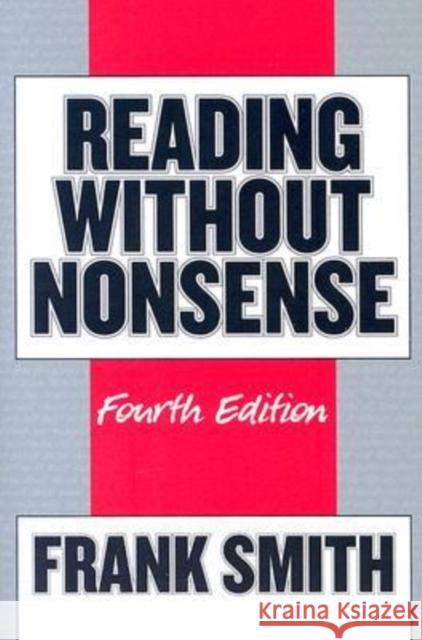
Reading Without Nonsense remains a groundbreaking, humanistic antidote to the managed "systems" approach to reading instruction. In his extensively revised fourth edition, Frank Smith brings teachers and teacher educators up to date on how reading should not be taught. It is a necessary reminder that reading and learning to read are natural activities.
Reading Without Nonsense remains a groundbreaking, humanistic antidote to the managed "systems" approach to reading instruction. In his extensively re...
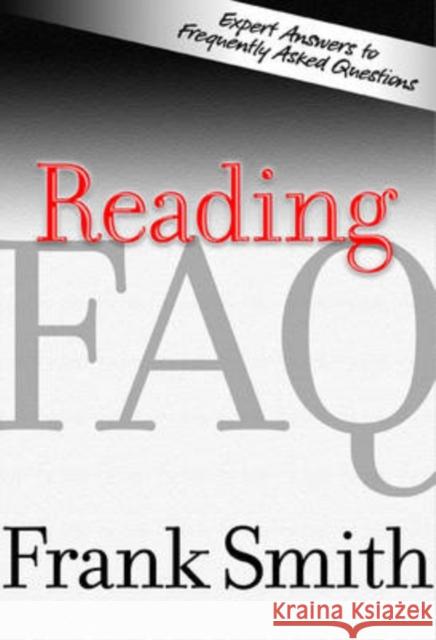
In his latest work, the author of more than 20 books on reading, writing, thinking, and learning addresses questions that he is frequently asked at workshops and conferences about learning, prediction, phonics, stories, meaning, writing, and the brain. This book will reassure parents who have questions about their childs progress in reading, and will help teachers respond to parents concerns about how reading should be taught.
In his latest work, the author of more than 20 books on reading, writing, thinking, and learning addresses questions that he is frequently asked at wo...
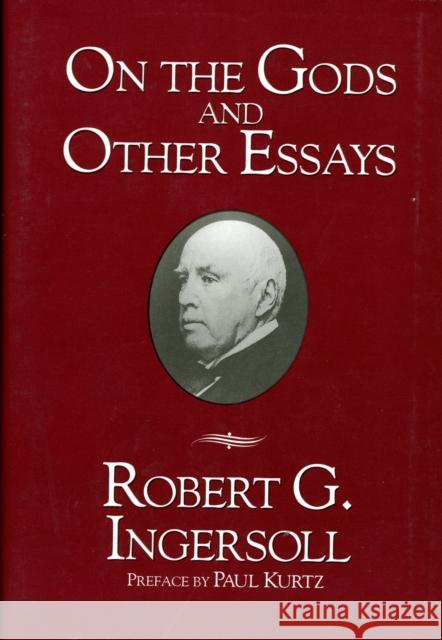
Robert G. Ingersoll (1833-1899) was a complex figure - a brilliant lawyer and orator who courageously advanced the concept of freethought; a magnetic extrovert whose public esteem, eagerly sought, never earned him the private favors he so generously bestowed on others. Ingersoll was a staunch republican in the great tradition of Abraham Lincoln, and he vigorously championed such progressive causes as equal rights for blacks, women, and children; liberal divorce laws; and better wages and conditions for workers. Perhaps Ingersoll's greatest legacy derives from his daring rejection of...
Robert G. Ingersoll (1833-1899) was a complex figure - a brilliant lawyer and orator who courageously advanced the concept of freethought; a magnetic ...