A scholarly edition of a work by Adam Smith. The edition presents an authoritative text, together with an introduction, commentary notes, and scholarly apparatus.
A scholarly edition of a work by Adam Smith. The edition presents an authoritative text, together with an introduction, commentary notes, and scholarl...
A scholarly edition of a work by Adam Smith. The edition presents an authoritative text, together with an introduction, commentary notes, and scholarly apparatus.
A scholarly edition of a work by Adam Smith. The edition presents an authoritative text, together with an introduction, commentary notes, and scholarl...
"This is a modern classic." Paul A. Samuelson, First American Nobel Prize Winner in Economics "The best book there is about the stock market and all that goes with it." The New York Times Book Review "Anyone whose orientation is toward where the action is, where the happenings happen, should buy a copy of The Money Game and read it with due diligence." Book World " 'Adam Smith' is a veteran observer and commentator on the events and people of Wall Street.... His thorough knowledge of financial affairs gives his observations a great degree of authenticity....
"This is a modern classic." Paul A. Samuelson, First American Nobel Prize Winner in Economics "The best book there is about the stock market and ...
Political economy had been studied long before Adam Smith. But Wealth of Nations (1776) established it for the first time as a separate science. Smith based his arguments on vast historical knowledge, and developed his principles with remarkable clarity. What set this work apart was its statement of the doctrine of natural liberty. Smith believed that "man's self-interest is God's providence" - that if government abstained from interfering with free competition, the invisible hand of capitalism would emerge from the competing claims of individual self-interest. Industrial problems would be...
Political economy had been studied long before Adam Smith. But Wealth of Nations (1776) established it for the first time as a separate science. Smith...
Adam Smith (1723-90) studied under Francis Hutcheson at the University of Glasgow, befriended David Hume while lecturing on rhetoric and jurisprudence in Edinburgh, was elected Professor of Logic, Professor of Moral Philosophy, Vice-rector, and eventually Lord Rector of the University of Glasgow, and, along with Hutcheson, Hume, and a few others, went on to become one of the chief figures of the astonishing period of learning known as the Scottish Enlightenment. He is the author of two books: The Theory of Moral Sentiments (1759) and An Inquiry into the Nature and Causes of the Wealth of...
Adam Smith (1723-90) studied under Francis Hutcheson at the University of Glasgow, befriended David Hume while lecturing on rhetoric and jurisprude...
The Wealth of Nations is a treasured classic of political economy. First published in March of 1776, Adam Smith wrote the book to influence a special audience - the British Parliament - and its arguments in the early spring of that year pressed for peace and cooperation with Britain's colonies rather than war. Smith's message was that economic exploitation, through the monopoly trade of empire, stifled wealth-creation in both home and foreign lands. Moreover, protectionism preserved the status quo, and privileged a few elites at the expense of long run growth. Smith wrote, "It is the industry...
The Wealth of Nations is a treasured classic of political economy. First published in March of 1776, Adam Smith wrote the book to influence a special ...
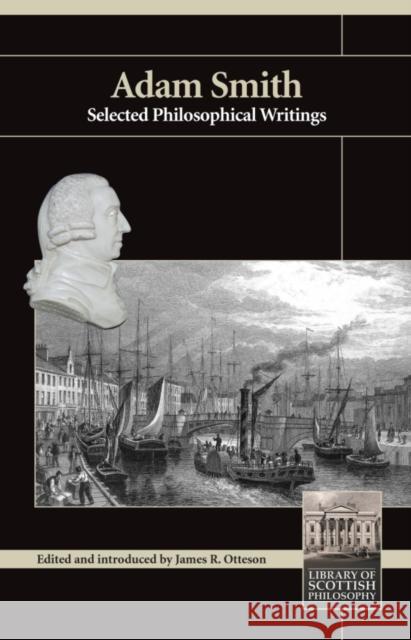
Reflecting Adam Smith's wide learning and varied interests, these essays shed considerable light on his place in the Scottish Enlightenment. Included are histories of astronomy, ancient logic and ancient physics; essays on the imitative arts and the affinity between music, dancing and poetry; and a critical review of Samuel Johnson's famous dictionary, which Smith originally published in the Edinburgh Review (1755-1756).
Reflecting Adam Smith's wide learning and varied interests, these essays shed considerable light on his place in the Scottish Enlightenment. Included ...
Adam Smith's major work of 1759 develops the foundation for a general system of morals, and is a text of central importance in the history of moral and political thought. Through the idea of sympathy and the mental construct of an impartial spectator, Smith formulated highly original theories of conscience, moral judgment and the virtues. This volume offers a new edition of the text with helpful notes for the student reader, and a substantial introduction that establishes the work in its philosophical and historical context.
Adam Smith's major work of 1759 develops the foundation for a general system of morals, and is a text of central importance in the history of moral an...
A scholarly edition of a work by Adam Smith. The edition presents an authoritative text, together with an introduction, commentary notes, and scholarly apparatus.
A scholarly edition of a work by Adam Smith. The edition presents an authoritative text, together with an introduction, commentary notes, and scholarl...