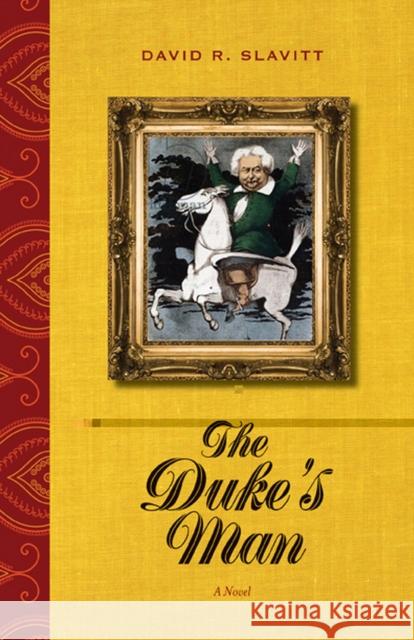
Historical fiction has long ranked somewhere just above romance novels and mysteries in the great chain of literary respectability, yet as David Slavitt points out in his humorous yet loving send-up of the genre, riches might be found in the most unlikely sources. "The Duke s Man" is, in a way, old and new a condensation and commentary and a literary mash-up. The eponymous character is Louis de Clermont, Comte de Bussy d Amboise, a gentleman of the court of King Henri III of France, and the hero of Dumas three-volume historical novel "La Dame de Monsoreau" (1846). Dumas novel serves here as...
Historical fiction has long ranked somewhere just above romance novels and mysteries in the great chain of literary respectability, yet as David Slavi...
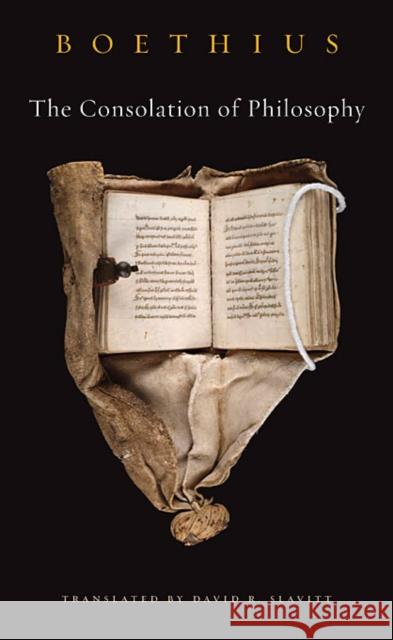
In this highly praised new translation of Boethius's The Consolation of Philosophy, David R. Slavitt presents a graceful, accessible, and modern version for both longtime admirers of one of the great masterpieces of philosophical literature and those encountering it for the first time. Slavitt preserves the distinction between the alternating verse and prose sections in the Latin original, allowing us to appreciate the Menippian parallels between the discourses of literary and logical inquiry. His prose translations are lively and colloquial, conveying the argumentative,...
In this highly praised new translation of Boethius's The Consolation of Philosophy, David R. Slavitt presents a graceful, accessible, and mo...
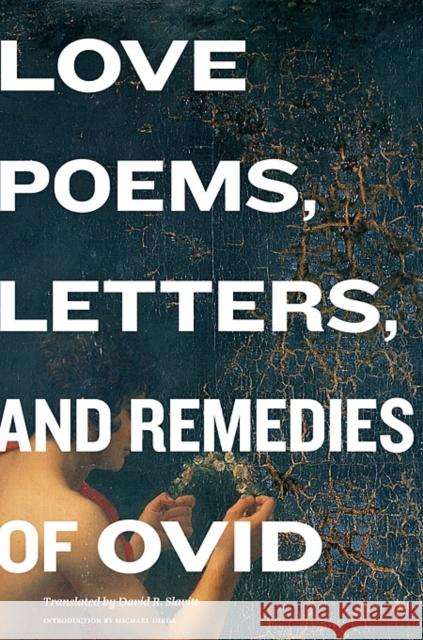
Widely praised for his recent translations of Boethius and Ariosto, David R. Slavitt returns to Ovid, once again bringing to the contemporary ear the spirited, idiomatic, audacious charms of this master poet.
The love described here is the anguished, ruinous kind, for which Ovid was among the first to find expression. In the Amores, he testifies to the male experience, and in the companion Heroides--through a series of dramatic monologues addressed to absent lovers--he imagines how love goes for women. "You think she is ardent with you? So was she ardent with him,"...
Widely praised for his recent translations of Boethius and Ariosto, David R. Slavitt returns to Ovid, once again bringing to the contemporary ear t...
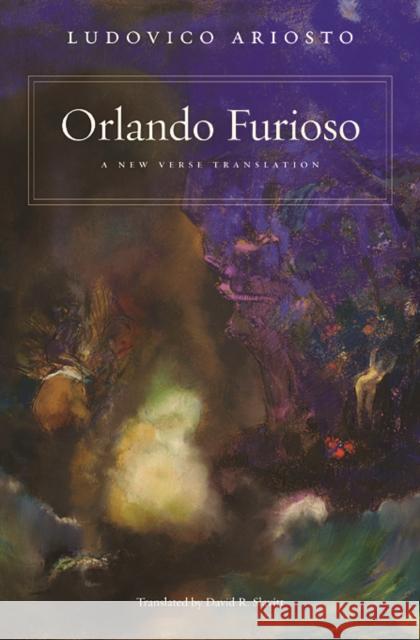
The appearance of David R. Slavitt's translation of Orlando Furioso ("Mad Orlando"), one of the great literary achievements of the Italian Renaissance, is a publishing event. With this lively new verse translation, Slavitt introduces readers to Ariosto's now neglected masterpiece--a poem whose impact on Western literature can scarcely be exaggerated. It was a major influence on Spenser's Faerie Queene. William Shakespeare borrowed one of its plots. Voltaire called it the equal of the Iliad, the Odyssey, and Don Quixote combined. More recently, Italo Calvino...
The appearance of David R. Slavitt's translation of Orlando Furioso ("Mad Orlando"), one of the great literary achievements of the Italian Rena...
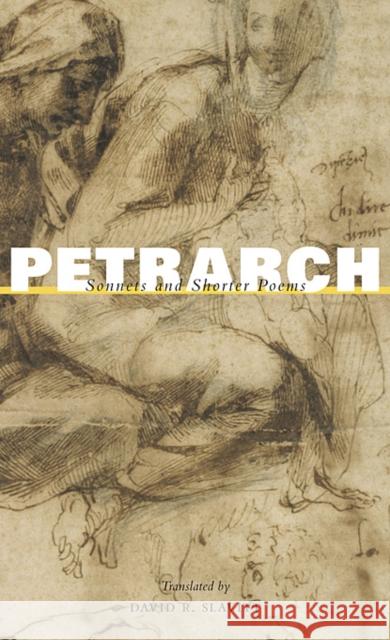
In this volume, David R. Slavitt, the distinguished translator and author of more than one hundred works of fiction, poetry, and drama, turns his skills to Il Canzoniere (Songbook) by Petrarch, the most influential poet in the history of the sonnet. In Petrarch's hands, lyric verse was transformed from an expression of courtly devotion into a way of conversing with one's own heart and mind. Slavitt renders the sonnets in Il Canzoniere, along with the shorter madrigals and ballate, in a sparkling and engaging idiom and in rhythm and rhyme that do justice to Petrarch's...
In this volume, David R. Slavitt, the distinguished translator and author of more than one hundred works of fiction, poetry, and drama, turns his s...
This volume of poetry illustrates a new side of the author of The Carnivore and Suits for the Dead. The wit, the toughness, the shining lyric clarity of the earlier books are still here, but they have been joined by a quiet understanding, a joyfulness, and an acceptance of things as they are that indicates the poet has moved into a new and most exciting period.
Originally published in 1969.
A UNC Press Enduring Edition -- UNC Press Enduring Editions use the latest in digital technology to make available again books from our distinguished backlist that were...
This volume of poetry illustrates a new side of the author of The Carnivore and Suits for the Dead. The wit, the toughness, the shining ...
Virgil is Publius Vergilius Maro (70 BC - 19 BC), classical Roman poet, author of Aeneid, Eclogues, and Georgics. Biographical and historical study includes analyses of his works and his profound influence on Medieval writers, including Dante. Slavitt provides new translations of Georgics and Eclogues. Hermes series on classical authors.
Virgil is Publius Vergilius Maro (70 BC - 19 BC), classical Roman poet, author of Aeneid, Eclogues, and Georgics. Biographical and historical study in...
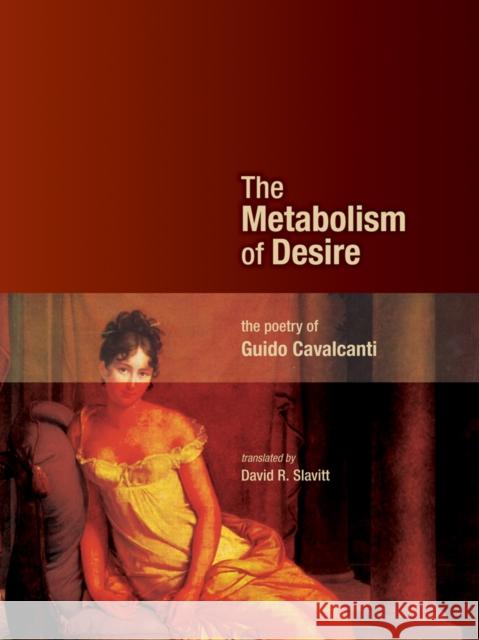
The fact that Cavlacanti's friend, Dante Alighieri, was a supremely fine poet ought not blind us to Cavalcanti's own, rather different excellence. Both men were attracted to the dolce stil nuovo, the ""sweet new style"" that emerged in thirteenth-century Florence. While Dante's poetry was devoted to his childhood sweetheart, Beatrice, Cavalcanti's poetry had more the tang of real-world experience: he struggled against unruly passions and sought instead to overcome love - a source of torment and despair.
It is chiefly through the translations of Rossetti and Pound that...
The fact that Cavlacanti's friend, Dante Alighieri, was a supremely fine poet ought not blind us to Cavalcanti's own, rather different excellence. ...
Three mysterious Greenlandic poets are translated for the first time into English by David R. Slavitt--a poet and novelist as well as a prodigious translator of Greek, Latin, Hebrew, Italian, Portuguese, and Sanskrit--and Nive Gr nkj r, a native Greenlander named "Greenland's connection to the Anglophone world" by Ekstra Bladet.
Three mysterious Greenlandic poets are translated for the first time into English by David R. Slavitt--a poet and novelist as well as a prodigious tra...
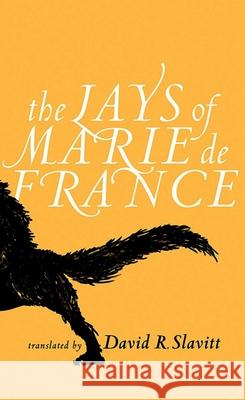
The twelve ?lays? of Marie de France, the earliest known French woman poet, are here presented in sprightly English verse by poet and translator David R. Slavitt. Traditional Breton folktales were the raw material for Marie de France's series of lively but profound considerations of love, life, death, fidelity and betrayal, and luck and fate. They offer acute observations about the choices that women make, startling in the late twelfth century and challenging even today. Combining a woman's wisdom with an impressive technical bravura, the lays are a minor treasure of European culture.
The twelve ?lays? of Marie de France, the earliest known French woman poet, are here presented in sprightly English verse by poet and translator Da...