This volume places the welfare debates of the 1980s in the context of past patterns of U.S. policy, such as the Social Security Act of 1935, the failure of efforts in the 1940s to extend national social benefits and economic planning, and the backlashes against "big government" that followed reforms of the 1960s and early 1970s. Historical analysis reveals that certain social policies have flourished in the United States: those that have appealed simultaneously to middle-class and lower-income people, while not involving direct bureaucratic interventions into local communities. The editors...
This volume places the welfare debates of the 1980s in the context of past patterns of U.S. policy, such as the Social Security Act of 1935, the fa...
Health care, welfare, Social Security, employment programs--all are part of ongoing national debates about the future of social policy in the United States. In this wide-ranging collection of essays, Theda Skocpol shows how historical understanding, centered on governmental institutions and political alliances, can illuminate the limits and possibilities of American social policymaking both past and present. Skocpol dispels the myth that Americans are inherently hostile to social spending and suggests why President Clinton's health care agenda was so quickly attacked despite the support of...
Health care, welfare, Social Security, employment programs--all are part of ongoing national debates about the future of social policy in the Unite...
The contemporary American political landscape has been marked by two paradoxical transformations: the emergence after 1960 of an increasingly activist state, and the rise of an assertive and politically powerful conservatism that strongly opposes activist government. Leading young scholars take up these issues in The Transformation of American Politics. Arguing that even conservative administrations have become more deeply involved in managing our economy and social choices, they examine why our political system nevertheless has grown divided as never before over the extent to which...
The contemporary American political landscape has been marked by two paradoxical transformations: the emergence after 1960 of an increasingly activ...
The work of Barrington Moore, Jr., is one of the landmarks of modern social science. A distinguished roster of contributors here discusses the influence of his best-known work, Social Origins of Dictatorship and Democracy. Their individual perspectives combine in delineating Moore's contributions to the transformation of comparative and historical social science over the past several decades.
The essays in Democracy, Revolution, and History all address substantive and methodological problems, asking questions about the different historical paths toward democratic or...
The work of Barrington Moore, Jr., is one of the landmarks of modern social science. A distinguished roster of contributors here discusses the infl...
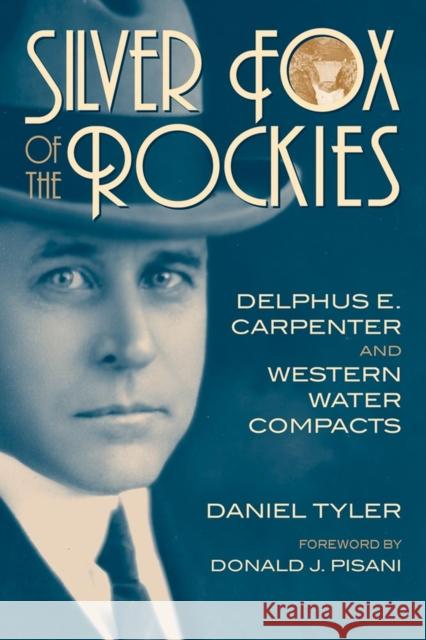
Delphus E. Carpenter (1877-1951) was Colorado's commissioner of interstate streams during a time when water rights were a legal battleground for western states. A complex, unassuming man as rare and cunning in politics and law as the elusive silver fox of the Rocky Mountain West, Carpenter boldly relied on negotiation instead of endless litigation to forge agreements among states first, before federal intervention. In Silver Fox of the Rockies, Daniel Tyler tells Carpenter's story and that of the great interstate water compacts he helped create. Those compacts, produced in the early...
Delphus E. Carpenter (1877-1951) was Colorado's commissioner of interstate streams during a time when water rights were a legal battleground for we...
Pundits and social observers have voiced alarm each year as fewer Americans involve themselves in voluntary groups that meet regularly. Thousands of nonprofit groups have been launched in recent times, but most are run by professionals who lobby Congress or deliver social services to clients. What will happen to U.S. democracy if participatory groups and social movements wither, while civic involvement becomes one more occupation rather than every citizen's right and duty? In Diminished Democracy, Theda Skocpol shows that this decline in public involvement has not always been the...
Pundits and social observers have voiced alarm each year as fewer Americans involve themselves in voluntary groups that meet regularly. Thousands o...
An analysis of civic engagement in American democracy. It opens with a look at the roots of America's patterns of civic engagement, examining the ways in which social groups and government and electoral politics have influenced each other. Other chapters examine the impact of advocacy groups and socioeconomic inequalities on democratic processes and probe the influence of long-term social and cultural changes on voluntary associations and civic participation. The book concludes by asking why social liberation has been accompanied by new inequalities and the erosion of many important forms of...
An analysis of civic engagement in American democracy. It opens with a look at the roots of America's patterns of civic engagement, examining the ways...
Until recently, dominant theoretical paradigms in the comparative social sciences did not highlight states as organizational structures or as potentially autonomous actors. Indeed, the term 'state' was rarely used. Current work, however, increasingly views the state as an agent which, although influenced by the society that surrounds it, also shapes social and political processes. The contributors to this volume, which includes some of the best recent interdisciplinary scholarship on states in relation to social structures, make use of theoretically engaged comparative and historical...
Until recently, dominant theoretical paradigms in the comparative social sciences did not highlight states as organizational structures or as potentia...
At the turn of the twentieth century, black fraternities and sororities, also known as Black Greek-Letter Organizations (BGLOs), were an integral part of what W.E.B. Du Bois called the -talented tenth.- This was the top ten percent of the black community that would serve as a cadre of educated, upper-class, motivated individuals who acquired the professional credentials, skills, and capital to assist the race to attain socio-economic parity. Today, however, BGLOs struggle to find their place and direction in a world drastically different from the one that witnessed their genesis.
In...
At the turn of the twentieth century, black fraternities and sororities, also known as Black Greek-Letter Organizations (BGLOs), were an integral p...
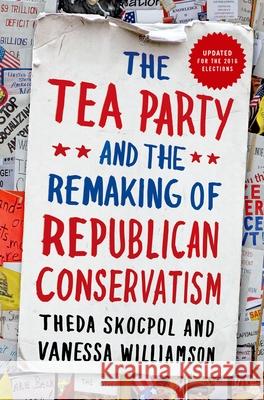
This revised edition features a new afterword, updated through the 2016 election. On February 19, 2009, CNBC commentator Rick Santelli delivered a dramatic rant against Obama administration programs to shore up the plunging housing market. Invoking the Founding Fathers and ridiculing "losers" who could not pay their mortgages, Santelli called for "Tea Party" protests. Over the next two years, conservative activists took to the streets and airways, built hundreds of local Tea Party groups, and weighed in with votes and money to help right-wing Republicans win electoral victories in 2010....
This revised edition features a new afterword, updated through the 2016 election. On February 19, 2009, CNBC commentator Rick Santelli delivered a...