Upton Sinclair (1878 A 1968) wrote over 90 books in several genres. He was considered to be a leading social advocate. Because of his novel The Jungle, which dealt with conditions in the meat packing industry, The Pure Food and Drug Act and the Meat Inspection Act were passed. Love's Pilgrimage was written in 1911. It advocates the new morals and is an extended account of Sinclair's "love program for a poet." An excerpt reads, "Section 1. It was the Highway of Lost Men. They shivered, and drew their shoulders together as they walked, for it was night, and a cold, sleety rain was falling. The...
Upton Sinclair (1878 A 1968) wrote over 90 books in several genres. He was considered to be a leading social advocate. Because of his novel The Jungle...
Will (wildly). Why do we have to start that now? I want to finish the play! (Drags her to work-table.) Come! Sit down here and let's get busy! Right off! Not another word! (They sit side by side.) I've a scene here with Bill. I want to know what you think of it. (Lights begin to rise on Play-play.) Bill comes to see Belle.
Will (wildly). Why do we have to start that now? I want to finish the play! (Drags her to work-table.) Come! Sit down here and let's get busy! Right o...
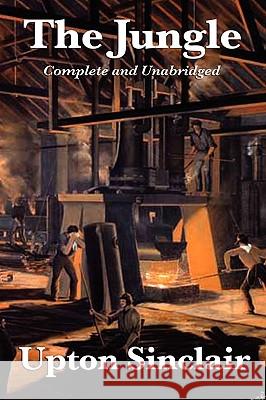
Set in the early 1900's in working class America, a young immigrant couple, full of hope for a better future, are faced with the real life struggle of achieving the American dream from the bottom up. The dark and dangerous working conditions of the meatpacking district, along with the impossibility of pulling oneself up by one's bootstraps leads the protagonist, Jurgis Rudkus, to join a union. Soon, corruption and bribery reveal themselves as the foundation for business and politics of the time, and Jurgis comes to understand that the American dream is far out of his reach unless he changes...
Set in the early 1900's in working class America, a young immigrant couple, full of hope for a better future, are faced with the real life struggle of...
A searing novel of social realism, Upton Sinclair's The Jungle follows the fortunes of Jurgis Rudkus, an immigrant who finds in the stockyards of turn-of-the-century Chicago a ruthless system that degrades and impoverishes him, and an industry whose filthy practices contaminate the meat it processes. From the stench of the killing-beds to the horrors of the fertilizer-works, the appalling conditions in which Jurgis works are described in intense detail by an author bent on social reform. So powerful was the book's message that it caught the eye of President Theodore Roosevelt and led to...
A searing novel of social realism, Upton Sinclair's The Jungle follows the fortunes of Jurgis Rudkus, an immigrant who finds in the stockyards of turn...
Upton Sinclair's classic brings home the brutal plight of the working class, exposing the corruption and callousness of Corporate America. Just as relevant today as when it was first published.
Upton Sinclair's classic brings home the brutal plight of the working class, exposing the corruption and callousness of Corporate America. Just as rel...
The Profits of Religion: An Essay in Economic Interpretation is a snapshot of the religious movements in the U.S. before its entry into World War I.
The book is the first of the "Dead Hand" series: six books Upton Sinclair wrote on American institutions. The series also includes The Brass Check (journalism), The Goose-step (higher education), The Goslings (elementary and high school education), Mammonart (art) and Money Writes! (literature). The term "Dead Hand" ironically refers to Adam Smiths concept that allowing an "invisible hand" of individual self interest to shape economic relations...
The Profits of Religion: An Essay in Economic Interpretation is a snapshot of the religious movements in the U.S. before its entry into World War I.