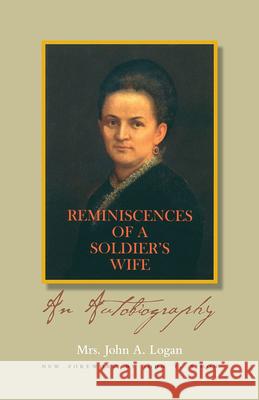
"To tell my own story is to tell that of my famous husband, General John A. Logan," explains Mary S. Logan in the preface to her autobiography.
Married to John A. Logan for thirty-one years, Mary Logan shared in her distinguished husband s career as a prosecutor in southern Illinois, as a Civil War general, and as a senator from Illinois. She observed firsthand the extraordinary events before, during, and after the Civil War, and she knew personally those world leaders who held the power to shape history. After the death of her husband, she maintained her influence in Washington, D.C....
"To tell my own story is to tell that of my famous husband, General John A. Logan," explains Mary S. Logan in the preface to her autobiography.
In the spring of 1871, Ulysses S. Grant wrote to an old friend that as president he was "the most persecuted individual on the Western Continent." Grant had not sought the office, and halfway through his first term he chafed under its many burdens.
Grant's cherished project to annex Santo Domingo, begun early in his administration, entered a crucial period. Grant agreed to a tactical compromise: Rather than vote the controversial treaty down, Congress sent a commission to investigate the island. Grant's message submitting the report, hammered out over labored drafts, bore a defensive...
In the spring of 1871, Ulysses S. Grant wrote to an old friend that as president he was "the most persecuted individual on the Western Continent." ...
In his third annual message to the nation, Ulysses S. Grant stated the obvious: "The condition of the Southern States is, unhappily, not such as all true patriotic citizens would like to see." Brutal attacks and political murders throughout the South prompted Grant to invoke the new Enforcement Act, ordering in troops and suspending the writ of habeas corpus.
When fire swept through Chicago during 1871, Grant immediately telegraphed to General Philip H. Sheridan to "Render all the aid you can." When Illinois' governor charged federal interference, Grant replied: "The only thing...
In his third annual message to the nation, Ulysses S. Grant stated the obvious: "The condition of the Southern States is, unhappily, not such as al...
Notified of his nomination for a second term in June 1872, Ulysses S. Grant accepted, promising "the same zeal and devotion to the good of the whole people for the future of my official life, as shown in the past." Challenged by a coalition of disaffected Republicans and Democrats led by New York Tribune editor Horace Greeley, Grant was privately optimistic about his own chances. "There has been no time from the Baltimore Convention to this when I have felt the least anxiety. The Soreheads & thieves who have deserted the republican party have strengthened it by their departure."...
Notified of his nomination for a second term in June 1872, Ulysses S. Grant accepted, promising "the same zeal and devotion to the good of the whole p...
Inaugurated for a second term on March 4, 1873, Ulysses S. Grant gave an address that was both inspiring and curiously bitter. He told the assembled crowd, "It is my firm conviction that the civilized world is tending towards republicanism, or government by the people through their chosen representatives, and that our own great republic is destined to be the guiding star to all others." Yet he ended the speech on an almost petulant note: "I have been the subject of abuse and slander scarcely ever equaled in political history, which to-day I feel that I can afford to disregard in view of your...
Inaugurated for a second term on March 4, 1873, Ulysses S. Grant gave an address that was both inspiring and curiously bitter. He told the assembled c...
Originally published in 1909, this biography by Isabel Wallace recounts the life of her adoptive father, the little-recognized William Hervy Lamme Wallace, the highest-ranking Union officer to fall at the battle of Shiloh.Born in 1821 in Ohio, Wallace and his family moved to Illinois in 1834, where he was educated at Rock Springs Seminary in Mount Morris. On his way to study law with Abraham Lincoln in Springfield in 1844, Wallace was persuaded by local attorney T. Lyle Dickey, a close friend of Lincoln, to join his practice in Ottawa instead. Wallace eventually married Dickey s...
Originally published in 1909, this biography by Isabel Wallace recounts the life of her adoptive father, the little-recognized William Hervy Lamme Wal...
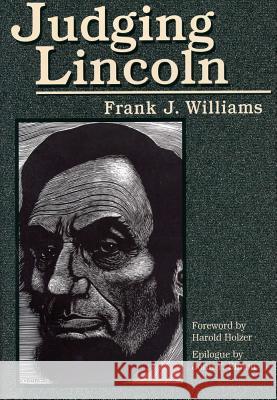
"Judging Lincoln "collects nine of the most insightful essays on the topic of the sixteenth president as written over the past twenty years by Frank J. Williams, chief justice of the Rhode Island Supreme Court and one of the nation s leading authorities on Abraham Lincoln. For Judge Williams, Lincoln remains the central figure of the American experiencepast, present, and future. With this collection, he boldly reassesses Lincoln s legacy as we enter the twenty-first century.Williams begins with a survey of the interest inand influence ofLincoln both at home and abroad and then moves into an...
"Judging Lincoln "collects nine of the most insightful essays on the topic of the sixteenth president as written over the past twenty years by Frank J...
Ulysses S. Grant faced numerous political challenges during 1874. In the south, the Republican party steadily receded from power. As the year opened, Grant conceded Texas to the Democrats, counseling the recently defeated Republican governor to "yield to the verdict of the people as expressed by their ballots." Throughout the spring, Grant monitored an explosive situation in Arkansas, where rival governors set up contending governments. And in Louisiana, the emergence of the White League led to a pitched battle on the streets of New Orleans. All over the south, what Grant called "atrocities"...
Ulysses S. Grant faced numerous political challenges during 1874. In the south, the Republican party steadily receded from power. As the year opened, ...
Pressured in 1875 to declare himself for or against a third term as president, Ulysses S. Grant found it equally difficult to decide what he wanted and to explain himself to the nation. In May, he pronounced the idea of a third term both constitutional and potentially expedient, and defended the right of the people to choose their own leaders. Grant disavowed any desire to continue as president but expressed gratitude at being chosen twice already. His conclusion left room for doubt. "I would not accept a nomination if it were tendered unless it should come under such circumstances as to make...
Pressured in 1875 to declare himself for or against a third term as president, Ulysses S. Grant found it equally difficult to decide what he wanted an...
Each year, hundreds of scholars and other enthusiasts mark the anniversary of the Gettysburg Address by gathering together in Gettysburg, Pennsylvania for the Lincoln Forum. There, leading historians reinterpret and rediscover the legacy of Abraham Lincoln. Now the best recent Lincoln Forum essays are available in one volume, offering important reexaminations of Lincoln as military leader, communicator, family man, and icon. The contributors include James M. McPherson, Craig L. Symonds, John F. Marszalek, Jean H. Baker, Hans L. Trefousse, J. Tracy Power, John C. Waugh, Gerald Prokopowicz, and...
Each year, hundreds of scholars and other enthusiasts mark the anniversary of the Gettysburg Address by gathering together in Gettysburg, Pennsylvania...