This imaginative reworking of the story of Abraham and Sarah combines in a 'novelized essay' myth, rabbinic lore, storytelling, and psychological insight to create new and revealing interpretations of ancient texts.
This imaginative reworking of the story of Abraham and Sarah combines in a 'novelized essay' myth, rabbinic lore, storytelling, and psychological insi...
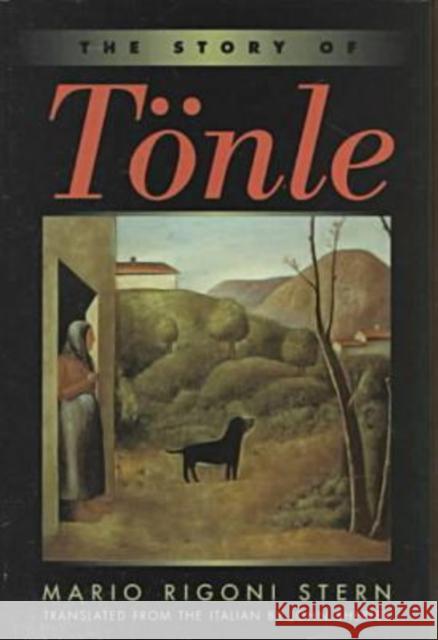
Mario Rigoni Stern was born in 1921 in Asiago, in the mountains of northeastern Italy. Throughout his literary career, he has remained deeply attached to the region of his birth, its peasant customs, its dialect, its seasonal cycles and shifting historical fortunes. Tonle Bintarn's story takes place in the mountains of the Veneto region, which once bordered the Austro-Hungarian Empire and where smuggling was a means of subsistence for the peasant population. Having run afoul of a patrol of revenue agents, Tonle must seek refuge beyond the frontier in Central Europe, where year after year he...
Mario Rigoni Stern was born in 1921 in Asiago, in the mountains of northeastern Italy. Throughout his literary career, he has remained deeply attached...
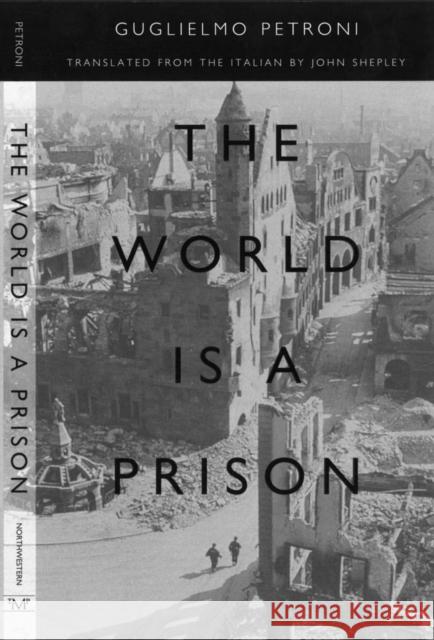
This classic of war literature is the story of Guglielmo Petroni--not only his experiences in the hands of Fascist police and the Gestapo, but a meditation on the survival and growth of his compatriots and his nation. Terror, uncertainty, the fear of death, and the brutality he encounters at nearly every turn are all described in concrete terms, but the author's restrained tone, informed by a sense of paradox and the absurd, conveys a depth of feeling that makes this memoir all the more remarkable.
This classic of war literature is the story of Guglielmo Petroni--not only his experiences in the hands of Fascist police and the Gestapo, but a medit...
The World Is a Prison is Guglielmo Petroni's story of survival and growth, an account of his experiences and a meditation on their meaning for himself, for his compatriots, and for an entire country. Terror, uncertainty, the fear of death, and the brutality he encounters at nearly every turn are all described in concrete terms, but the author's restrained tone, informed by a sense of paradox and the absurd, conveys a depth of feeling that makes this prison memoir all the more remarkable.
The World Is a Prison is Guglielmo Petroni's story of survival and growth, an account of his experiences and a meditation on their meaning for himself...
The first of his three classic autobiographical novels, "The Fifth Estate" chronicles the passing in our own time of an ageless civilization, that of the peasant world Camon was born into. The trilogy--which also includes "Life Everlasting" and "Memorial"--has appeared in translation worldwide since its publication in the 1970s.
The first of his three classic autobiographical novels, "The Fifth Estate" chronicles the passing in our own time of an ageless civilization, that of ...
Together with "The Fifth Estate" and "Memorial, Life Everlasting" belongs to a sequence of fictional memoirs which brilliantly evokes peasant society in the Veneto in northeast Italy. It was into that ageless traditional society that Camon himself was born, and it is its disappearance in our own time that this trilogy relates.
Together with "The Fifth Estate" and "Memorial, Life Everlasting" belongs to a sequence of fictional memoirs which brilliantly evokes peasant society ...
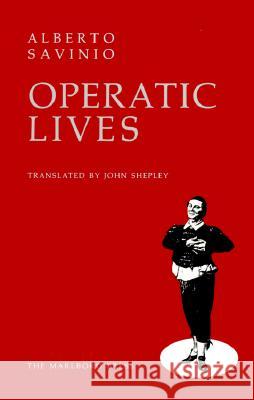
Writing under the pen name Alberto Savinio, Andrea de Chirico (brother of painter Giorgio) penned fourteen short portraits of such luminaries as the painter Arnold Bocklin, the poet Guillaume Apollinaire, Verdi, Stradivarius, Nostradamus, Paracelsus, Jules Verne, the bullfighter Bienvenido, Isadora Duncan, and Carlo Collodi, the creator of Pinocchio. In these biographies, Savinio's complex tone is at times warm and cordial -and, at other times, ironic to the point of malignancy. "
Writing under the pen name Alberto Savinio, Andrea de Chirico (brother of painter Giorgio) penned fourteen short portraits of such luminaries as the p...
First published in Italy in 1921, this short novel is a dark, grim account of two Sicilian women's voluntary imprisonment in the elder's dull, dour marriage. Sisters Nicolina and Antonietta see their chance to flee their small Italian village when Don Lucio announces his intentions to marry Antonietta. They envision a grand life for themselves in Lucio's large, gloomy house in the city--but their taste of freedom proves fleeting. Nicolina dwindles to an unpaid drudge for her sister's family, while Antonietta fares only slightly better as a wife-of-all-work and beleaguered mother. Together the...
First published in Italy in 1921, this short novel is a dark, grim account of two Sicilian women's voluntary imprisonment in the elder's dull, dour ma...