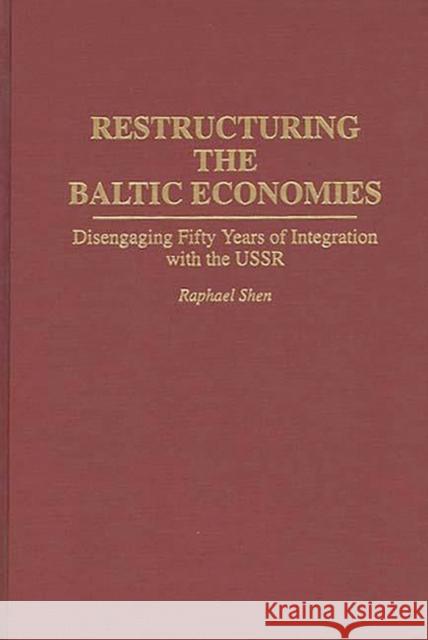
The promise of a smooth systemic transformation in the Baltic states has been overshadowed by unforeseen obstacles. Speedy disengagement from the past, particularly from long established practices and inherited economic relationships, has proven more trying than originally anticipated. Compelling interview materials from the region's 115 leading government officials, including prime ministers, and academicians, highlight the major points of the text. Scholars in the United States and Europe, government officials, research and business institutes, and business trade associations will find...
The promise of a smooth systemic transformation in the Baltic states has been overshadowed by unforeseen obstacles. Speedy disengagement from the p...
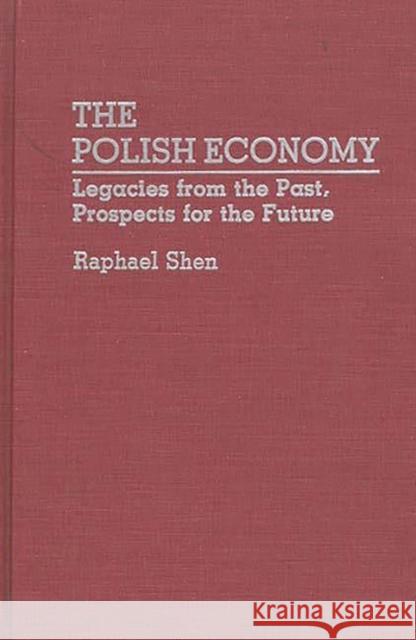
.Economic reform measures introduced in Poland have been the most radical and ambitious in the newly free countries of Eastern Europe. In a short time that country has moved from a centrally planned economy to a free-market system. The ramifications and implications of these economic reforms are influencing economic thought and planning in other recently liberalized, formerly communist societies.
Raphael Shen asserts that measures taken to transform the Polish economy should be implemented over time rather than overnight, and should be moderate rather than radical. Throwing the...
.Economic reform measures introduced in Poland have been the most radical and ambitious in the newly free countries of Eastern Europe. In a short t...
This study examines the relative successes and failures of reform programs in Poland and Czechoslovakia, as well as the causes of these successes and failures. It provides a synthesized and comparative study of efforts to achieve systemic economic transformation. The work begins with the identification of background forces in these two countries--cultural, social, political, and economic--analyzing their impact on micro-responsiveness to reform policies. Then, within the framework of these forces, the author traces the causes of the two economies' reform failures during and since the...
This study examines the relative successes and failures of reform programs in Poland and Czechoslovakia, as well as the causes of these successes a...
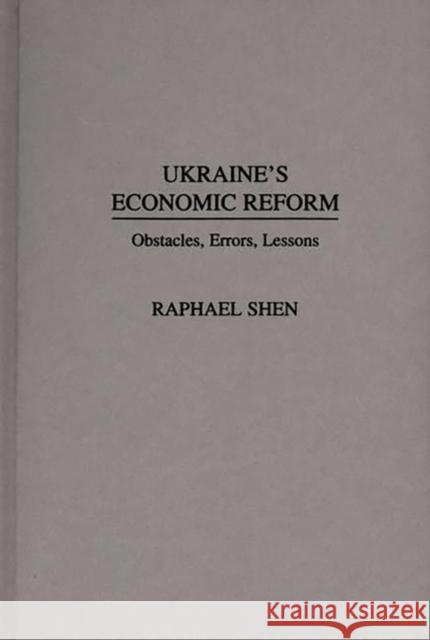
Political and economic independence has been a novel experience for the 51 million people of Ukraine since the collapse of the former Soviet Union. This most tightly controlled and regulated republic of the former USSR has had difficulty in making the transition to another form of government. The hurdles and uncommon difficulties which must be neutralized or mitigated before market forces can materialize and become viable are described and analyzed in each of the core chapters. The work concludes with practical lessons and recommendations for Ukraine, and, by extrapolation, for the other...
Political and economic independence has been a novel experience for the 51 million people of Ukraine since the collapse of the former Soviet Union....
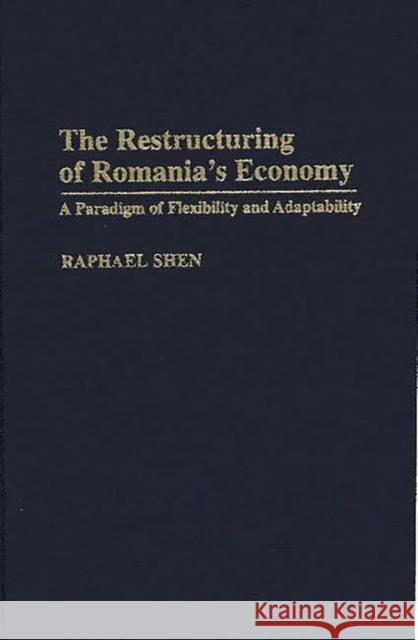
Given the political, financial, social, and economic conditions inherited from Communist rule, Romania's new government concluded that a shock therapy approach to reform would create unmanageable chaos and enduring instability. Though committed to economic liberalization, decisionmakers espoused a gradualist approach to economic reform. The government pursued its objectives by implementing policies it considered functionally operational. Although Romania experienced the macro dislocations and downturns that are common in transitional economies in the region, the country sustained shallower...
Given the political, financial, social, and economic conditions inherited from Communist rule, Romania's new government concluded that a shock ther...
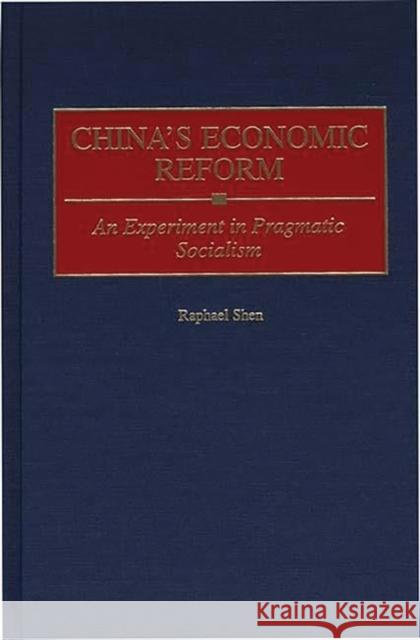
Both Mao Zedong and Deng Xiaoping drastically altered the course of contemporary China's economic development using opposing strategies. Mao froze China's economic system in a perennial state of consumer goods shortages and pervasive macro disequilibria. Deng, however, began thawing a rigidly structured system by introducing experimental reform measures. Mao's revolutionary rhetoric brought China's economy to the brink of bankruptcy. Deng's ideological pragmatism netted China glowing successes. Mao closed China to the outside world. Deng engineered China's reintegration into the world...
Both Mao Zedong and Deng Xiaoping drastically altered the course of contemporary China's economic development using opposing strategies. Mao froze ...
The future success of China's rapidly growing economy remains uncertain. This book analyzes official documents, data and current writings of recognized academicians investigating China's experience with systemic restructuring.
The future success of China's rapidly growing economy remains uncertain. This book analyzes official documents, data and current writings of recognize...