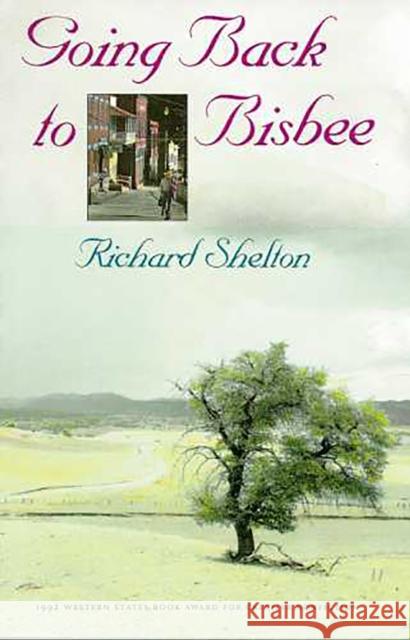
One of America's most distinguished poets now shares his fascination with a distinctive corner of our country. Richard Shelton first came to southeastern Arizona in the 1950s as a soldier stationed at Fort Huachuca. He soon fell in love with the region and upon his discharge found a job as a schoolteacher in nearby Bisbee. Now a university professor and respected poet living in Tucson, still in love with the Southwestern deserts, Shelton sets off for Bisbee on a not-uncommon day trip. Along the way, he reflects on the history of the area, on the beauty of the landscape, and on his own...
One of America's most distinguished poets now shares his fascination with a distinctive corner of our country. Richard Shelton first came to so...
Ever since he was asked to critique the poetry of a convicted murderer, he has lived in two worlds. Richard Shelton was a young English professor in 1970 when a convict named Charles Schmid a serial killer dubbed the Pied Piper of Tucson in national magazines shared his brooding verse. But for Shelton, the novelty of meeting a death-row monster became a thirty-year commitment to helping prisoners express themselves. Shelton began organizing creative writing workshops behind bars, and in this gritty memoir he offers up a chronicle of reaching out to forgotten men and women and of creativity...
Ever since he was asked to critique the poetry of a convicted murderer, he has lived in two worlds. Richard Shelton was a young English professor in 1...
Ever since he was asked to critique the poetry of a convicted murderer, he has lived in two worlds. Richard Shelton was a young English professor in 1970 when a convict named Charles Schmid--a serial killer dubbed the "Pied Piper of Tucson" in national magazines--shared his brooding verse. But for Shelton, the novelty of meeting a death-row monster became a thirty-year commitment to helping prisoners express themselves. Shelton began organizing creative writing workshops behind bars, and in this gritty memoir he offers up a chronicle of reaching out to forgotten men and women--and of...
Ever since he was asked to critique the poetry of a convicted murderer, he has lived in two worlds. Richard Shelton was a young English professor...
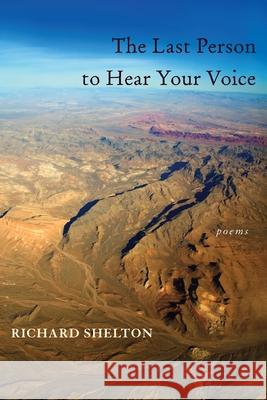
While Shelton has been known primarily for his poems dealing with the landscape of the Southwest and the destruction of that landscape, the poems in this book are much more far-ranging, including many poems dealing with soocial issues (the issue of illegal immigration on our southern border, homelessness), historical events (the war in Iraq, the events of 9/11) and attitudes concerning politics and the environment. The poems are filled with sensory images, engaged in the real world, often ironic or simply off-the-wall, and their tone ranges from deeply sad, as in a requiem for Glen Canyon on...
While Shelton has been known primarily for his poems dealing with the landscape of the Southwest and the destruction of that landscape, the poems in t...
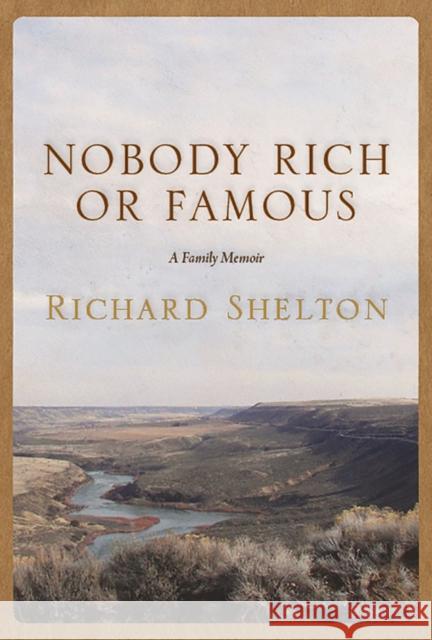
Once in a while, a book comes along that redefines the concept of family. Frank McCourt did it with Angela's Ashes; Annie Dillard did it with An American Childhood. In Nobody Rich or Famous, author Richard Shelton (b. 1933) immerses us in the hardscrabble lives of his Boise, Idaho, clan during the 1930s and '40s. Using a framework of journals, road trips, and artful storytelling, Shelton traces three generations of women. We meet his mother, Hazel, a model of western respectability, who carefully dresses in her finest clothes before walking into a bar and emptying a...
Once in a while, a book comes along that redefines the concept of family. Frank McCourt did it with Angela's Ashes; Annie Dillard did it with <...
Once in a while, a book comes along that redefines the concept of family. Frank McCourt did it with Angela's Ashes; Annie Dillard did it with An American Childhood. In Nobody Rich or Famous, author Richard Shelton (b. 1933) immerses us in the hardscrabble lives of his Boise, Idaho, clan during the 1930s and '40s. Using a framework of journals, road trips, and artful storytelling, Shelton traces three generations of women. We meet his mother, Hazel, a model of western respectability, who carefully dresses in her finest clothes before walking into a bar and emptying a...
Once in a while, a book comes along that redefines the concept of family. Frank McCourt did it with Angela's Ashes; Annie Dillard did it with <...
Shelton says of his work: "I consider myself a regionalist and a surrealist. I have lived in the desert for ten years and hope that my work reflects that fact." In the forty-seven poems in this collection the poet moves backward and forward through time but always in the same landscape, the desert-mountains of southern Arizona, which foster his surrealistic view of his interior conflict. He is followed by peculiarly insistent voices from the past.
Shelton says of his work: "I consider myself a regionalist and a surrealist. I have lived in the desert for ten years and hope that my work reflects t...
Biocompatibility of Dental Biomaterials details and examines the fundamentals of biocompatibililty, also including strategies to combat it. As biomaterials used in the mouth are subject to different problems than those associated with the general in vivo environment, this book examines these challenges, presenting the latest research and forward-thinking strategies.
Explores the fundamentals of dental biomaterials and their compatibility
Presents a thorough review of material specific issues
Biocompatibility of Dental Biomaterials details and examines the fundamentals of biocompatibililty, also including strategies to combat it. ...