A. C. Scott's first visit to China in 1946 marked the beginning of a personal involvement with that nation's people and culture that would prove singular in its intensity, intimacy, and joy. Now, more than three decades later, an eminent Western authority on Asian theatre looks back on those early years of discovery in a memoir that is at once compelling drama and vividly etched history. This is an explorer's impressions of a world which few foreigners have ever seen and a scholar's unique depiction of pre-liberation China, its society, customs, and theatre, before the final curtain fell. For...
A. C. Scott's first visit to China in 1946 marked the beginning of a personal involvement with that nation's people and culture that would prove singu...
A. C. Scott, a student of Chinese culture, traces the development of the novel, short story, and poetry; the theatre and dance; painting, the graphic arts, and sculpture; architecture; and music through the 20th century. He also discusses the artistic achievements of the Chinese outside of China.
A. C. Scott, a student of Chinese culture, traces the development of the novel, short story, and poetry; the theatre and dance; painting, the graph...
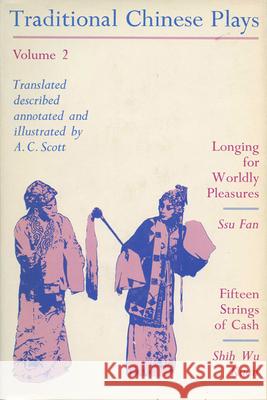
The world of traditional Chinese drama can be at once fascinating and bewildering to the uninitiated Western observer. Attuned to his own dramatic conventions, he is hard put to apprehend the delicate fusion of poetry, music, and subtle gesture which is the essence of Chinese theatre. Because of these difficulties, the task of translating traditional Chinese drama must go far beyond the conventional literary treatment and evoke the entire world of stagecraft and directing. Longing for Worldly Pleasures (Ssu Fan) is a lyric monologue in which a young Buddhist laments the waning...
The world of traditional Chinese drama can be at once fascinating and bewildering to the uninitiated Western observer. Attuned to his own dramatic ...
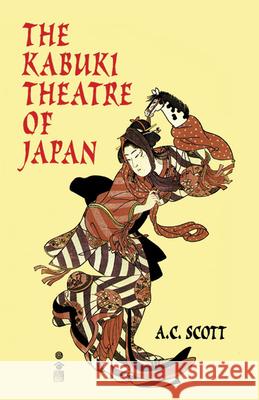
"Highly recommended." "Library Journal." One of the most comprehensive handbooks available on Kabuki theatre provides readers with all the information they need to understand and appreciate this exciting amalgam of dramatic and musical arts. A clear and thoughtfully written text describes the theater's development in the context of Japanese history, with detailed analyses of actors' techniques, music and dance, plays and playwrights, the playhouse's design evolution, and six representative Kabuki plays. Includes glossary of Japanese terms. Invaluable to students, scholars and anyone intrigued...
"Highly recommended." "Library Journal." One of the most comprehensive handbooks available on Kabuki theatre provides readers with all the information...