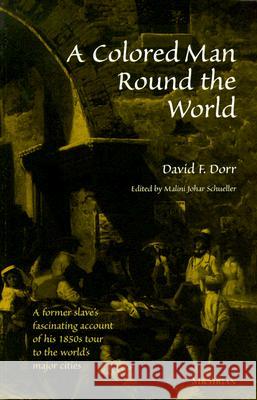
This remarkable book, written by former slave David F. Dorr, published in the mid-nineteenth century and only recently rediscovered, is an uncommon travel narrative. In the 1850s Dorr accompanied Louisiana plantation owner Cornelius Fellowes on a tour of the world's major cities, with the promise that when they returned to the United States, Dorr would be given his freedom. When that promise was broken, Dorr escaped to Ohio and wrote of his experiences in A Colored Man Round the World. Malini Johar Schueller has edited and annotated the 1858 text and added a critical introduction...
This remarkable book, written by former slave David F. Dorr, published in the mid-nineteenth century and only recently rediscovered, is an uncommon tr...
U.S. Orientalisms is the first extensive and politicized study of nineteenth century American discourses that helped build an idea of nationhood with control over three "Orients": the "Barbary" Orient; the Orient of Egypt; and the Orient of India. Malini Johar Schueller persuasively argues that current notions about the East can be better understood as latter-day manifestations of the earlier U.S. visions of the Orient refracted variously through millennial fervor, racial-cultural difference, and ideas of Westerly empire. This book begins with an examination of the literature of the...
U.S. Orientalisms is the first extensive and politicized study of nineteenth century American discourses that helped build an idea of nationhoo...
"Exceptional State" analyzes the nexus of culture and contemporary manifestations of U.S. imperialism. The contributors, established and emerging cultural studies scholars, define culture broadly to include a range of media, literature, and political discourse. They do not posit September 11, 2001 as the beginning of U.S. belligerence and authoritarianism at home and abroad, but they do provide context for understanding U.S. responses to and uses of that event. Taken together, the essays stress both the continuities and discontinuities embodied in a present-day U.S. imperialism constituted...
"Exceptional State" analyzes the nexus of culture and contemporary manifestations of U.S. imperialism. The contributors, established and emerging cult...
"Exceptional State" analyzes the nexus of culture and contemporary manifestations of U.S. imperialism. The contributors, established and emerging cultural studies scholars, define culture broadly to include a range of media, literature, and political discourse. They do not posit September 11, 2001 as the beginning of U.S. belligerence and authoritarianism at home and abroad, but they do provide context for understanding U.S. responses to and uses of that event. Taken together, the essays stress both the continuities and discontinuities embodied in a present-day U.S. imperialism constituted...
"Exceptional State" analyzes the nexus of culture and contemporary manifestations of U.S. imperialism. The contributors, established and emerging cult...