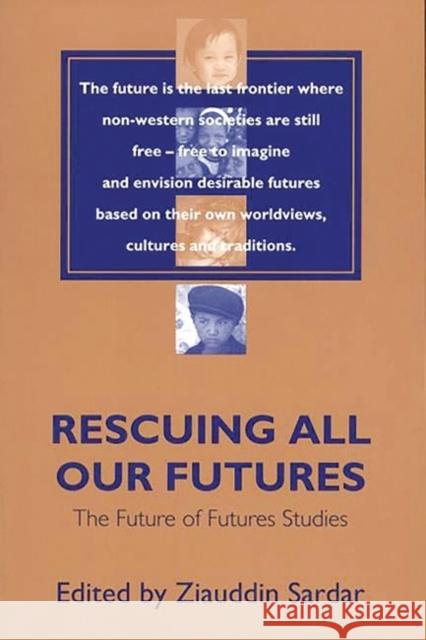
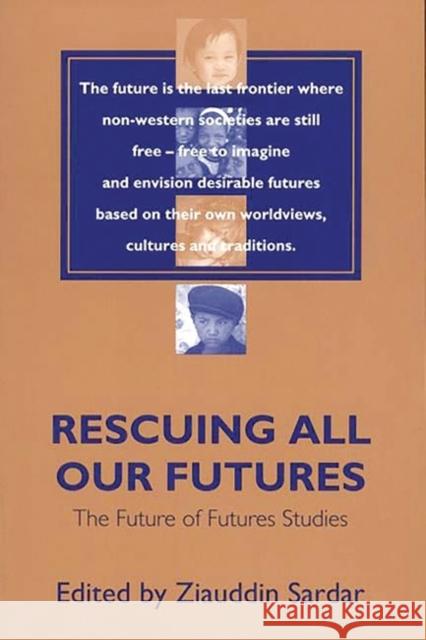
The future is the last frontier where nonwestern societies are still free--free to envision desirable futures based on their own worldviews, cultures, and traditions. Yet the discipline of futures studies, this volume argues, has abandoned its goal of exploring such diverse and alternative futures in favor of a single, myopic vision that is incapable of seeing outside the framework of western thought and action. Its overemphasis on forecasting and prediction, its overpreoccupation with technology, and its neglect of nonwestern cultures and concerns have transformed the discipline into an...
The future is the last frontier where nonwestern societies are still free--free to envision desirable futures based on their own worldviews, cultures,...
"Aliens R Us" explores the global culture of science fiction cinema, and in particular its presentation of contemporary images of the Other. Taking as a starting point the popularity of international forms such as Japanese Manga and Hong Kong sci-fi, in addition to the success of films such as The Matrix and television series such as Deep Space Nine, the contributors examine the science fiction genre as an international, populist form of social analysis. In doing so, they discuss issues such as Orientalism, technology, apocalyptic futures, xenophobia, militarism and the role of women. Most...
"Aliens R Us" explores the global culture of science fiction cinema, and in particular its presentation of contemporary images of the Other. Taking as...
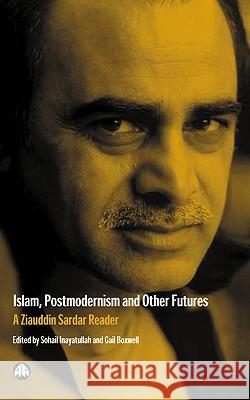
Ziauddin Sardar is a prolific writer and an insightful cultural commentator. His latest book, "Why Do People Hate America?," has been a regular feature in bestseller lists in several countries. In the UK, he is known as a leading intellectual and his regular contributions to the Observer, the Independent and the New Statesman have brought his writings to a wide audience. As one of our most high-profile Muslim intellectuals, he has also become an increasingly important voice in the media since the events of September 11th 2001. This is the first collection of his writings that offers a...
Ziauddin Sardar is a prolific writer and an insightful cultural commentator. His latest book, "Why Do People Hate America?," has been a regular fea...
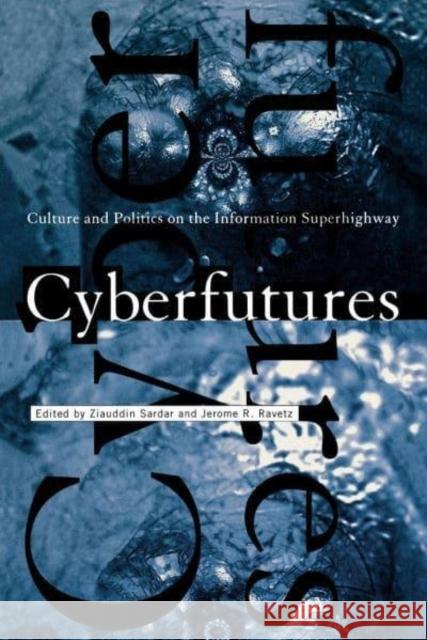
The World Wide Web exploded into public consciousness in 1995, a year which saw the coming of age of the Internet. People are communicating, working, shopping, learning, and entertaining themselves, as well as satisfying carnal desires and even finding God through the simple act of connecting their computers to the wide universe of cyberspace.
We are assured, at the same time, that this progress will have profound effects on work, culture, leisure--everything, including the ways in which we interact with each other. Yet just what these effects will be, how power will be distributed,...
The World Wide Web exploded into public consciousness in 1995, a year which saw the coming of age of the Internet. People are communicating, workin...
The World Wide Web exploded into public consciousness in 1995, a year which saw the coming of age of the Internet. People are communicating, working, shopping, learning, and entertaining themselves, as well as satisfying carnal desires and even finding God through the simple act of connecting their computers to the wide universe of cyberspace.
We are assured, at the same time, that this progress will have profound effects on work, culture, leisure--everything, including the ways in which we interact with each other. Yet just what these effects will be, how power will be distributed,...
The World Wide Web exploded into public consciousness in 1995, a year which saw the coming of age of the Internet. People are communicating, workin...
Kuala Lumpur is the postmodern city writ large, a city that, within the short span of a decade, has been transformed from a sleepy capital into a technological marvel with a thriving, diverse and affluent cultural life. Using anecdotes, classic Malay myths and tales, and observations based on real and imaginary wanderings through the city, Ziauddin Sardar traces Kuala Lumpur's origins and charts the remarkable changes experienced by the city and its people, including both the recent economic crisis and the vicious power struggle between Prime Minister Mahathir Mohamad and his ex-Deputy Anwar...
Kuala Lumpur is the postmodern city writ large, a city that, within the short span of a decade, has been transformed from a sleepy capital into a tech...
The future is the last frontier where nonwestern societies are still free--free to envision desirable futures based on their own worldviews, cultures, and traditions. Yet the discipline of futures studies, this volume argues, has abandoned its goal of exploring such diverse and alternative futures in favor of a single, myopic vision that is incapable of seeing outside the framework of western thought and action. Its overemphasis on forecasting and prediction, its overpreoccupation with technology, and its neglect of nonwestern cultures and concerns have transformed the discipline into an...
The future is the last frontier where nonwestern societies are still free--free to envision desirable futures based on their own worldviews, cultur...
This controversial work examines postmodernism from a non-Western perspective, and exposes its claims as a sham. Sardar makes a systematic assessment of the salient spheres of postmodernism - from philosophy and architecture, to film, music and new age religions - and reveals that, contrary to commonly-held notions, postmodernism operates to further marginalise the reality of the non-West and confound its aspirations.
This controversial work examines postmodernism from a non-Western perspective, and exposes its claims as a sham. Sardar makes a systematic assessment ...
Kiesler's "Beyond the Disease Model of Mental Disorder" goes beyond recent volumes which argue that psychotropic medications are being overused and abused in contemporary mental health settings. Elliott Valenstein, for example, an emeritus professor of psychology and neuroscience at the University of Michigan, recently argues that people should be highly suspicious of the claim that all mental illness is primarily a biochemical disorder. In his 1998 book, "Blaming the Brain: The Truth about Drugs and Mental Health," Valenstein does not argue that drugs never work or that patients should...
Kiesler's "Beyond the Disease Model of Mental Disorder" goes beyond recent volumes which argue that psychotropic medications are being overused and...
This book examines the social and political position of Muslims in Britain. Contributions from academics and policy makers explore issues of religion and politics, Britishness, governance, parallel lives, gender issues, religion in civic space, ethnicity, and inter ethnic and religious relations.
This book examines the social and political position of Muslims in Britain. Contributions from academics and policy makers explore issues of religion ...