The twentieth century has witnessed the blossoming of Western culture: new technology; communications and transportation systems; social, political, educational, agricultural, and medical advances. But with these changes have come the strains and tensions of conflicting interests, desires, and values within the community. John Dewey, one of America's most prolific writers of popular philosophy, believed that humankind could keep a firm hold on its destiny only if the critical intelligence of scientific method and its democratic counterpart were emphasized and promoted. Freedom of inquiry,...
The twentieth century has witnessed the blossoming of Western culture: new technology; communications and transportation systems; social, political, e...
Ever since humankind raised its head toward the heavens in search of universal understanding and spiritual fulfillment, wars, pogroms, persecution, prejudice, and contempt have been the means of resolving the many and varied disagreements that have arisen over matters religious. In his Letter Concerning Toleration, Locke offers a compelling plea for freedom of conscience and religious expression. He outlines the limits of social and political incursion into the realm of personal belief or non-belief, discusses the dangers of mixing church and state, and strikes hard at those who would use...
Ever since humankind raised its head toward the heavens in search of universal understanding and spiritual fulfillment, wars, pogroms, persecution, pr...
"The whole function of philosophy ought to be to find out what definite difference it will make to you and to me, at definite instances in our life, if this world-formula or that world-formula be the true one." With these words, William James, one of the great minds of American philosophy, captures the power of pragmatism, a theory first developed by Charles S. Peirce. Pragmatism explores the various theories of truth, meaning, and reality to discover their "cash value" when implemented. Exactly what happens to our understanding of the world when this or that perspective is adopted? Most...
"The whole function of philosophy ought to be to find out what definite difference it will make to you and to me, at definite instances in our life, i...
John Dewey, one of America's greatest popular philosophers and educators, emphasizes the importance of critical thinking and the vital role education should play. In this progressive work, written more than 80 years ago, Dewey, recognizing that we are born with the ability to think, argues that the educator's fundamental role is to train us to think well. At a time when America is lamenting the lack of solid training in the sciences at the elementary and secondary levels, Dewey's enthusiastic correlation between the scientific mind and the natural attitude of childhoodmarked by curiosity,...
John Dewey, one of America's greatest popular philosophers and educators, emphasizes the importance of critical thinking and the vital role education ...
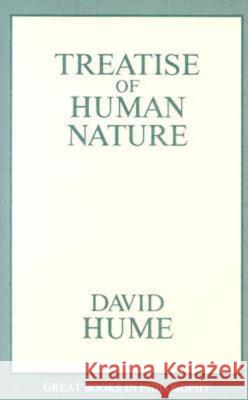
"Nothing is more curiously enquired after . . . than the causes of every phenomenon. . . . We] push on our enquiries, till we arrive at the original and ultimate principle. . . . This is our aim in all our studies and reflections." These words sum up David Hume's plan: To discover the fundamental principles at work in the nature and extent of human knowledge, and in so doing to gain a clearer understanding of our perception, ideas (e.g. of cause and effect), impressions, beliefs, passions, virtues, and vices. Hume's piercing critique and relentless analysis make this truly one of the...
"Nothing is more curiously enquired after . . . than the causes of every phenomenon. . . . We] push on our enquiries, till we arrive at the original ...
Gottfried Wilhelm Leibniz Robert M. Baird Stuart E. Rosenbaum
Leibniz (1646 - 1716) was a true polymath and has been called the most comprehensive thinker since Aristotle. In these two great works by the founder of modern German speculative philosophy, the reader is introduced to Leibniz's metaphysics, including his conception of physical substance, the motion and resistance of bodies, and the role of the divine within the dynamic universe.
Leibniz (1646 - 1716) was a true polymath and has been called the most comprehensive thinker since Aristotle. In these two great works by the founder ...
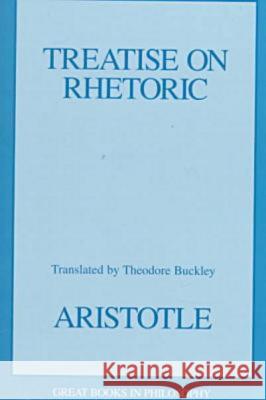
The art of rhetoric, or persuasive public speaking, was brought to perfection in classical Athens. During the fifth and fourth centuries B.C.E., rhetoric came under the scrutiny of the philosophers. While Plato dismissed public speaking as mere hackwork devoid of a rational basis, Aristotle defended it as a true art. In his great work, Treatise on Rhetoric, which laid the foundations of philosophical rhetoric, Aristotle deals at length with the processes of argument and with style, including rhythm and meter. For Aristotle, rhetoric is a brand of the art of reasoning; its function he...
The art of rhetoric, or persuasive public speaking, was brought to perfection in classical Athens. During the fifth and fourth centuries B.C.E., rheto...
Arthur Schopenhauer Robert M. Baird Stuart E. Rosenbaum
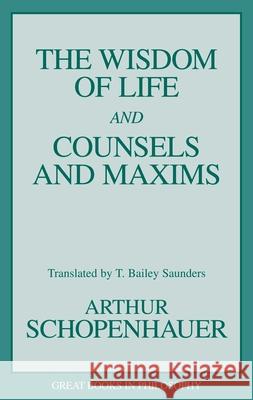
Nineteenth-century German philosopher Arthur Schopenhauer (1788-1860) championed individual strength of will and independent, reasoned deliberation above the irrational impulses that animated most of society. In The Wisdom of Life and Counsels and Maxims, two essays from his last work, Parerga und Paralipomena (1851), he discusses how to order our lives to obtain the greatest amount of pleasure and success; then he offers guidelines for living life to its fullest. But for Schopenhauer a life well lived should always reach beyond itself to a higher plane.
Nineteenth-century German philosopher Arthur Schopenhauer (1788-1860) championed individual strength of will and independent, reasoned deliberation ab...
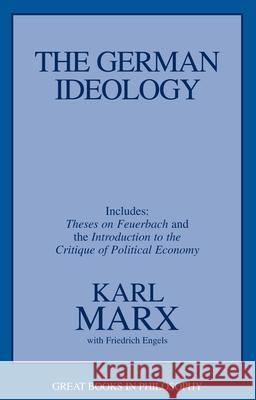
Nearly two years before his powerful Communist Manifesto, Marx (1818-1883) co-wrote The German Ideology in 1845 with friend and collaborator Friedrich Engels expounding a new political worldview, including positions on materialism, labor, production, alienation, the expansion of capitalism, class conflict, revolution, and eventually communism. They chart the course of -true- socialism based on Hegel's dialectic, while criticizing the ideas of Bruno Bauer, Max Stirner and Ludwig Feuerbach. Marx expanded his criticism of the latter in his now famous Theses on Feuerbach, found after Marx's death...
Nearly two years before his powerful Communist Manifesto, Marx (1818-1883) co-wrote The German Ideology in 1845 with friend and collaborator Friedrich...
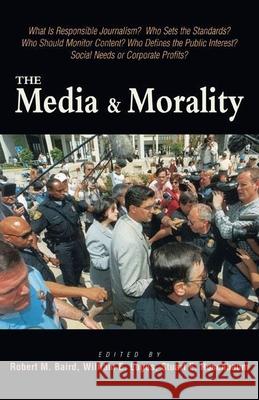
From the blaming of Princess Diana's death on news photographers to the public apology by CNN over its erroneous Vietnam-nerve-gas story, journalism and the American media in general are being placed under the microscope. The media-now more powerful than ever before due to computer advances, cable television, and the internet-controls our opinions, tastes, and, as some would have us believe, our actions. But has the media shed its ethics and gotten completely out of control? Has the quest to get the big scoop crippled the news media into believing "first" is better than factual? To whom...
From the blaming of Princess Diana's death on news photographers to the public apology by CNN over its erroneous Vietnam-nerve-gas story, journalism a...