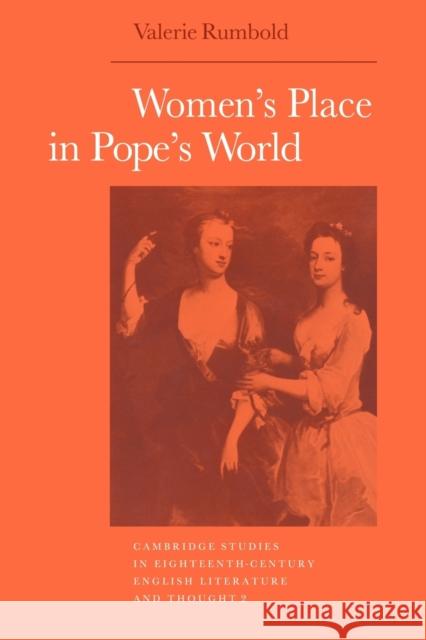
How was Alexander Pope's personal experience of women transformed into poetry? How characteristic of his age was Pope's attitude toward women? What was the influence of individual women such as his mother, Patty Blount and Lady Mary Montagu on his life and work? Valerie Rumbold's is the first full-length study to address these issues. Referring to previously unexploited manuscripts, she focuses both on Pope's own life and art, and on early eighteenth-century assumptions about women and gender. She offers readings of some of the well-known poems in which women feature prominently, and follows...
How was Alexander Pope's personal experience of women transformed into poetry? How characteristic of his age was Pope's attitude toward women? What wa...
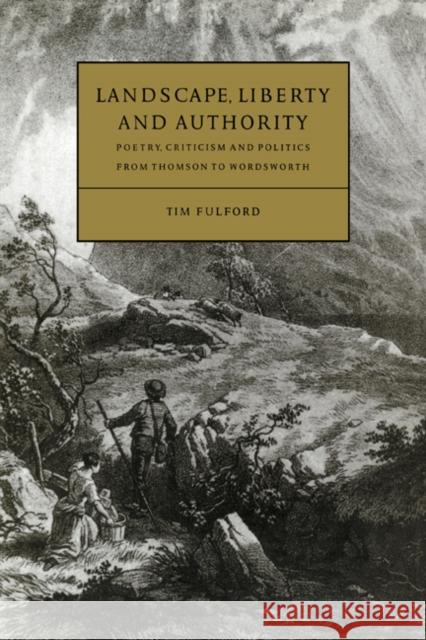
Tim Fulford examines landscape description in the writings of Thomson, Cowper, Johnson, Gilpin, Repton, Wordsworth, Coleridge and others. He shows how landscape description formed part of a larger debate over the nature of liberty and authority in a Britain developing its sense of nationhood, and reveals the tensions that arose as writers sought to define their relationship to the public sphere. Fulford's innovative study offers a new view of literary and political influence linking the early eighteenth and nineteenth centuries.
Tim Fulford examines landscape description in the writings of Thomson, Cowper, Johnson, Gilpin, Repton, Wordsworth, Coleridge and others. He shows how...
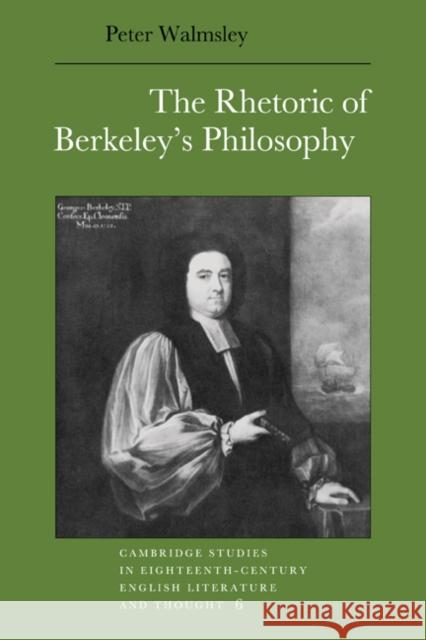
Whereas previous studies have made George Berkeley (1685-1753) the object of philosophical study, Peter Walmsley assesses Berkeley as a writer, offering rhetorical and literary analyses of Berkeley's four major philosophical texts, A Treatise Concerning the Principles of Human Knowledge, Three Dialogues Between Hylas and Philonous, Alciphron, and Siris. Berkeley emerges from this study as an accomplished stylist who builds structures of affective imagery, creates dramatic voices in his texts, and masters the range of philosophical genres--the treatise, the dialogue, and the essay.
Whereas previous studies have made George Berkeley (1685-1753) the object of philosophical study, Peter Walmsley assesses Berkeley as a writer, offeri...
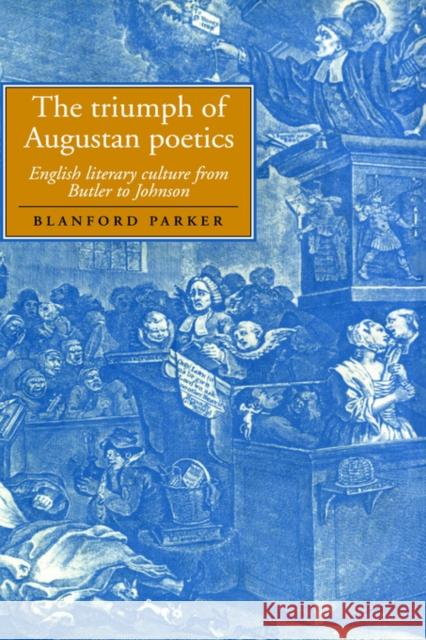
The Triumph of Augustan Poetics offers an important and original reevaluation of the transition from Baroque to Augustan in English literature. Starting with Butler's outrageous burlesque, Hudibras, Blanford Parker describes the origins of Augustan satire and its momentous departure from the religious and social writing of an earlier era. He goes on to explain the creation, from the ruins of satire, of a new poetry of nature and everyday life (emerging most significantly in the work of Pope and Thomson), and the ambiguous or hostile responses of writers including Samuel Johnson.
The Triumph of Augustan Poetics offers an important and original reevaluation of the transition from Baroque to Augustan in English literature. Starti...
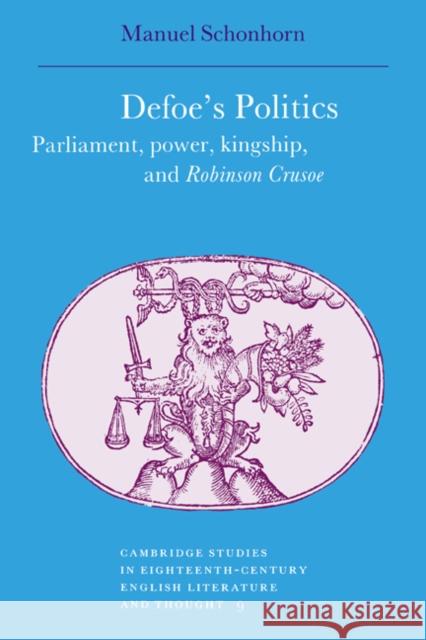
This study of Defoe's politics aims to challenge the critical demand to see Defoe as a "modern" and to counter misrepresentations of his political writings by restoring their seventeenth-century context. Offering a full examination of Defoe's years as a political reporter and journalist (1689-1715), it recovers his traditional, conservative and anti-Lockean ideas on contemporary issues: the origins of society, the role of the people in the establishment of a political society and how monarchies are created and maintained as the means of achieving a beneficent political order. At the heart of...
This study of Defoe's politics aims to challenge the critical demand to see Defoe as a "modern" and to counter misrepresentations of his political wri...
Murray G. H. Pittock Howard Erskine-Hill John Richetti
This book seeks to rewrite assumptions about the Augustan era through an exploration of Jacobite ideology. The author studies canonical and noncanonical literature and uncovers a new "four nations" literary history defined in terms of a struggle for control of the language of authority between Jacobite and Hanoverian writers. Sources explored include ballads in Scots, Irish, Welsh and Gaelic. The author concludes that the literary history of the Augustan age is built on the history of the victors in the Revolution of 1688.
This book seeks to rewrite assumptions about the Augustan era through an exploration of Jacobite ideology. The author studies canonical and noncanonic...
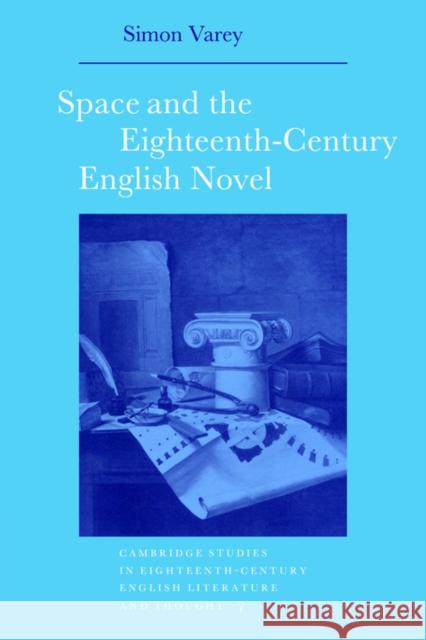
In this challenging and original study, Simon Varey relates the idea of space in the major novels of Defoe, Fielding, and Richardson to its use in the theory and practice of eighteenth-century architecture. Drawing on a wide range of architectural books, Varey argues that space can become a political instrument used by its designers to establish conformity, assert power, and give form to the aspirations of social classes. As an example, he cites the city of Bath, a neo-classical city designed to reflect the political values of the empire. The discussion of the novels examines narrative as a...
In this challenging and original study, Simon Varey relates the idea of space in the major novels of Defoe, Fielding, and Richardson to its use in the...
Carol Houlihan Flynn Howard Erskine-Hill John Richetti
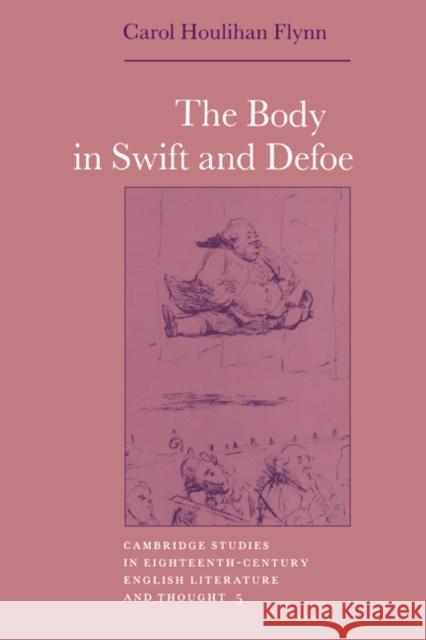
This extended study of the treatment of the physical, material nature of the human body in the works of Jonathan Swift and Daniel Defoe examines the role that literary invention (with its rhetorical and linguistic strategies) plays in expressing and exploring the problems of physicality. The book takes up a wide range of issues relating to the body such as sexuality, cannibalism, scatology, and the fear of contagion. In an eclectic synthesis of recent critical approaches, Professor Flynn draws insight from biographical and psychoanalytic criticism as well as social history. Application of...
This extended study of the treatment of the physical, material nature of the human body in the works of Jonathan Swift and Daniel Defoe examines the r...
The period 1660-1780 saw major changes in the relationship between religion and ethics in English thought. In this first part of an important two-volume study, Isabel Rivers examines the rise of Anglican moral religion and the reactions against it expressed in nonconformity, dissent and methodism. Her study investigates the writings that grew out of these movements, combining a history of the ideas of individual thinkers (including both prominent figures such as Bunyan and Wesley and a range of lesser writers) with analysis of their characteristic terminology, techniques of persuasion,...
The period 1660-1780 saw major changes in the relationship between religion and ethics in English thought. In this first part of an important two-volu...
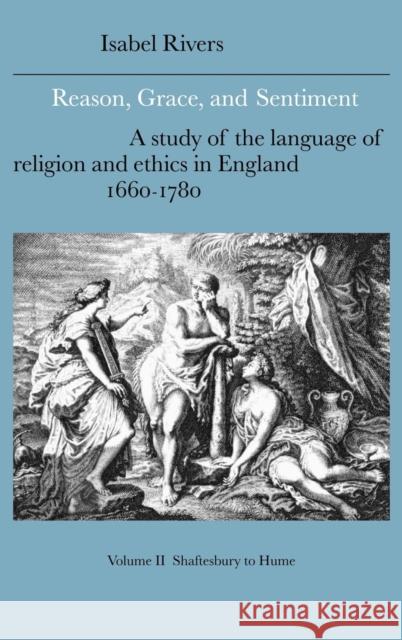
This volume completes Isabel Rivers' widely-acclaimed exploration of the relationship between religion and ethics from the mid-seventeenth to the later eighteenth centuries. She investigates what happened when attempts were made to separate ethics from religion, and to locate the foundation of morals in the constitution of human nature. Her book pays close attention to the movement of ideas through the British Isles, and demonstrates the enormous influence of Shaftesbury's moral thought. Meticulously researched and accessibly written, this study makes a vital contribution to our understanding...
This volume completes Isabel Rivers' widely-acclaimed exploration of the relationship between religion and ethics from the mid-seventeenth to the late...