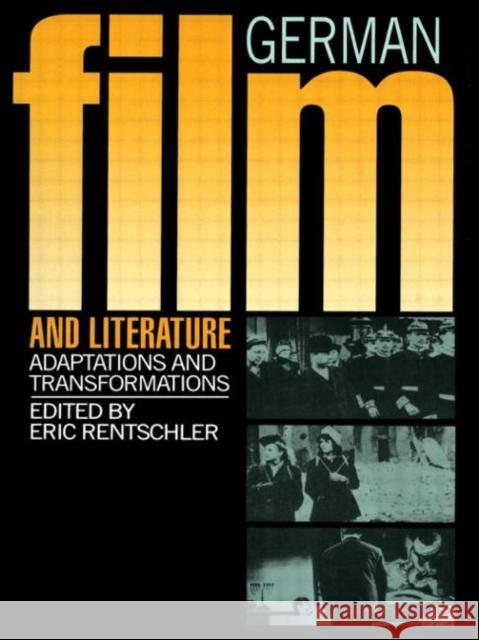
"A valuable contribution to understanding and interpreting a visually and philosophical ambitious and at the same time provocatively eccentric film maker."--"German Studies Review"
"A valuable contribution to understanding and interpreting a visually and philosophical ambitious and at the same time provocatively eccentric film ma...
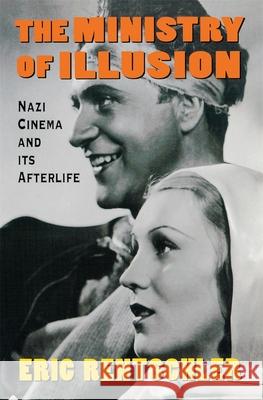
German cinema of the Third Reich, even a half-century after Hitler's demise, still provokes extreme reactions. "Never before and in no other country," observes director Wim Wenders, "have images and language been abused so unscrupulously as here, never before and nowhere else have they been debased so deeply as vehicles to transmit lies." More than a thousand German feature films that premiered during the reign of National Socialism survive as mementoes of what many regard as film history's darkest hour.
As Eric Rentschler argues, however, cinema in the Third Reich emanated from a...
German cinema of the Third Reich, even a half-century after Hitler's demise, still provokes extreme reactions. "Never before and in no other countr...
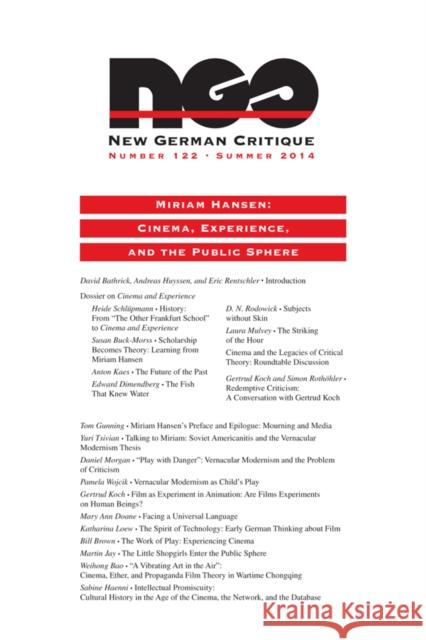
This issue is dedicated to the thought and writing of Miriam Hansen, whose contributions broke ground in film history, film theory, and the politics of mass culture and the public sphere. The collection focuses on the areas in which she was most influential: early cinema, its reception, and the legacy of vernacular modernism, including essays touching on the concept's impact on contemporary thinking about Russian and Chinese cinemas. The issue also features extensive commentary on Hansen's pioneering book "Cinema and Experience," expanding on the book's inquiry into the continuing legacy of...
This issue is dedicated to the thought and writing of Miriam Hansen, whose contributions broke ground in film history, film theory, and the politics o...
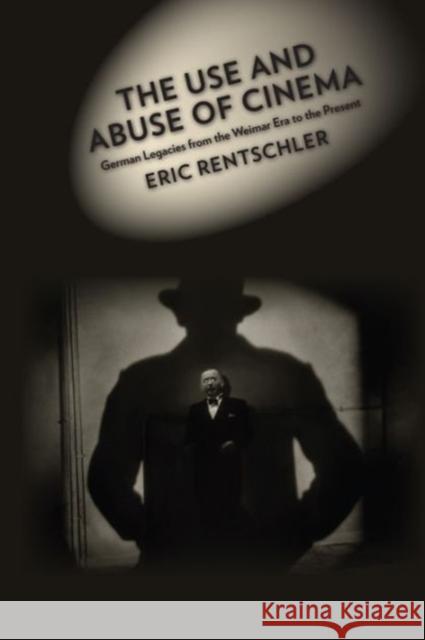
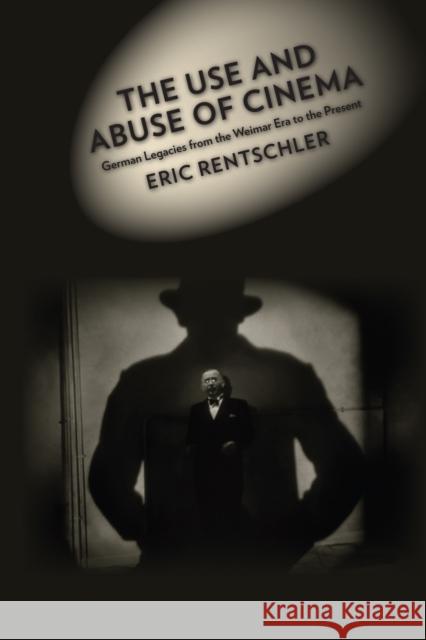
Eric Rentschler's new book, The Use and Abuse of Cinema, takes readers on a series of enthralling excursions through the fraught history of German cinema, from the Weimar and Nazi eras to the postwar and postwall epochs and into the new millennium. These journeys afford rich panoramas and nuanced close-ups from a nation's production of fantasies and spectacles, traversing the different ways in which the film medium has figured in Germany, both as a site of creative and critical enterprise and as a locus of destructive and regressive endeavor. Each of the chapters provides a stirring...
Eric Rentschler's new book, The Use and Abuse of Cinema, takes readers on a series of enthralling excursions through the fraught history of Ger...
Eric Rentschler's new book, The Use and Abuse of Cinema, takes readers on a series of enthralling excursions through the fraught history of German cinema, from the Weimar and Nazi eras to the postwar and postwall epochs and into the new millennium. These journeys afford rich panoramas and nuanced close-ups from a nation's production of fantasies and spectacles, traversing the different ways in which the film medium has figured in Germany, both as a site of creative and critical enterprise and as a locus of destructive and regressive endeavor. Each of the chapters provides a stirring...
Eric Rentschler's new book, The Use and Abuse of Cinema, takes readers on a series of enthralling excursions through the fraught history of Ger...