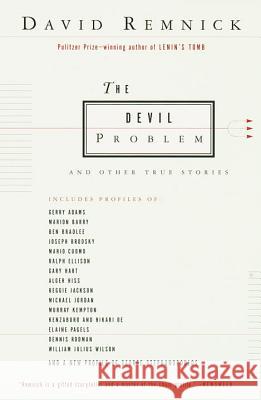
Readers know from his now classic Lenin's Tomb that Remnick is a superb portraitist who can bring his subjects to life and reveal them in such surprising ways as to justify comparison to Dickens, Balzac, or Proust. In this collection, Remnick's gift for character is sharper than ever, whether he writes about Gary Hart stumbling through life after Donna Rice or Mario Cuomo, who now presides over a Saturday morning radio talk show, fielding questions from crackpots, or about Michael Jordan's awesome return to the Chicago Bulls -- or Reggie Jackson's last times at bat. Remnick's portraits of...
Readers know from his now classic Lenin's Tomb that Remnick is a superb portraitist who can bring his subjects to life and reveal them in such surpris...
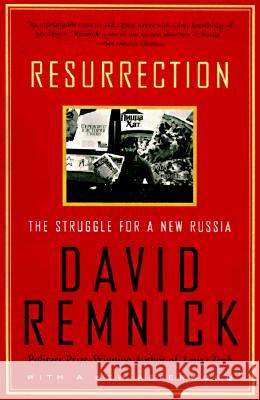
Pulitzer Prize-winning author David Remnick chronicles the new Russia that emerged from the ash heap of the Soviet Union. From the siege of Parliament to the farcically tilted elections of 1996, from the rubble of Grozny to the grandiose wealth and naked corruption of today's Moscow, Remnick chronicles a society so racked by change that its citizens must daily ask themselves who they are, where they belong, and what they believe in. Remnick composes this panorama out of dozens of finely realized individual portraits. Here is Mikhail Gorbachev, his head still swimming from his plunge from...
Pulitzer Prize-winning author David Remnick chronicles the new Russia that emerged from the ash heap of the Soviet Union. From the siege of Parliament...
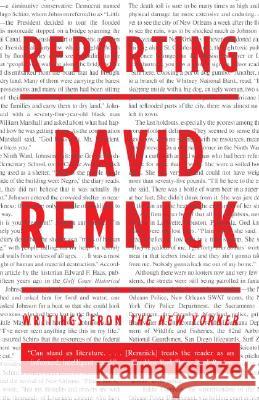
David Remnick is a writer with a rare gift for making readers understand the hearts and minds of our public figures. Whether it's the decline and fall of Mike Tyson, Al Gore's struggle to move forward after his loss in the 2000 election, or Vladimir Putin dealing with Gorbachev's legacy, Remnick brings his subjects to life with extraordinary clarity and depth. In Reporting, he gives us his best writing from the past fifteen years, ranging from American politics and culture to post-Soviet Russia to the Middle East conflict; from Tony Blair grappling with Iraq, to Philip Roth making...
David Remnick is a writer with a rare gift for making readers understand the hearts and minds of our public figures. Whether it's the decline and fall...
With an Introduction by Salman Rushdie On the night in 1964 that Muhammad Ali (then known as Cassius Clay) stepped into the ring with Sonny Liston, he was widely regarded as an irritating freak who danced and talked way too much. Six rounds later Ali was not only the new world heavyweight boxing champion: He was "a new kind of black man" who would shortly transform America's racial politics, its popular culture, and its notions of heroism. No one has captured Ali--and the era that he exhilarated and sometimes infuriated--with greater vibrancy, drama, and astuteness than David...
With an Introduction by Salman Rushdie On the night in 1964 that Muhammad Ali (then known as Cassius Clay) stepped into the ring with Sonny...
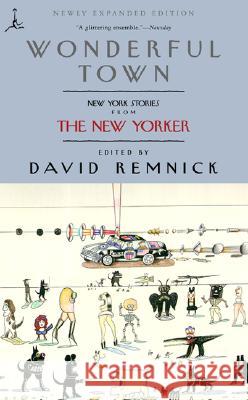
New York City is not only The New Yorker's place of origin and its sensibility's lifeblood; it is the heart of American literary culture. Wonderful Town collects superb short fiction by many of the magazine's and this country's most accomplished writers. Like all good fiction, these stories take particular places, particular people, and particular events and turn them into dramas of universal enlightenment and emotional impact. Here New York is every great place and every ordinary place. Each life in it, and each life in Wonderful Town, is the life of us all.
New York City is not only The New Yorker's place of origin and its sensibility's lifeblood; it is the heart of American literary culture. Wo...
The New Yorker Magazine Henry Finder David Remnick
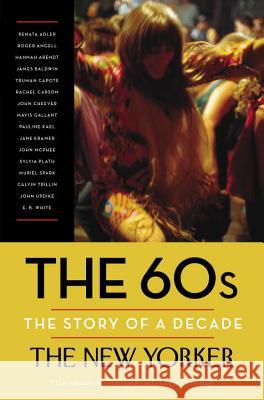
The third installment of a fascinating decade-by-decade series, this anthology collects historic New Yorker pieces from the most tumultuous years of the twentieth century--including work by James Baldwin, Pauline Kael, Sylvia Plath, Roger Angell, Muriel Spark, and John Updike--alongside new assessments of the 1960s by some of today's finest writers. Here are real-time accounts of these years of turmoil: Calvin Trillin reports on the integration of Southern universities, E. B. White and John Updike wrestle with the enormity of the Kennedy assassination, and Jonathan Schell...
The third installment of a fascinating decade-by-decade series, this anthology collects historic New Yorker pieces from the most tumultuous ...
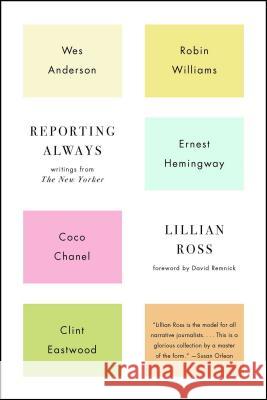
From the inimitable New Yorker journalist Lillian Ross--"a collection of her most luminous New Yorker pieces" (Entertainment Weekly, grade: A). A staff writer for The New Yorker since 1945, Lillian Ross is one of the few journalists who worked for both the magazine's founding editor, Harold Ross, and its current editor, David Remnick. She "made journalistic history by pioneering the kind of novelistic nonfiction that inspired later work" (The New York Times).Reporting Always is a collection of Ross's iconic New Yorker profiles...
From the inimitable New Yorker journalist Lillian Ross--"a collection of her most luminous New Yorker pieces" (Entertainment Weekly
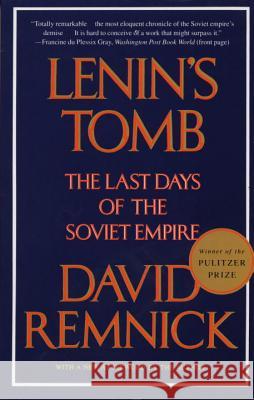
Winner of the Pulitzer Prize One of the Best Books of the Year: The New York Times
From the editor of The New Yorker a riveting account of the collapse of the Soviet Union, which has become the standard book on the subject. Lenin's Tomb combines the global vision of the best historical scholarship with the immediacy of eyewitness journalism. Remnick takes us through the tumultuous 75-year period of Communist rule leading up to the collapse and gives us the voices of those who lived through it, from democratic activists to Party members, from...
Winner of the Pulitzer Prize One of the Best Books of the Year: The New York Times
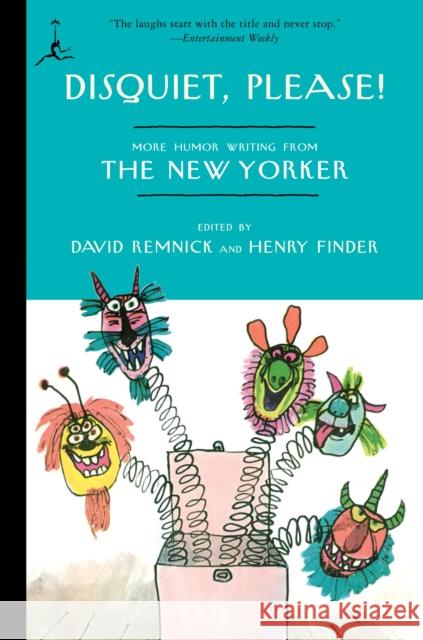
The New Yorker is, of course, a bastion of superb essays, influential investigative journalism, and insightful arts criticism. But for eighty years it's also been a hoot. Now an uproarious sampling of its funny writings can be found in this collection, by turns satirical and witty, misanthropic and menacing. From the 1920s onward--but with a special focus on the latest generation--here are the humorists who have set the pace and stirred the pot, pulled the leg and pinched the behind of America. The comic lineup includes Christopher Buckley, Ian Frazier, Veronica Geng, Garrison Keillor,...
The New Yorker is, of course, a bastion of superb essays, influential investigative journalism, and insightful arts criticism. But for eighty y...
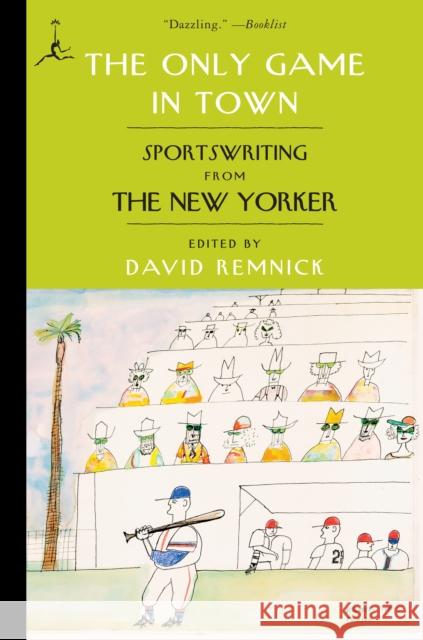
For more than eighty years, The New Yorker has been home to some of the toughest, wisest, funniest, and most moving sportswriting around. The Only Game in Town is a classic collection from a magazine with a deep bench, including such authors as Roger Angell, John Updike, Don DeLillo, and John McPhee. Hall of Famer Ring Lardner is here, bemoaning the lowering of standards for baseball achievement--in 1930. John Cheever pens a story about a boy's troubled relationship with his father and the national pastime. From Lance Armstrong to bullfighter Sidney Franklin, from the Chinese...
For more than eighty years, The New Yorker has been home to some of the toughest, wisest, funniest, and most moving sportswriting around.