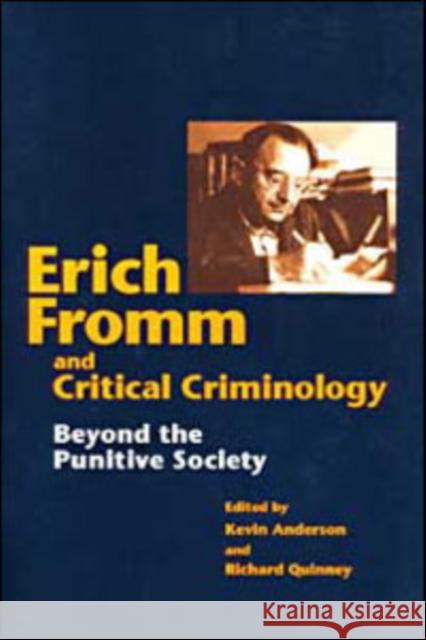
Linking the writings of the humanist psychologist Erich Fromm to criminology, this collection shows how viewing crime patterns and the criminal justice system from Fromm's humanist perspective opens a path to more effective and more humane way of understanding and dealing with crime and criminals.
Linking the writings of the humanist psychologist Erich Fromm to criminology, this collection shows how viewing crime patterns and the criminal justic...
Watch closely, Richard Quinney reminds himself, participate, experience the mystery. And watching, we experience with him the wonders of the borderland between a remembered past and an ever-unfolding present, the extraordinary mysteries of ordinary life in a world comfortably situated in the middle of a vast, unknowable universe. To be a midwesterner is, for Quinney, to belong to a place, to a time, to a community, all of which he evokes in this physical, mental, and spiritual geography. In photographs handed down over the years and in those he has taken over a half-century, in reflections...
Watch closely, Richard Quinney reminds himself, participate, experience the mystery. And watching, we experience with him the wonders of the borderlan...
Richard Quinney's The Social Reality of Crime remains an eloquent and important statement on crime, law, and justice. At the time of its appearance in 1970, Quinney's theory not only liberated the field from a recitation of the practices of the police, courts, and corrections, it also represented a marked departure from traditional analysis which viewed criminal behavior as pathological. Quinney not only advanced criminological thought, he inspired scores of students of crime and criminal justice to reorient their perceptions of the justice system.
The Social Reality of...
Richard Quinney's The Social Reality of Crime remains an eloquent and important statement on crime, law, and justice. At the time of its a...
Originally published thirty years ago, Critique of the Legal Order remains highly relevant for the twenty-first century. Here Richard Quinney provides a critical look at the legal order in capitalist society. Using a traditional Marxist perspective, he argues that the legal order is not intended to reduce crime and suffering, but to maintain class differences and a social order that mainly benefits the ruling class.
Quinney challenges modern criminologists to examine their own positions. As -ancillary agents of power, - criminologists provide information that governing...
Originally published thirty years ago, Critique of the Legal Order remains highly relevant for the twenty-first century. Here Richard Quin...
Criminology has traditionally been a military science, a science of war. "The criminal element" is the enemy. Repression and restraint are the primary tools of criminal justice, and criminologists study how to make those tools effective in the "war on crime." We are beginning to realize that this is a war against ourselves and one that we are losing. Our inability to make peace with crime and criminals is reflected in the paucity of our daily personal relations, where we live by domination and discipline, where forgiveness and mercy are seen as naive surrender to victimization.
The...
Criminology has traditionally been a military science, a science of war. "The criminal element" is the enemy. Repression and restraint are the prim...